

What if the right momo isn’t the crispiest one, but the one that suits your appetite right now? Choosing between steamed vs pan fried momo can be tricky when the names tell you how each is cooked, but not what the first bite feels like. One style is tender and delicate; the other brings a browned, firmer edge.
There’s no universal winner. Steamed momo keeps the wrapper soft and lets the savoury filling take centre stage. Pan-fried momo develops browned patches that bring extra texture and toasted notes. This guide compares flavour, feel, and eating experience to help you choose by the bite you want. It also explains how dipping sauce fits into the decision and what to expect from the steamed and fried momo at Alyonna Bliss.
Key Takeaways
- Choose by texture: steamed momo has a soft wrapper, while pan-fried momo has a firmer, browned surface.
- Cooking changes the wrapper’s surface and bite, but the filling and seasoning shape flavour too.
- Consider the whole mouthful, including the filling and dipping sauce, rather than choosing by cooking method alone.
- Alyonna Bliss serves steamed and fried momo, offering two ways to enjoy Nepali flavours.
Steamed vs Pan-Fried Momo: What Changes When You Choose One?
The choice often comes down to the first bite you want: a soft, tender dumpling or a browned wrapper with a firmer edge. Steamed momo cooks with moist heat, leaving its exterior soft rather than pan-browned. Pan-fried momo meets a hot pan, which browns the surface where it touches and creates a more pronounced contrast with the centre. Each style gives the same kind of dumpling a different texture and aroma.
Momo has a rich culinary context, with traditions and variations explored in Momo (dumpling). For this comparison, focus on what cooking changes in the wrapper, aroma, and feel. The filling and its seasoning matter too, so two dumplings can share familiar flavours while offering distinctly different textures.
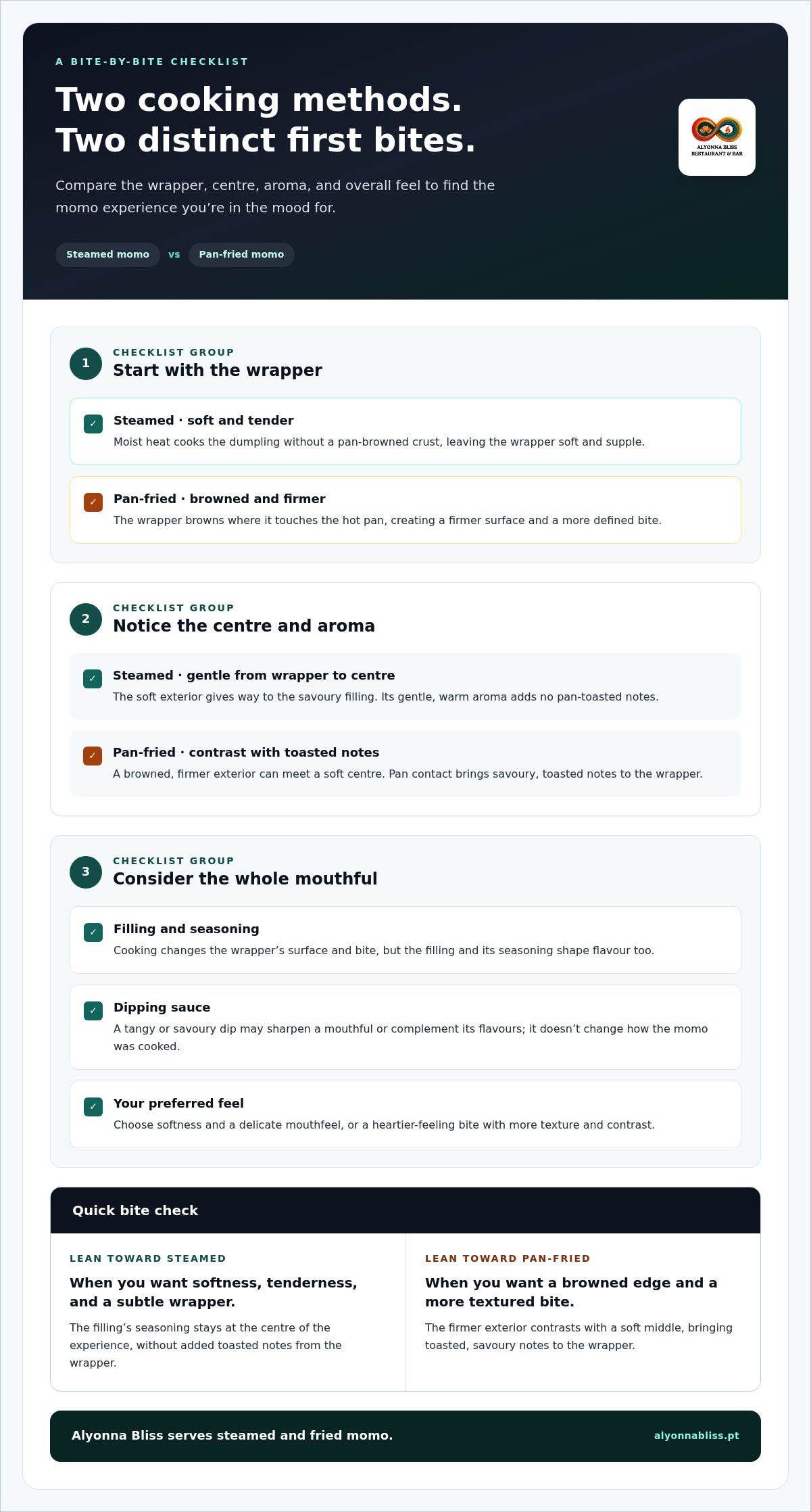
Exterior: Steamed momo has a soft, tender wrapper; pan-fried momo has a browned, firmer surface.
Centre: Both can have a soft centre, with pan-fried momo contrasting it against its more substantial exterior.
Aroma: Steamed momo has a gentle, warm aroma; pan contact can bring toasted, savoury notes.
Eating experience: Steamed momo feels delicate and comforting, while pan-fried momo brings more texture and contrast to each bite.
What does steamed momo taste and feel like?
Steamed momo has a tender wrapper and a soft, moist finish. Because its exterior isn’t browned against a pan, the bite stays gentle from the wrapper to the centre. That texture lets the filling’s own seasoning stand out without adding toasted notes. Choose steamed momo when you want softness and a delicate mouthfeel, or when you’d like the wrapper to stay subtle beside the filling.
What does pan-fried momo taste and feel like?
Pan-fried momo offers a more defined bite. Its browned, firmer exterior meets a softer centre, making the contrast easy to notice as you chew. Contact with a hot pan develops savoury, toasted notes in the wrapper, adding depth without taking the filling out of the picture. It can feel heartier and more textured than steamed momo, especially if you enjoy a browned edge alongside a tender middle.
That’s the heart of the steamed vs pan fried momo choice: one highlights softness, while the other adds browning and contrast. At Alyonna Bliss, you can choose steamed or fried momo. Let the wrapper you’re craving, the flavours you enjoy, and the mood of the meal guide your choice.
How Steaming and Pan-Frying Shape a Momo’s Texture
A momo’s wrapper is the first clue to how it was cooked. Steam surrounds the dumpling with moist heat, while a hot pan browns the surface where wrapper meets metal. That difference shapes the outside bite and aroma, but it isn’t the whole story. The filling, its seasoning, and any dipping sauce also influence the eating experience.
Steamed momo: Moist heat cooks the dumpling without a pan-browned crust, leaving the wrapper soft and tender.
Pan-fried momo: Contact with a hot pan browns parts of the wrapper, creating a firmer bite and toasted notes.
How steaming creates a tender dumpling
Inside a steamer, heat surrounds the momo rather than pressing its wrapper against a hot cooking surface. The outside cooks without developing the browned crust associated with pan contact, so the wrapper stays soft and supple. As you bite through it, that gentle surface gives way to the savoury filling. The result is a continuous, tender mouthfeel, without a crisp patch interrupting the wrapper’s softness.
Steaming shapes texture, not the dumpling’s seasoning. The filling has its own flavour, while a dip can add another layer at the table. A tangy or savoury sauce may sharpen each mouthful, but it doesn’t create the wrapper’s softness. That comes from the cooking method. Keeping these elements separate helps you notice the dough, filling, and sauce on their own.
How pan contact creates a browned exterior
Where the wrapper touches a hot pan, its surface can turn golden-brown and firmer, bringing a savoury, toasted quality to the first bite. The centre can still feel soft, giving the momo a contrast between browned exterior and tender interior. Pan-fried doesn’t automatically mean uniformly crisp, and it isn’t the same as deep-fried. The texture depends on which parts of the wrapper meet the pan and how they cook.
That contrast is the defining pleasure of this style. A browned area offers more resistance than a steamed wrapper, while the softer middle keeps the bite from feeling crisp all the way through. The method may add toasted, savoury notes to the wrapper, but it doesn’t replace the filling’s own character. Seasoning still matters, and dipping sauce can complement or brighten the bite without changing how the momo was cooked.
Research examining the impact of cooking methods on food offers broader context for how preparation can affect a dish. For momo, the practical takeaway is simple: notice the wrapper first, then the centre, filling, and dip. Alyonna Bliss serves steamed and fried momo, giving you two ways to enjoy the dish. Explore the momo offering.
Steamed or Pan-Fried Momo: Compare Flavour, Texture, and Comfort
The cooking method changes the wrapper’s character, but it doesn’t decide everything you taste. A tender steamed wrapper gives the filling room to lead, while browned patches on pan-fried momo add toasted notes and a firmer bite. The same seasoning can come across differently with each surface, so consider the whole mouthful: wrapper, filling, and dipping sauce.
Perceived richness is personal, too. Some diners find the contrast of a browned exterior and soft centre more substantial, while others prefer the gentle, even tenderness of steamed momo. Neither impression makes one style better. It simply helps you picture which bite sounds more satisfying at this meal.
Which momo style suits a softer, gentler bite?
If you prefer a wrapper that yields easily, steamed momo may be the more appealing choice. Its soft surface doesn’t bring browned notes, so the filling’s savoury flavours remain at the centre of the experience. Each bite feels cohesive and tender, making this style a natural fit if you want the wrapper to complement rather than compete with the filling. A dipping sauce can add a sharper or deeper note alongside that softness.
Which momo style suits a browned, savoury bite?
Choose pan-fried momo if you enjoy a firmer wrapper and the flavour that comes with browning. The outside offers more resistance, while the middle can remain soft, creating a change in texture within one bite. Pan-fried doesn’t mean deep-fried, nor does it promise an evenly crisp shell; the browned surface and its texture can vary. Its appeal lies in the savoury contrast, not in a guaranteed crunch from edge to edge.
Seasoning still deserves a place in the comparison. A strongly flavoured filling may stand out through either wrapper, while a dipping sauce can make a bite feel tangier, warmer, or more rounded. Cooking method shapes the wrapper and its toasted notes; filling and sauce shape other parts of the flavour. Keeping those influences separate makes the steamed vs pan fried momo choice easier to judge by what you actually enjoy.
A quick preference guide:
- Soft, tender wrapper: Steamed momo may suit you.
- Filling-forward bite: Try steamed momo, where the wrapper brings no pan-browned notes.
- Firmer surface and toasted flavour: Pan-fried momo may be your preference.
- Texture contrast: Choose pan-fried for a browned outside against a softer centre.
At Alyonna Bliss, steamed and fried momo offer two ways to enjoy Nepali flavours. Use your preference for wrapper texture, seasoning, and the feel of the meal to choose between them.
How to Choose Between Steamed and Pan-Fried Momo
There’s no single right answer to the steamed vs pan fried momo question. Start with the bite you want, then consider which flavours and dining mood sound inviting. A soft wrapper may feel right for a gentle, comforting meal; a browned, firmer one can appeal when you want more contrast. Neither style is automatically better for every diner or occasion.
Choose by the texture you enjoy most
Picture the first bite. Would you rather the wrapper yield softly or offer a browned, firmer surface? If tenderness is your preference, steamed momo may suit you; if you enjoy a more pronounced exterior, pan-fried may be the better fit. Then consider the centre: filling and seasoning still shape the full mouthful, whatever the wrapper feels like.
Choose by appetite and dining moment
Think about the mood you’re bringing to the table, not a rule about what a meal should be. Steamed momo offers a delicate, comforting experience, while pan-fried momo brings a more assertive browned bite. One may suit a quiet craving for softness; the other may appeal when you’re in the mood for extra texture. Let that preference lead.
The simplest rule: choose steamed for tenderness, and pan-fried for a browned, firmer bite. If you’re still undecided, follow this short path:
- Start with texture. Pick soft and tender or browned and firm.
- Consider flavour. Decide whether you want a delicate wrapper or toasted notes alongside the filling.
- Match the moment. Choose the style that feels most welcome for your appetite and dining mood.
A dipping sauce can also help guide your choice. If you enjoy tasting the filling with a gentle wrapper around it, steamed momo may be your preference. If you like sauce alongside a wrapper with more browned character, pan-fried may appeal. Either way, let the seasoning and dip complement the bite rather than expecting the cooking method to determine every flavour.
When sharing a meal, preferences don’t have to match. One diner can favour softness while another looks forward to a browned edge. At Alyonna Bliss, steamed and fried momo offer both ways to enjoy Nepali flavours, so each person can choose the texture they prefer. Choose your momo style at Alyonna Bliss.
Enjoy Steamed and Fried Momo at Alyonna Bliss
The difference between steamed and fried momo is more than a cooking detail. It’s a chance to enjoy Nepalese flavours through two distinct textures: one tender and gentle, the other browned and more pronounced. At Alyonna Bliss, you can choose steamed or fried momo, following your appetite rather than searching for a universal winner. The steamed vs pan fried momo question can be part of the pleasure, a small decision that shapes how each bite feels.
Make the momo choice part of the meal
Start with what sounds inviting today. If you’re drawn to a soft wrapper and a delicate bite, steamed momo may feel right. If you’d rather have a firmer, browned surface, fried momo offers a different texture to enjoy. Neither needs to be treated as the default. Your mood, the flavours you enjoy, and the way you like a dumpling to feel all belong in the decision.
Momo is part of Alyonna Bliss’s wider Indian and Nepali dining experience. You can make it the centre of your meal or enjoy it alongside other dishes from these culinary traditions. Choose the wrapper you’re curious about, notice its contrast with the filling, and let the meal unfold at your own pace.
Enjoy momo with a welcoming table or at home
Alyonna Bliss offers dine-in and food delivery, so you can enjoy momo around a table or at home. For a shared meal, different diners can choose the style that suits them: one may favour the softness of steamed momo, while another enjoys the browned character of fried momo. Or keep the choice entirely your own, guided by the texture you feel like tasting.
Either setting makes room for the same simple pleasure: a warm dumpling, carefully enjoyed, and flavours that bring Nepali food into the moment. Whether you’re in the mood for a tender bite or a more pronounced browned surface, choose the style that suits your craving.
Let Your Next Momo Bite Be a Discovery
Let your next order be a small act of curiosity. Rather than deciding which style is best in the abstract, notice what you’re drawn to at the table: a mellow, tender bite or the warmth of a browned wrapper. Your preference can change with the day, the company, or the mood you bring to a meal. There’s room to enjoy both.
Alyonna Bliss serves Indian and Nepali food for dine-in and delivery, including freshly steamed and fried momo. The steamed vs pan fried momo question doesn’t need a permanent answer. Let your appetite make the choice today, then see whether another texture appeals next time. When sharing a meal, everyone can follow their own taste.
Explore Alyonna Bliss and choose the momo experience that sounds right. A good meal starts with curiosity, and the first bite is yours to enjoy.
Frequently Asked Questions
Are steamed momo healthier than pan-fried momo?
Not necessarily; the cooking method alone can’t determine which momo is healthier overall. Steaming doesn’t brown the wrapper in a pan, while pan-frying does, but the filling, portion, and dipping sauce also affect what you eat. If you’re comparing options for a particular dietary need, consider the complete dish rather than judging by the name of the cooking style alone.
Can steamed and pan-fried momo have the same filling?
Yes, momo made with different cooking methods can use the same filling. The method changes the wrapper’s surface and bite, while the filling brings its own flavour and seasoning. For example, the same savoury filling may taste more directly against a soft wrapper or alongside the toasted notes of a browned one.
Are pan-fried momo the same as deep-fried momo?
No. Pan-fried momo are cooked in contact with a pan, so browning develops where the wrapper touches the cooking surface. Deep-frying means cooking food in hot oil, which is a different method. The terms aren’t interchangeable: pan-fried momo may have browned areas without being crisp all over. The word “fried” by itself doesn’t always tell you every detail of the cooking technique.
Can momo wrappers become soggy after cooking?
Yes, a wrapper can soften or become soggy if moisture collects around the dumplings after cooking. Steam trapped under a lid or in a closed container can settle on the surface, and dipping sauce left on the wrapper can soften it too. For a better texture, serve momo soon after cooking and keep any sauce separate until you’re ready to eat.
How should I reheat leftover momo?
For steamed momo, gentle steaming can warm the dumplings while keeping the wrapper tender. To bring back some surface browning on pan-fried momo, warm them in a pan rather than enclosing them in moisture. A microwave is convenient, but it may leave the wrapper softer and less even in texture. Refrigerate leftovers promptly, and reheat them until hot throughout before serving.
Do you eat momo with a fork or your hands?
Either is fine. Clean hands let you pick up a momo and take a bite without a utensil, while a fork can be useful if the dumpling is hot or served with sauce. If you’re sharing, use a serving utensil where available, then choose whatever feels comfortable for your own plate. The pleasure is in enjoying the dumpling, not following a strict rule.
What does the word momo refer to?
Momo refers to a filled dumpling associated with Nepalese and Tibetan cuisines, and enjoyed in other parts of South Asia too. The word commonly describes the dumpling itself, rather than one particular filling or cooking method. That’s why a menu can offer momo in different styles. In the phrase “steamed vs pan fried momo,” momo names the dish, while the other words describe how it’s cooked.


