

What if the boldest achar isn’t always the best match for your momo? A sharp, chilli-forward dip can wake up a gentle filling, yet overwhelm one that’s already richly seasoned. The best pairing isn’t a fixed rule; it comes from balancing flavour, heat and texture. This momo achar pairing guide will help you find that balance while leaving room to experiment.
Choosing a sauce can feel uncertain because the filling, spices and tender wrapper all shape how each bite tastes. Texture matters too. Steamed momo are soft and yielding, while fried momo have a crisp shell that can welcome a different level of richness or tang.
Here, you’ll learn how to match achar’s intensity and texture to the momo in front of you, from mellow, savoury combinations to livelier, sharper ones. You’ll also find a simple tasting method and practical ways to adjust heat and sourness to suit your palate. Think of it as guidance for a shared table, where handmade steamed or fried momo invite everyone to taste, compare and find a favourite.
Key Takeaways
- Use acidity, chilli heat, savoury depth and freshness to shape how achar complements a momo’s filling.
- Match sauce intensity to the softer texture of steamed momo or the crispness of fried momo.
- Start with a plain bite, add a little achar, then notice what changes before adjusting the pairing.
- Change one element at a time, such as the heat, acidity or amount of achar, to find a balance that suits your palate.
- Share different bites and impressions around the table. Pairing is an exploration, not a test.
Momo and Achar: What Makes This Pairing Work?
A momo is a filled dumpling, with a wrapper around a savoury, seasoned filling. Achar is a flavourful accompaniment that adds contrast. Pairing them means balancing the filling with the condiment’s acidity, heat, savoury depth and freshness. There isn’t one fixed match: ingredients and serving traditions vary across regions and households. The Momo (food) overview offers useful context on momo’s variations and traditional accompaniments.
The pleasure is in the interplay. A warm, tender dumpling can taste mellow on its own, while a vivid dip brings tang, aromatic spice or a gentle tingle to the next bite. Acidity can brighten a rich or deeply savoury filling; chilli can add lift and linger on the palate. Fresh, fragrant notes can make a bite feel lighter, while earthy flavours bring a grounded counterpoint. The goal isn’t to make the dip louder, but to let it bring the momo’s flavour into clearer focus.
What does achar bring to a plate of momo?
Achar adds a distinct layer rather than replacing the dumpling’s own seasoning. Think of the filling as the warm, savoury centre and the dip as the accent: tang can cut through richness, spice can sharpen a gentle bite, and aromatic or earthy flavours can add depth. Start with a small taste to see whether those qualities complement the momo or crowd its flavour.
Ask what the bite needs. If the filling already tastes bold, a restrained dip may let its seasoning come through. If it feels mild, a livelier contrast might make each mouthful more expressive. These are starting points, not rules. The same achar may seem balanced with one filling and intense with another because the dumpling and dip are tasted together.
Is there one traditional momo and achar pairing?
No single formula represents every kitchen or food tradition. Achar ingredients and preparation vary between households and regions, creating different balances of tang, heat, aroma and texture. Even familiar styles can shift from one cook to another. Culinary context helps explain a pairing’s character, but it doesn’t require everyone to prefer the same combination.
Let preference guide you alongside tradition. If you enjoy bright, sharp flavours, a tangier dip may appeal; if you prefer gentle warmth, a less fiery taste may suit you better. Notice whether the achar deepens the filling or masks it, and whether the finish invites another bite. That’s the heart of a useful momo achar pairing guide: understand the contrast, then follow the balance that feels right to you.
Build a Balanced Momo Achar Pairing with Four Flavour Cues
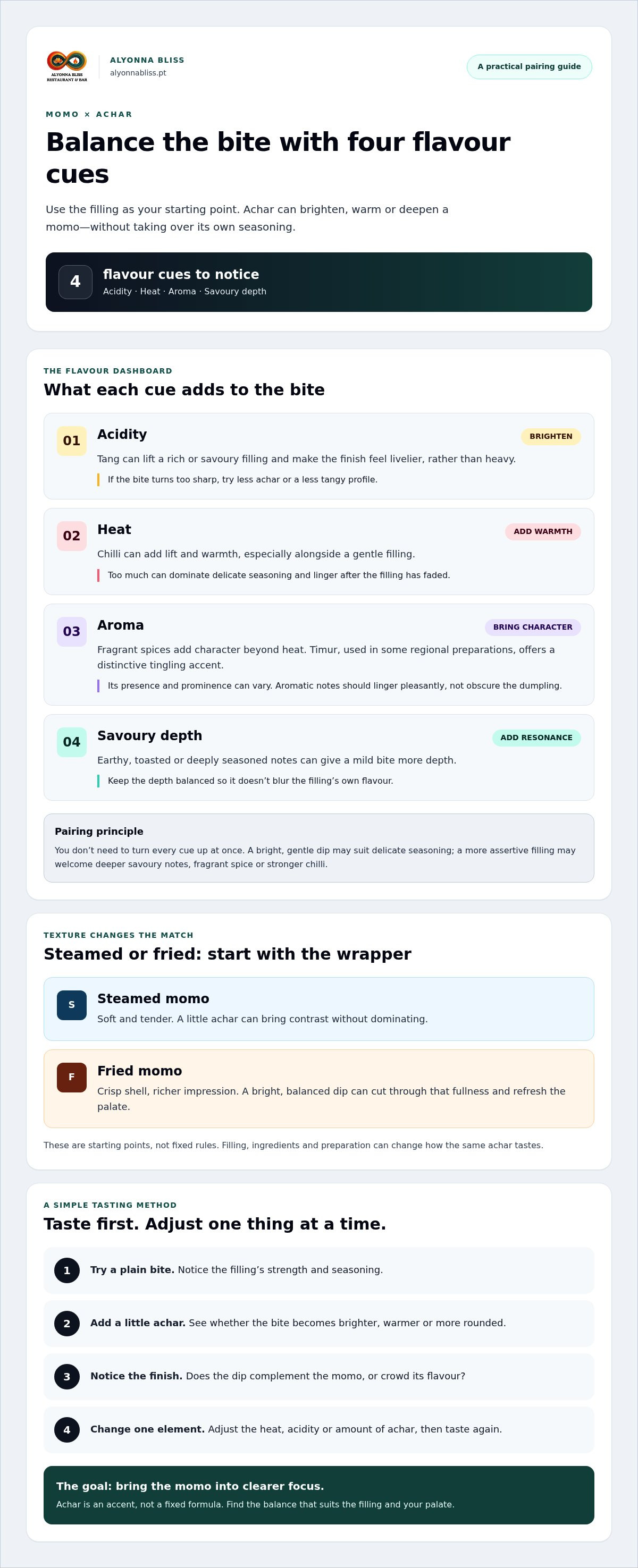
A useful momo achar pairing guide starts with four cues: acidity, heat, aroma and savoury depth. Each can bring a different part of a dumpling’s flavour into focus, but balance depends on how strongly each quality comes through and what the filling already offers. Taste first, then consider what might make the bite brighter, warmer or more rounded.
- Acidity: A tangy note can brighten a rich or savoury bite and make its finish feel livelier rather than heavy.
- Heat: Chilli can add warmth and lift, but too much may dominate delicate seasoning and linger after the filling has faded.
- Aroma: Fragrant spices bring character beyond heat. Timur, used in some regional preparations, offers a distinctive tingling accent; its presence and prominence can vary.
- Savoury depth: Earthy, toasted or deeply seasoned notes can give a mild bite more resonance, provided they don’t blur the filling’s own flavour.
The best match is rarely about turning every cue up at once. A bright, gentle dip may suit a delicately seasoned dumpling, while a more assertive filling can stand beside bolder spice or aromatic notes. Treat these as tasting ideas, not fixed pairings: fillings differ, and the same condiment can taste more intense in one bite than another. Think of each flavour as an adjustment you can notice and explore.
Match sourness, heat, and aroma to the filling
Begin by noticing the filling’s strength. If its seasoning is subtle, try a fresh, tangy profile with heat in the background so finer flavours remain clear. A fuller, more assertive filling may welcome deeper savoury notes, fragrant spice or stronger chilli. Achar styles vary, so use these contrasts as tasting ideas rather than rules about what belongs together.
Pay attention to the finish. If sourness makes the bite too sharp, try less achar or a less tangy profile. If chilli takes over, choose a gentler amount or flavour. Aromatic accents should linger pleasantly, not obscure the dumpling. Change one quality at a time to understand why a pairing works, or doesn’t.
Use texture and temperature to complete the bite
Flavour is only part of the pairing. A smooth, spoonable achar coats the dumpling evenly, while a finely chopped or textured style adds small bursts of contrast. Warm momo with a fresh-tasting condiment create another shift, from soft warmth to bright, lively flavour. Neither sauce consistency nor serving temperature has to follow a strict rule; notice what feels comfortable with each bite.
For a simple test, try a small dip and see whether it clings, runs or adds texture. Then decide whether that suits the momo. If you’d like to enjoy handmade momo around the table, dine in at Alyonna Bliss and explore the steamed or fried styles.
Steamed or Fried Momo: Choose Achar by Texture and Intensity
The wrapper changes how a momo meets its dip. Steamed momo have a soft, tender exterior, so a little achar can bring contrast without dominating. Fried momo offer a crisp shell and a richer impression; a bright, balanced dip can cut through that fullness and refresh the palate. These are useful starting points, not fixed rules. Let texture guide your first taste, then account for the filling and your own preferences.
Use the table as a first tasting map. “Useful qualities” describes what you might look for in an achar, not a prescribed recipe or a single correct match.
| Momo style | Texture | Useful achar qualities | Why try it |
|---|---|---|---|
| Steamed | Soft wrapper, tender bite | Gentle tang or fragrant aroma | Adds contrast while allowing the filling to remain noticeable |
| Fried | Crisp exterior, fuller impression | Bright acidity or moderate heat | Offers a lively counterpoint to the crisp, rich-feeling bite |
Pairing ideas for steamed momo
A steamed momo’s tender wrapper yields easily, giving the filling room to come through. As a first taste, try a gently tangy or aromatic achar. Freshness can lift the bite, while softer intensity preserves its quieter details. Take a small dip rather than coating the whole dumpling, so you can notice the filling, wrapper and condiment together before deciding whether you want more contrast.
If the dip’s acidity or fragrance takes over, use less on the next bite. If the momo tastes muted beside it, try a lighter touch or a gentler flavour profile. Achar texture matters too: a smooth dip may spread evenly, while a more textured one offers distinct accents against the soft wrapper.
Pairing ideas for fried momo
Fried momo bring a crisp exterior that gives way to a tender centre. That crunch can make the bite feel richer, so a bright or gently sharp achar is one possible counterpoint. Try a crisp bite with a balanced, tangy dip and notice whether its freshness makes the finish feel lighter. A fragrant profile can complement the contrast without requiring extra chilli.
Adjust the dip’s intensity and the amount you use. A small dab lets the crisp surface stay present; a larger amount makes the achar more prominent and may soften the contrast. If heat masks the filling or sourness feels too sharp, scale back and taste again. If you enjoy bolder flavours, increase gradually until the dumpling still has a voice of its own.
Alyonna Bliss serves handmade momo steamed or fried for dine-in guests, making the difference between soft and crisp a pleasure to explore bite by bite. Let the texture guide your first choice, then follow the balance that keeps you reaching for another.
How to Taste and Adjust Your Momo Achar Pairing
A thoughtful tasting gives each flavour room to speak. Rather than judging a pairing from one heavily dipped bite, notice the dumpling first, then introduce the achar gradually. This makes it easier to tell whether the condiment adds brightness and aroma or masks the filling’s seasoning. The aim isn’t to find a perfect formula, but to make small, clear adjustments until the bite feels balanced to you.
Taste the momo plain, add a small dip of achar, then reassess the balance before adjusting one quality at a time.
- Sample the momo plain. Notice the wrapper’s texture, the filling’s savouriness and any seasoning that lingers.
- Add a modest dip. Taste another bite with just enough achar to register its flavour without covering the dumpling.
- Reassess the whole bite. Ask what stands out first: the filling, the dip’s acidity, its heat or its aroma. Notice whether the finish feels balanced or dominated by one quality.
- Adjust gradually. Add a little more only if the achar complements the momo. If the pairing feels too intense, use less or try a gentler profile.
Start with a small taste before adding more
Begin with the plain dumpling and notice its filling and seasoning before adding anything. Then use a small amount of achar and identify the first flavour that catches your attention. Is it a clean tang, lingering heat or fragrant spice? If the condiment enhances the filling and leaves its character intact, try slightly more on the next bite. A measured taste makes the differences easier to enjoy.
Keep your test consistent. If you’re comparing dips or returning to the same one, taste a similar bite each time and change only the amount of achar. That helps separate the effect of quantity from the condiment’s flavour. The wrapper and filling still matter, so let each bite guide your next one rather than assuming the same amount will suit every momo.
Adjust a pairing that feels too sharp or too hot
If acidity feels sharp or chilli heat takes over, reduce the amount of achar on your next bite. You can also pause briefly or alternate with a plain momo, giving your attention a moment to settle before tasting again. These simple changes don’t alter the condiment itself; they help you notice how its flavours meet the dumpling.
Change one quality at a time. If heat is the issue, use less achar before deciding whether the acidity also needs adjusting. If the dip tastes too sour, reduce its amount and see whether the filling comes forward. Small changes help you find balance without losing the pleasure of discovery. Put this tasting approach into practice over handmade steamed or fried momo at Alyonna Bliss.
Bring the Momo Achar Pairing to the Table
Pairing isn’t a test with one correct answer. It’s a way to notice how a tender wrapper, savoury filling and lively condiment meet in the same bite. These ideas are here to help you pay attention, not prescribe what everyone should enjoy. Let curiosity lead: one person may love a bright, tangy contrast, while another prefers a gentler accent that lets the filling take centre stage.
A shared table makes that discovery feel natural. Taste at an unhurried pace, compare impressions and let different preferences sit side by side. The conversation can be as simple as noticing which flavour lingers or which texture makes you want another bite.
Make tasting a shared, sensory experience
Notice the wrapper first: is it soft and yielding, or crisp at the edge? Then consider the filling’s savoury depth, the aroma as you bring the momo closer, and the way the condiment changes the finish. These small observations give you more to share than a verdict of “good” or “bad.” They help explain what you enjoy, whether it’s freshness, warmth, tang or a quieter balance.
Different reactions are part of the pleasure. One diner might find the same dip pleasantly lively, while another prefers less intensity. Compare what stands out, then try another bite with a different amount of achar if you wish. There’s no need to settle on a winner; the aim is to discover what suits each palate and enjoy the conversation around the food.
Enjoy handmade momo at Alyonna Bliss
Alyonna Bliss serves handmade momo in steamed and fried styles as part of its dine-in Indian and Nepali restaurant experience. Their contrasting textures offer a lovely way to explore the balance described here: the softness of a steamed bite or the crispness of a fried one. Focus on each dumpling’s wrapper, filling and aroma, and let your own impressions guide the meal.
Bring your curiosity to the table, share a few thoughts and enjoy tasting together. There’s no need to overthink every bite; a little attention can turn a familiar meal into a small discovery. For a dine-in meal featuring handmade steamed or fried momo, enjoy momo at Alyonna Bliss.
Let Your Next Bite Be a Discovery
A good pairing doesn’t need a final verdict. Let your preferences shift with the mood, the company and the bite in front of you. Some days, you may want a vivid contrast; other times, a quieter balance feels right. Use this momo achar pairing guide to stay curious, trust your palate and enjoy the small surprises that come from tasting with care.
Food is especially generous when there’s someone beside you to share it. Trade impressions, laugh over different favourites and let the table become part of the pleasure. When you’re ready to make your next tasting a meal, join us for handmade momo at Alyonna Bliss, where traditional Nepali home cooking is served in a dine-in setting.
Bring your curiosity, take your time and follow the flavours you love. The most satisfying pairing is the one that makes you eager for another bite.
Frequently Asked Questions
Is momo achar the same as chutney?
Not exactly, although the words can overlap in everyday use. Achar generally refers to a seasoned condiment or pickle, while chutney often describes a sauce or relish served alongside food. For momo, people may use “achar” for a dipping sauce and also call it chutney. The name alone doesn’t tell you its flavour or texture, so notice whether it’s tangy, spicy, smooth or chunky.
Is momo achar always made with tomatoes?
No, tomato is common, but it isn’t the only base. Momo accompaniments can vary, with some versions drawing richness from sesame or peanuts, or a sweet-sour character from ingredients such as tamarind. The flavour and consistency depend on the cook and culinary tradition. When choosing a dip, consider the qualities you enjoy rather than assuming every achar will taste tomato-forward.
Can I serve more than one achar with momo?
Yes. Offering two contrasting dips can make a shared plate more inviting, especially if diners enjoy different levels of intensity. For instance, set out one milder option and one with more pronounced tang or heat, each in its own small bowl. Try them separately first so their flavours stay distinct, then let everyone choose whether to stick with one or alternate between them.
How should I store leftover momo achar safely?
Transfer leftover achar to a clean, covered container and refrigerate it promptly. Keep it separate from the momo, and don’t return sauce from individual dipping bowls to the stored portion. Use a clean spoon whenever you serve more. Storage life depends on the ingredients and preparation, so follow a trusted food-safety source for specific guidance and discard anything that looks or smells unusual.
Can momo achar be prepared ahead of serving?
Often, yes, though the best timing depends on the ingredients. Prepare it in advance, keep it covered and chilled, then stir and taste it before serving. Chilling can soften some flavours, while fresh ingredients may lose their brightness over time. If it tastes less lively at the table, adjust the seasoning or add fresh aromatic elements if they suit the recipe.
What drink can I serve with spicy momo and achar?
A cooling, lightly flavoured drink can sit comfortably alongside a spicy meal. Try plain water, a milk-based drink or a mild tea, choosing what suits the group and the level of heat on the table. A simple drink also leaves room for the momo and achar’s aromas to come through. If serving several options, keep their flavours distinct so they don’t compete with the meal.


