
The most beautiful room isn’t always the right choice for your event. A private event venue with catering should bring together good food, a welcoming space and practical details that help guests feel at ease from arrival to the last course.
Atmosphere matters, but so do the details behind the meal. Venues may charge a fixed hire fee, set a minimum spend on food and drinks, or offer a tailored package. Their food and drinks policies also shape the experience, so compare these details early.
This guide explains how to compare menus, costs, capacity and equipment before booking. You’ll also learn how to match a venue to your gathering, whether you’re planning a relaxed meal or a formal event. These essentials help you choose a space where the setting and food suit the occasion.
Key Takeaways
- Compare menu choices and drinks policies to understand how catering will shape the gathering.
- Match the venue’s available equipment and layout to the practical needs of your event.
- Choose a space whose capacity and atmosphere suit both your guest list and event format.
- Review deposit, cancellation, and payment terms alongside the venue’s pricing structure before booking.
Catering options
When searching for a private event venue with catering in Portugal, compare the menu, drinks policy and service style together. A restaurant private room, hotel event space or historic venue may handle food differently, so the setting alone won’t tell you what’s included.
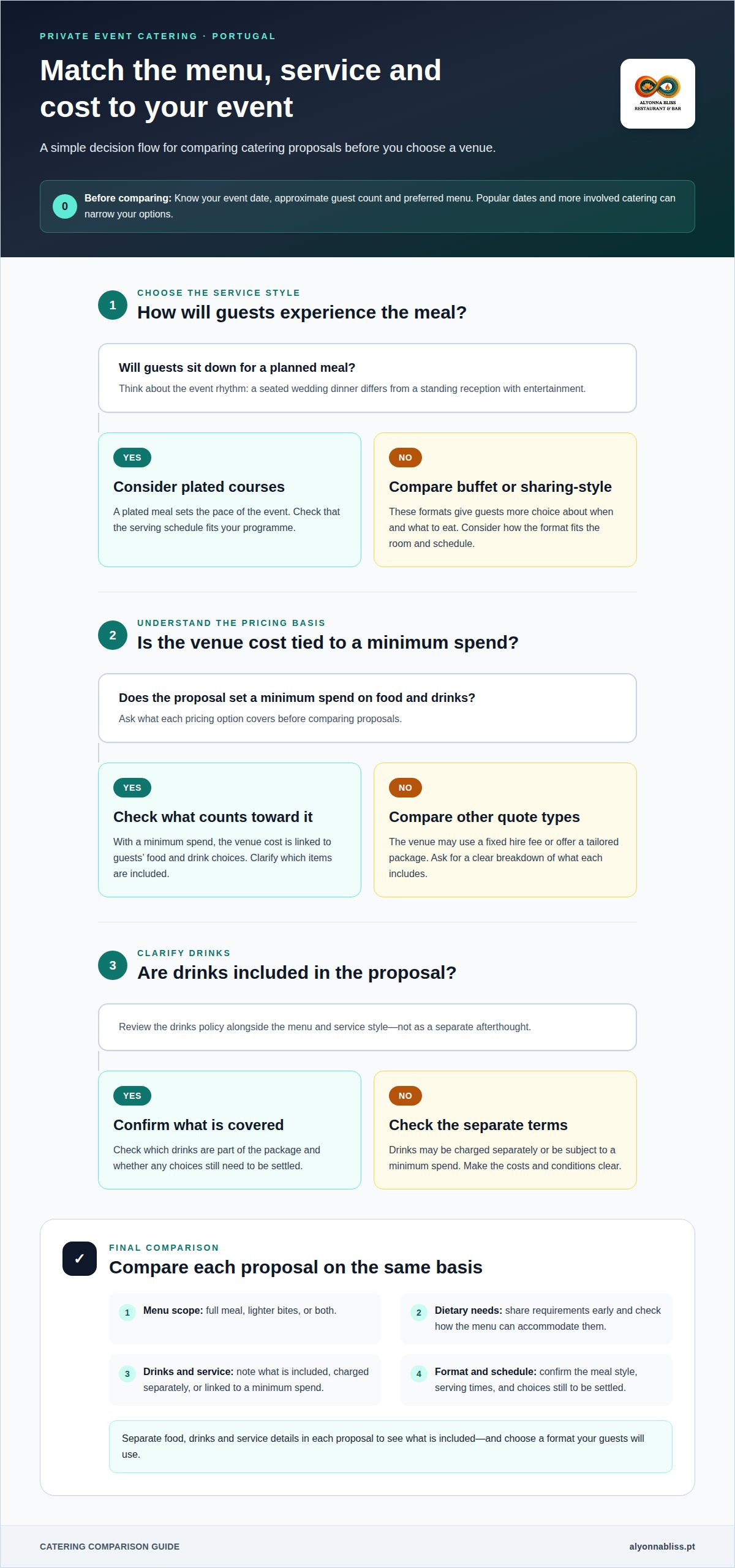
Venues may charge a fixed hire fee, set a minimum spend on food and drinks, or offer a tailored package. Ask what each option covers. With a minimum spend, for example, the venue cost is linked to your guests’ food and drink choices.
Match the meal format to your celebration. A seated wedding dinner has a different rhythm from a standing reception with entertainment. Plated courses set the pace, while buffet or sharing-style service gives guests more choice about when and what to eat. Consider how each format fits the room and schedule.
- Compare menu scope: Note whether the proposal covers a full meal, lighter bites, or both.
- Review drinks: Clarify whether drinks are part of the package, charged separately, or subject to a minimum spend.
- Plan dietary needs: Share requirements early and see how the proposed menu can accommodate them.
There’s no single booking lead time that suits every venue. Start once you know the event date, approximate guest count and preferred menu. Popular dates and more involved catering can narrow your options, so deciding early gives you more time to compare.
Compare proposals on the same basis before committing. Separate food, drinks and service details to see what each package includes. Confirm the menu format, serving schedule and any choices still to be settled. A clear comparison helps you choose catering that suits the occasion, rather than paying for a format your guests won’t use.
Event infrastructure and equipment
A room’s layout matters as much as its appearance. For a presentation followed by dinner, guests may need clear sightlines, room to move between seating and dining, and a quiet place to talk. Picture the event in stages: arrival, presentation, meal and departure. The furniture and layout should support each transition without crowding tables or blocking access.
Make a practical equipment list before comparing spaces. A microphone and speakers can support speeches; a projector and screen can suit presentations; and good lighting helps guests read menus and move around comfortably. Don’t assume every venue provides these items. Ask what the venue supplies and sets up, and what you would need to arrange separately.
- Sound: Match microphones and speakers to speeches, background music or entertainment. Consider where guests will sit and whether conversation should remain easy during dinner.
- Display: For slides or a video, identify the screen location and how presenters connect their device.
- Power: Map outlets against the planned positions of laptops, lighting and other equipment.
- Furniture: Compare the table layout for a seated meal with the open floor space needed for mingling.
Walk through the guest experience, from entrance to table. A narrow route between a presentation area and dinner seating, for example, can interrupt service and conversation. A seating plan can show whether guests will have clear views and staff can move through the room comfortably. Include accessibility needs in this review.
Put each equipment detail in writing alongside its setup and timing. That makes it easier to distinguish what the venue provides from what needs arranging elsewhere, without relying on assumptions. If food is central to your gathering, explore event details as you shape the occasion.
Guest capacity and event type
Choose a venue around your guest list and event format, not its maximum capacity alone. A seated dinner needs room for tables, service and comfortable movement. A standing reception uses space differently, while a corporate conference may need distinct areas for attendees and presentations. In Portugal, ask how the stated capacity changes between these layouts.
Conferences and congresses can be large-scale events with hundreds of attendees, according to Venuesin. That requires a different venue plan from a family celebration. A room that feels lively at dinner may feel sparse during a talk. Picture your guests in the space rather than relying only on its stated capacity.
Build your estimate around everyone who will attend. Include hosts, speakers, performers and event staff as well as invited guests. Then consider the event’s flow: a seated meal keeps people in one arrangement, while networking or entertainment needs room for guests to circulate. A wedding with speeches and dinner, for example, needs a layout that supports both.
- Set the format: Decide whether guests will sit, stand, or move between activities.
- Map attendance: Count invitees and essential event participants, then use a realistic attendance estimate.
- Review the layout: Consider seating, circulation and how guests will enter and leave the event space.
- Plan for outdoors: For an outdoor event, consider how the gathering would work if conditions change, including whether an indoor option is available.
Match the venue’s atmosphere to the occasion, too. A formal corporate gathering may call for a focused setting; a relaxed celebration may suit a more social arrangement. For an outdoor Portugal event, the season and setting can influence guest comfort and the timing of the meal. A thoughtful capacity plan helps the event feel welcoming, not cramped or empty.
What are the venue’s deposit, cancellation, and payment policies?
Before reserving a venue, understand how the booking is confirmed. A deposit may secure the date, but the agreement should explain its amount, due date and how it counts towards the total charge. It should also state accepted payment methods and when the remaining balance is due. These details help you plan other event expenses.
Read the cancellation terms alongside the payment schedule. Find out what happens if you cancel, change the date or reduce the guest count. A wedding postponed after invitations go out, for example, may affect catering plans and venue arrangements. The written terms should explain applicable deadlines, refund conditions and charges.
- Deposit: Record the amount, payment deadline, and whether it counts toward the final balance.
- Cancellation: Note the required notice period and how any refund or retained payment is handled.
- Changes: Understand how a revised date, guest count, or event format affects the agreement.
- Final payment: Confirm the balance deadline, payment method, and any stated conditions.
Before paying, compare the written agreement with the original proposal. If the proposal describes a meal package, for instance, the contract should explain how attendance changes affect the final amount. Keep the booking confirmation, payment receipts and agreed updates together. A clear record helps everyone refer to the same terms if plans change.
Ask for unclear wording to be explained before you commit, especially around cancellations and rescheduling. Read the full payment timeline, not just the deposit clause: a low initial payment may still be followed by an earlier balance deadline. Keep the signed terms accessible to the event coordinator so decisions follow the same agreement.
Ready to plan an occasion around a shared meal? Explore event options and consider the arrangements that suit your gathering.
Alyonna Bliss: events
Alyonna Bliss hosts private gatherings where food brings people together. It’s a natural fit when you want South Asian flavours at the heart of the occasion.
For a midday gathering, the 3-Course Lunch Deal gives the meal a clear structure. Tandoor Flatbread can add a warm, freshly prepared element to the table. Choose options that suit the event’s pace, whether guests are sharing a relaxed meal or gathering around a planned lunch.
Choose Alyonna Bliss for a gathering centred on a welcoming dining experience rather than a formal conference setup. The menu-led setting can shape a celebration around conversation, flavour and time together.
Contact Alyonna Bliss to discuss your event.
Let the meal shape your next gathering
Choose a private event venue with catering by picturing the moment you want guests to share. A table can become the heart of a celebration: warm bread passed around, familiar flavours sparking conversation, and a meal that gives everyone time to connect.
Alyonna Bliss offers events, with menu choices including Momo, Tandoor Flatbread and its 3-Course Lunch Deal. These options can help you imagine a gathering centred on a shared meal, whether you’re planning a relaxed lunch or bringing people together over South Asian flavours. Let the food guide the atmosphere, rather than treating it as a final detail.
As you move from planning to choosing, focus on the experience you want to create for your guests. A thoughtful menu can make the occasion feel personal, generous and full of life. Contact Alyonna Bliss about your event, and take the next step toward bringing everyone around the table.
Frequently Asked Questions
What should you compare before you book?
Compare the full event experience, not just the room or menu. Check whether the schedule allows for arrival, speeches, meal service and departure, and whether guests can move between these moments comfortably. Compare how clearly each proposal describes inclusions and extra charges, too. A written, side-by-side comparison can reveal differences that a room photo or brief menu summary won’t show.
What types of private event venues offer in-house catering?
Restaurants, hotels and dedicated event venues may offer in-house catering for private gatherings. The right setting depends on the occasion: a restaurant suits a meal-centred celebration, while a hotel or event space may suit a programme with several activities. Compare the catering arrangement in each specific offer, since venue type alone doesn’t establish what food service is included.
How much does a private event venue with catering cost per person?
There’s no single per-person rate for Lisbon venues. Rental may use a fixed daily rate, a minimum spend on food and drinks, or a tailored package. To compare on a per-person basis, divide the total expected spend by the planned guest count, then account for what the package includes. Menu choices and drinks can change the calculation, so compare equivalent offerings.
What is typically included in venue catering packages?
A catering package may combine food service with some drinks, but inclusions vary. A proposal might describe a set meal, buffet or light refreshments, along with service arrangements. Look for details such as the number of courses, drink selection, serving style, equipment and staffing. Count an item as included only when the terms say so.
How do catering menus and dietary accommodations compare across venues?
Compare menus by variety, meal format and how clearly dishes are described. A menu with several courses offers a different experience from shared platters or a buffet. For dietary needs, look for specific ingredient information and suitable alternatives rather than relying on broad labels. Clear descriptions help guests choose confidently and hosts plan a menu that welcomes everyone.
What is the minimum guest count or spending requirement?
Minimum requirements depend on the venue and booking arrangement. Some offers set a minimum spend on food and drinks; others specify a minimum guest count or use a tailored package. These terms affect the budget differently: a spend threshold is tied to purchases, while an attendance minimum is tied to guest numbers. Compare the stated condition with your expected turnout before choosing.


