
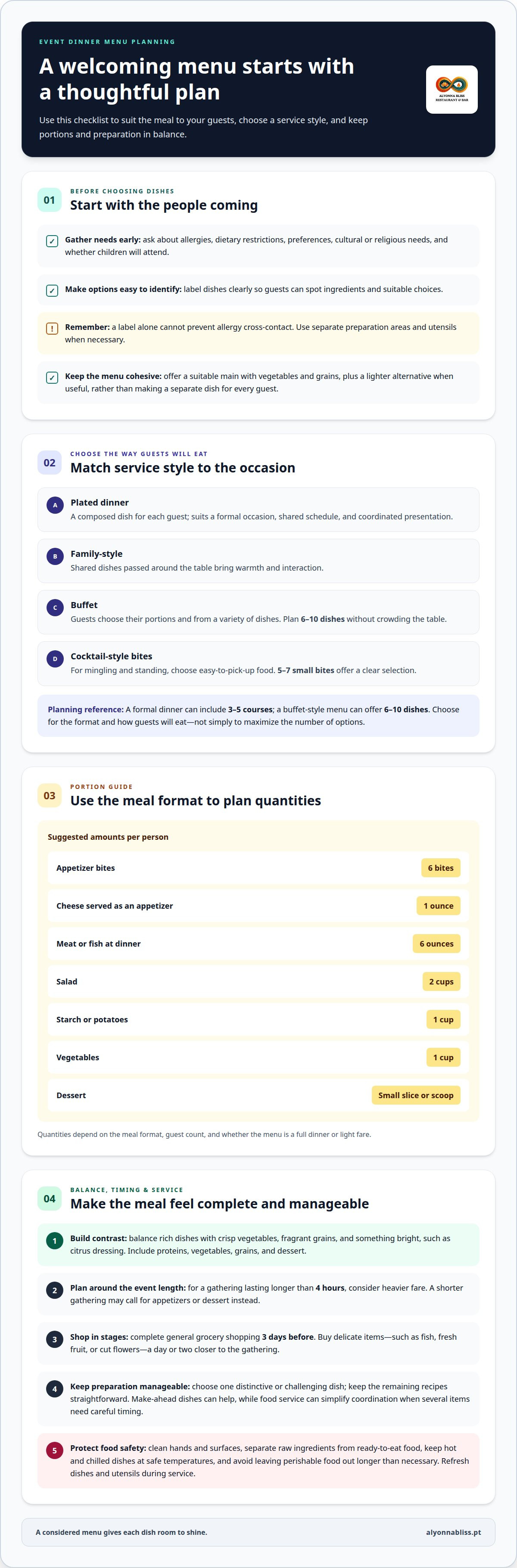
A formal event dinner can include 3-5 courses, while a buffet-style menu can offer 6-10 dishes. The right number depends on the format and the way guests will eat, not on filling the table with as many choices as possible. A thoughtful menu gives each dish room to shine.
It’s easy to assume that more options make every guest happier. In practice, a balanced selection is easier to enjoy and serve, especially when it accommodates different preferences without losing its sense of occasion. Learning how to plan an event dinner menu means choosing a format, considering dietary needs, and pairing courses that move naturally from light and fresh to rich and satisfying.
This guide covers the key decisions, from accommodating guest preferences to balancing flavours, textures, and colours. You’ll also find practical ways to shape a seated dinner, buffet, or spread of small bites into a meal that feels generous, cohesive, and welcoming.
Key Takeaways
- Gather guests’ dietary needs and cultural preferences early, then make suitable choices easy to identify on the menu.
- Choose seated dining, buffet service or finger foods to suit the event’s atmosphere and how guests will move through it.
- Build contrast into the menu with a thoughtful mix of rich and lighter dishes, varied textures and colourful ingredients.
- Shape formal courses so each dish leads naturally to the next, with drinks that complement the meal’s flavours.
1. Considering guests’ dietary restrictions, allergies and cultural preferences
Before choosing a main course, gather each guest’s dietary restrictions, allergies, preferences, and relevant cultural or religious needs. Ask about vegetarian or vegan choices, gluten-free requirements, ingredients to avoid, and whether children will attend. Then consider the guest count and season: a seasonal vegetable centrepiece can provide a vegetarian option while keeping the menu focused on fresh ingredients. Learning how to plan an event dinner menu starts with these details.
Build one inclusive menu rather than creating a separate dish for every person. Pair a suitable main with vegetables and grains, for example, and offer a lighter alternative for guests who prefer it. Label dishes clearly so guests can identify ingredients and dietary options. For allergies, use separate preparation areas and utensils when necessary to help prevent cross-contamination. A label alone cannot prevent contact during preparation.
Food quantities depend on the meal format, guest count, and whether the menu is a full dinner or light fare. As a reference point, plan six appetizer bites per person; if serving cheese as an appetizer, allow one ounce per person. For dinner, suggested portions are six ounces of meat or fish, two cups of salad, one cup of starch or potatoes, and one cup of vegetables per person. Finish with a small slice or scoop of dessert.
Seasonal ingredients can bring freshness and help shape a budget-conscious menu. Choose what’s in season, then balance the main course with vegetables, grains, and a lighter dish rather than adding costly complexity. For an event lasting longer than 4 hours, consider heavier fare; a shorter gathering may call for appetizers or dessert instead. These choices help clarify how to plan an event dinner menu around the occasion.
Common mistakes include collecting dietary details too late, leaving dishes unlabeled, and planning a menu around one rich main without suitable alternatives. Gather preferences before selecting dishes, keep the menu cohesive, and choose sides that can be prepared ahead. These steps make the meal easier to serve and more welcoming to guests.
2. Choosing between a sit-down dinner, buffet or finger foods
Match the service style to the event, guest preferences, and how people will spend the evening. A formal celebration often suits a seated meal, while a casual gathering with guests mingling may feel more natural with a buffet or easy-to-hold appetizers. For a memorable menu, consider the setting, pace, and food service together.
Plated service creates a composed experience, with each guest receiving a prepared dish. It works well when the event calls for a shared schedule and coordinated presentation. Family-style service places dishes on the table for guests to pass around, adding warmth and interaction. A buffet offers variety and lets guests choose portions, which can accommodate different appetites and preferences.
For a buffet, plan 6-10 dishes to offer variety without crowding the table. For a cocktail-style gathering, 5-7 small bites give guests a clear selection while they move and talk. If people will be standing with drinks, choose food that’s easy to pick up and eat. A seated dinner can suit a formal occasion; small plates or finger foods can better serve a social, free-flowing celebration.
Keep recipes simple enough to prepare and serve consistently. Choose one distinctive dish, then balance it with familiar flavours and manageable sides. For example, serve a richly seasoned main alongside a fresh salad and mild grain dish. Clear labels also help guests identify options that suit their allergies or dietary preferences.
Food safety begins with clean hands and surfaces, separating raw ingredients from ready-to-eat foods, and keeping hot and chilled dishes at safe temperatures. Plan the serving sequence so perishable food isn’t left out longer than necessary. Assign someone to refresh dishes and utensils during service.
For a gathering built around shared plates and conversation, explore event dining options as one possible way to shape the occasion.
3. Balancing flavours, textures, colours and food groups
Build contrast across the meal, not just within each dish. Pair a rich, slow-cooked main with crisp vegetables, fragrant grains, and something bright, such as citrus dressing. Include proteins, vegetables, grains, and dessert, balancing hearty portions with lighter choices. A menu can feel complete without complicated recipes or a crowded buffet.
For a seasonal touch, choose ingredients that are fresh around the event date, then let their flavours guide the menu. Organise shopping around preparation: complete general grocery shopping 3 days before the gathering, then buy delicate items such as fish, fresh fruit, or cut flowers a day or two closer. This timing helps keep ingredients fresh while leaving space for preparation.
Decide whether cooking at home or using food service best fits the menu’s workload. Preparing food yourself works well when dishes can be made ahead, such as a grain salad or dessert. If several items need careful timing, professional food service can simplify coordination. Either way, plan only one challenging dish and keep the remaining recipes straightforward to prepare and serve.
A food bar can make a casual gathering feel interactive without multiplying the main dishes. For a taco-style station, arrange the main filling beside tortillas, chopped vegetables, herbs, sauces, and clearly separated toppings. Guests can customise each plate while the host keeps the core menu cohesive. Place drinks nearby so guests can serve themselves without interrupting the meal.
Presentation shapes the first impression. Arrange dishes by colour and height, add fresh herbs for a vivid finish, and choose serving pieces that suit the occasion. A relaxed buffet might use bowls and platters, for example, while a formal table benefits from coordinated place settings. Keep labels close to each dish and place serving utensils beside them.
Before finalising the plan, picture the meal from the first sip of a drink to dessert. Check that each course offers a different texture or flavour and that the table setting supports easy serving. A seasonal vegetable, warm grain, and bright sauce can turn familiar ingredients into a thoughtful shared meal.
4. Formal dinner courses and dish pairings
A formal dinner menu can include 3-5 courses. Choose a sequence that builds gently: a light opening, a more substantial main, then a modest dessert. The clear takeaway is to give every course a purpose, vary flavour and texture, and keep portions in proportion to the full meal.
Start with an appetizer that wakes the palate rather than filling it. A crisp salad with herbs and citrus, for example, brings freshness before a slow-cooked main. Follow with a protein, vegetables, and a grain, balancing savoury depth with brighter or milder elements. Finish with fruit or a delicate dessert if the earlier courses are rich.
For a longer formal dinner, a soup or small intermediate course can create a graceful pause between starter and main. Keep its flavour distinct from the dishes around it. A creamy soup before a rich roast may feel heavy; a clear vegetable soup or small seasonal salad can maintain balance. Remember guests who prefer vegetarian choices or lighter flavours. Include a suitable alternative in the sequence, not as an afterthought.
Consider cooking and serving when pairing dishes. Choose items that can be prepared or finished in a coordinated way, so one course doesn’t demand attention while another waits. A menu built around a single challenging preparation can make timing harder, so keep the other courses straightforward. For a seated dinner, allow guests time to enjoy each plate and conversation between courses.
Drinks can echo or contrast with the food. A crisp non-alcoholic option can lift a rich or spicy dish, while a softer drink can complement delicate flavours. Offer choices that suit the menu and the guests, including non-alcoholic drinks alongside wine or cocktails.
Before settling the menu, read it from first course to last. Check that flavours progress, textures vary, and every dish contributes to the occasion. For a dinner shaped around thoughtful course pairings, plan an event dinner.
Alyonna Bliss: events
Alyonna Bliss welcomes gatherings where shared food brings people together around the table. Its menu includes Momo and Tandoor Flatbread, giving guests distinct flavours and textures to enjoy as part of the occasion. These dishes can help shape a relaxed meal with a South Asian touch.
If you’re planning an event dinner and want a restaurant setting with these menu options, Alyonna Bliss offers a welcoming place to gather. Consider the atmosphere and dishes that will suit your occasion, then reserve your table online via Damesa, by phone, by WhatsApp, or through the ‘Book Online’ button.
Give your gathering a table worth lingering around
The best menu leaves room for more than food: it gives guests a reason to settle in, share a taste, and enjoy one another’s company. As you decide how to plan an event dinner menu, let the mood of the gathering guide your final choices, from a relaxed spread to a more considered meal.
Alyonna Bliss offers events, with Momo and Tandoor Flatbread among the menu options. Its 3-Course Lunch Deal is another choice for a midday occasion. These offerings bring distinct flavours to the table, whether you’re planning a dinner gathering or a lunch with people you’d like to welcome well.
Bring your event plans and preferred atmosphere to the next step. Contact Alyonna Bliss about your event, and start shaping a warm, memorable gathering around the table.
Frequently Asked Questions
How many items should be on a menu?
For a formal dinner, plan 3-5 courses; a buffet can offer 6-10 dishes, while a cocktail menu can feature 5-7 small bites. Treat these as format-specific guides, not targets to combine. For example, a buffet with a main, sides, and dessert doesn’t also need a separate course sequence. Choose enough variety for the occasion without making service or guest choices feel overwhelming.
How do you accommodate dietary restrictions, allergies, and food preferences?
Ask guests which ingredients they must avoid, what alternatives they prefer, and whether a restriction involves an allergy or personal preference. Use that information to shape dishes and identify suitable options. For example, a vegetarian main can be part of the shared menu rather than an improvised substitute. Keep ingredient information accurate, and communicate allergy needs clearly to anyone preparing or serving the meal.
How do plated, buffet, family-style, and cocktail-style dinners compare?
Plated service gives each guest a prepared portion and a coordinated dining pace. Buffet service gives guests control over selection and portions, while family-style service invites them to pass shared platters around the table. Cocktail-style dining prioritises movement and conversation, with food designed to be eaten easily while standing. Choose the format based on whether the gathering centres on seated dining, self-service, sharing, or mingling.
How do seasonality and local ingredients affect event dinner menu planning?
Seasonal ingredients can guide the menu’s flavour, colour, and character. Start with a fruit or vegetable suited to the event season, then choose dishes that complement it rather than forcing it into every course. Local ingredients can also give a menu a sense of place. For example, feature a seasonal vegetable in a side dish and echo its freshness with herbs or a bright dressing.
How do you coordinate the menu with the venue, caterer, schedule, and service staff?
Share the service format, menu sequence, guest dietary needs, and event schedule with the people preparing and serving the meal. Then match dishes to the venue’s kitchen and serving arrangements: a meal requiring last-minute cooking needs different coordination from food prepared ahead. Agree on who handles each course, when it should be served, and how special-diet dishes will be identified at the table.


