

A Nepali thali isn’t simply an Indian thali with different spices. These traditional Nepali thali dishes explained here show a meal built around rice, lentils, curry, greens and achar, arranged so each bite offers a different balance of warmth, freshness and tang.
If you picture a platter of small bowls around a mound of rice, you have the right starting point. The pleasure comes from how the parts work together: dal softens the curry’s spice, while a little pickle brightens each mouthful.
This guide explains the core dishes and familiar sides, then compares Nepali and Indian thalis. You’ll learn how combinations vary, what gives the meal its distinctive character, and why Nepali flavours are often lighter and less creamy, allowing rice, dal and vegetables to come through.
Key Takeaways
- Recognise the foundation of a Nepali thali and how rice, lentils and tarkari create a balanced meal.
- Discover how achar, greens and other sides bring tang, freshness and texture to the plate.
- Understand how Nepali curries and thali combinations differ from those commonly associated with Indian thalis.
- Explore Alyonna Bliss’s Nepali Thakali thali set, served as a platter with dal, rice, chutney and a variety of curries.
What Exactly Is a Nepali Thali?
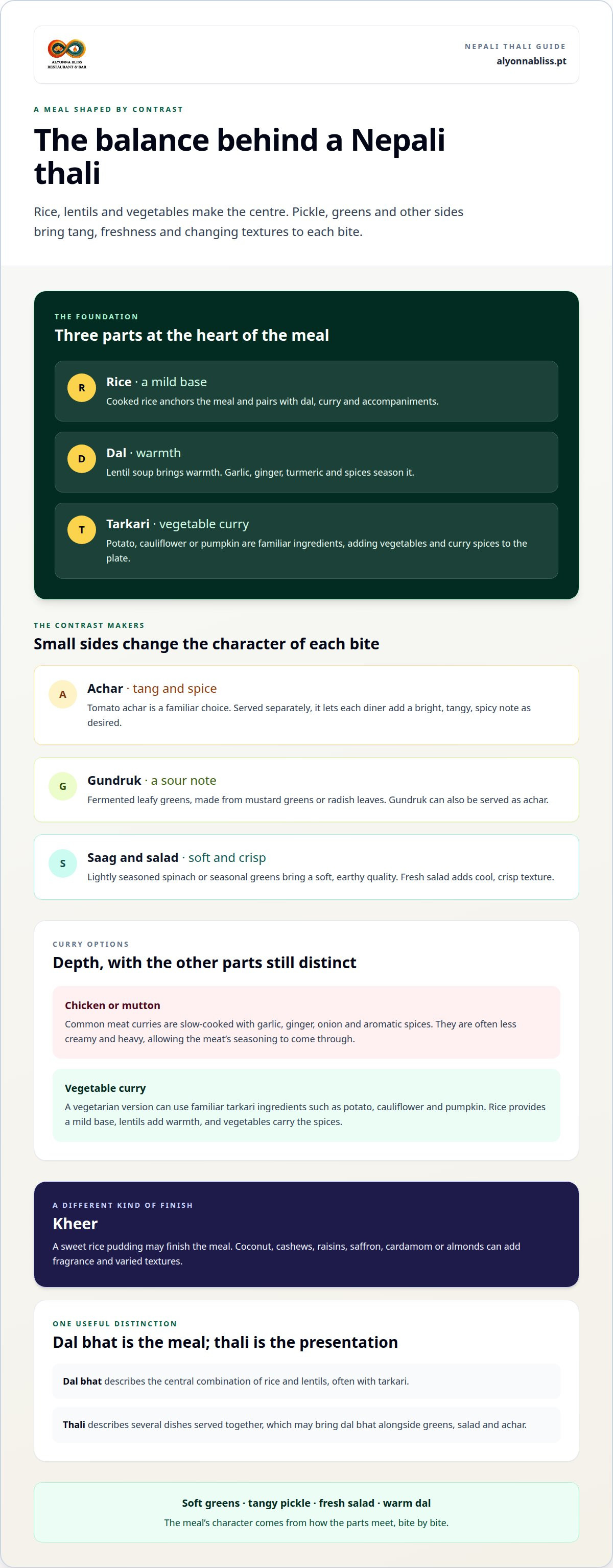
A Nepali thali brings rice, dal, curry and accompaniments together as one meal. Its centre is often dal bhat tarkari: rice, lentils and vegetables.
Dal Bhat and Its Components
Dal bhat pairs cooked rice with lentil soup, often served alongside tarkari, or vegetable curry. Lentils simmered with garlic, ginger, turmeric and spices give the dal warmth. Vegetables may include potato, cauliflower or pumpkin, while tomato achar adds a bright, tangy contrast. Everyday meals often follow this same rice, lentil and vegetable pattern; a restaurant thali presents the components together with additional sides. A version made with rice, lentils and vegetables can be vegan and gluten-free if its ingredients and accompaniments contain no animal products or gluten.
Thali and Dal Bhat Compared
Dal bhat describes the meal’s central combination, while thali describes its presentation, with several dishes served together. This distinction explains why a thali may include dal bhat alongside greens, salad and achar. Prices vary with the ingredients, location and portion. The dishes usually arrive together, and diners can combine rice, dal, curry and a little pickle in each bite. Eating with the right hand is traditional, but cutlery is also acceptable.
Regional Thali Varieties
Regional styles reflect Nepal’s varied food traditions rather than one fixed thali recipe. Thakali thali comes from the Mustang region and offers a regional take on the meal. Newari khaja is a distinct set, commonly pairing beaten rice with lentil soup, buffalo meat and other sides. Madhesh Province includes Maithili cuisine in the east, Tharu cuisine in the west, and Bhojpuri cuisine in the centre and near west. These traditions show how local ingredients and culinary practices shape a platter.
Newari and Standard Thalis
A standard Nepali thali centres on rice, dal and tarkari, with sides such as greens and achar. Newari khaja differs in its combination of dishes, commonly including chiura, or beaten rice, lentil soup, buffalo meat and other accompaniments. Newari cuisine also includes dishes made with different parts of buffalo, such as intestine, stomach and brain. The distinction is useful: “thali” describes a meal served together, while a Newari set reflects a more specific culinary tradition.
Common thali sides, pickles, greens, and dessert
A Nepali thali may bring rice, dal, tarkari, greens, salad and achar together. These sides add contrasting textures and flavours, from tender cooked leaves to sharp tomato pickle.
Achar and Fermented Greens
Achar is a punchy pickle served alongside dal bhat, tarkari and even momo dumplings. Tomato achar is a familiar choice, adding tang and spice in a small, vivid portion. Served separately, it lets diners brighten individual mouthfuls to taste.
Gundruk is fermented leafy greens, made from mustard greens or radish leaves. It can also appear as gundruk achar, adding a distinctive sour note. Since heat often comes from achar served separately, it can sharpen the meal without overpowering the rice, lentils or vegetables.
Greens and Other Accompaniments
Saag means spinach or seasonal greens cooked down with light seasoning. Its soft, earthy character contrasts gently with tart pickle and the fuller flavour of tarkari. A fresh salad may add another crisp element, balancing warm, cooked dishes with cool vegetables.
Each side has its role: greens bring softness, achar adds tang, and salad offers freshness. Combining a little of each with rice and dal changes the texture and flavour from bite to bite.
Thali Sides and Dessert
Kheer is a sweet rice pudding that may finish a Nepali meal. Coconut, cashews, raisins, saffron, cardamom or almonds can garnish it, adding fragrance and varied textures. Its gentle sweetness offers a different finish from savoury dal, greens and pickle.
The exact selection varies, but a thali’s familiar pattern is easy to recognise: rice and dal with curry, greens and achar, sometimes followed by kheer. Together, these dishes create a meal of contrasts, with soft, tangy, fresh and sweet flavours sharing the table.
Meat curry in a Nepali thali
Chicken or mutton curry commonly adds savoury depth to a Nepali thali. Slow cooking with garlic, ginger, onion and aromatic spices develops layered flavour. These curries are often less creamy and heavy, allowing the meat’s seasoning to come through. Rice, dal and vegetables remain distinct alongside the richer curry, creating balance across the plate.
Chicken and mutton are common choices, while some restaurants serve goat or fish. Buffalo also appears occasionally. Each option gives the curry a different character, while aromatic seasoning ties it into the wider meal. A spoonful with rice feels hearty; paired with dal, it adds another savoury note without making every bite taste the same.
A vegetarian version replaces meat curry with vegetable curry. Potato, cauliflower and pumpkin are familiar tarkari ingredients, offering different textures and gentle sweetness. This creates the thali’s central balance without meat: rice provides a mild base, lentils add warmth, and vegetables carry the curry’s spices. The meal’s character comes from how these components meet, not from meat alone.
In everyday Nepali cooking, curry is part of a broader pattern of rice, lentils and seasonal vegetables or meat. A restaurant thali gathers those elements together, often giving curry a clear place among its accompaniments. Mix it with rice for a fuller, spiced bite, or taste it between spoonfuls of dal. Either way, curry adds aroma and depth while the other dishes balance its flavour.
Nepalese thali compared with Indian thali
A Nepali thali often feels lighter, with rice, dal and vegetables clearly distinct. Its flavours let those ingredients come forward rather than relying on creamy, heavy curries. Indian thalis vary widely by region, so there’s no single formula for comparison. Traditional Nepali thali dishes explained alongside Indian examples are easiest to understand through their balance of rice, lentils, vegetables and curry, rather than by assuming every platter tastes alike.
In Nepal, seasonal vegetables and lentils anchor the familiar dal bhat pattern. A Thakali-style meal adds a regional expression, while gundruk, made from fermented leafy greens, brings a tangy note. Mustard oil and Himalayan influences also shape Nepali flavours. These ingredients and traditions give the meal a distinct character, even as Nepalese cuisine shares influences with neighbouring food cultures, including Indian and Tibetan traditions.
Indian thalis are equally varied, reflecting the country’s many regional cuisines. The curries, sides and seasonings on a platter depend on the region and its cooking traditions. Chicken curry, for example, may be one component among several, rather than a definition of the whole meal. To understand traditional Nepali thali dishes in context, compare specific plates: notice whether the curry is creamy or aromatic, and how vegetables, lentils and pickles contribute.
For a simple takeaway, Nepali thali tends to foreground a lighter combination of rice, dal and vegetables; Indian thali can bring a different regional balance of curries and accompaniments. Neither description defines every meal. To taste the Nepali arrangement alongside Indian curry traditions, explore Nepali Thakali thali and Indian curries, with rice, dal, chutney and varied curries offering a direct point of comparison.
Alyonna Bliss: nepali thakali ythali set includes dal rice chutney variety of curries butter and more in a platter.
Alyonna Bliss brings the Nepali thali’s mix of flavours together in its Nepali Thakali thali set, served as a platter with dal, rice, chutney, a variety of curries, butter and more. It’s a natural choice when you want to experience several parts of the meal together rather than choosing a single curry.
For a different taste of the menu, you can also choose a Newari khaja set or momos. Tandoor flatbread offers another accompaniment. Each option gives you a different way to enjoy South Asian dishes, whether you’re curious about Nepali flavours or already know what you’d like.
To enjoy a Nepali Thakali platter or another meal, reserve a table at Alyonna Bliss.
Let your next meal become a discovery
Understanding traditional Nepali thali dishes can shape what you choose next: follow the familiar comfort of rice and lentils, or let an unfamiliar regional flavour lead. A meal becomes a small act of discovery when you notice how each dish changes the next bite and share those impressions around the table.
At Alyonna Bliss, the 3-Course Lunch Deal offers another way to enjoy a meal, with courses bringing a different rhythm to the table. Whether you’re planning a relaxed lunch or considering what to try next, let appetite guide the occasion and curiosity choose the flavours.
Contact Alyonna Bliss today to plan your next meal. There’s always room at the table for something new, and a good dish can turn that first taste into a welcome discovery.
Frequently Asked Questions
Dal Bhat vs Thali Set: What Is the Difference?
Dal bhat names a familiar Nepali meal, while a thali set presents food as a platter of coordinated dishes. On a menu, dal bhat may describe the central meal; a thali set signals a wider selection of accompaniments. Choose the set to sample different flavours in one sitting. For a simpler, rice-centred option, dal bhat is the useful distinction.
What Are the Signature Flavours of Thakali Cooking?
Thakali cooking is known for fragrant, balanced seasoning rather than one defining heat level. Timur, a Himalayan spice, can bring a citrusy, tingling note, while jimbu adds an earthy aroma. Mustard oil is also used in traditional Thakali kitchens. Together, these flavours can make vegetables, lentils and curries vivid without relying on creaminess or overwhelming heat.
What Defines Nepali Cuisine?
Nepali cuisine draws on local ingredients and varied regional traditions, with rice, lentils and seasonal vegetables or meat forming a familiar foundation. Indian and Tibetan influences meet dishes shaped by mountain communities and available crops. Readers looking for traditional Nepali thali dishes explained through ingredients and regional context can use this variety as a guide: Nepali food describes a diverse food culture, not one fixed menu.
What Is Thakali Thali?
Thakali thali is a regional style of Nepali platter associated with the Mustang region. It brings several dishes together, letting diners experience different seasonings and textures in one meal. Thakali cooking has its own identity within Nepal’s broader cuisine; the name points to a regional tradition, not another term for every Nepali thali.
What Should Beginners Try First?
A Nepali Thakali thali is a welcoming first choice if you want to explore several dishes together. It lets you compare flavours and textures across one meal. For a smaller, familiar format, try Momo, Nepali dumplings served steamed or fried with dipping sauce. Traditional Nepali thali dishes explained through a first meal can make unfamiliar ingredients easier to recognise and enjoy.
What does dal bhat taste like?
Dal bhat tastes comforting and gently savoury, with soft rice balancing the earthy flavour of seasoned lentils. Garlic, cumin and turmeric can give the dal warmth and aroma, while a little achar adds sharper contrast. The flavour shifts with each combination, so a bite with pickle tastes brighter than rice and dal eaten together on their own.


