

What if the tangy spoonful beside your rice isn’t one kind of chutney, but a whole spectrum of fresh and fermented flavors? On a Nepali thali, achar is a broad name for pickles and condiments, and not every version is fermented. That distinction is useful when unfamiliar words like gundruk and sinki appear on a menu, and it’s key to understanding the lively character of nepali thali fermented chutneys.
Fresh chutneys and aged pickles are sometimes grouped together, but they’re made differently. Fermentation can develop a deeper tang, distinctive aromas, and textures shaped by time. This guide explains how fermented preparations differ from fresh accompaniments, with examples such as gundruk and sinki, while recognizing that recipes and traditions vary.
These sharp, savoury notes make sense alongside dal, rice, and curries, adding contrast to a generous thali rather than competing with its other flavours. At Alyonna Bliss, the Nepali Thakali thali includes a variety of chutneys. Tasting them with the other components is a welcoming way to explore the balance of a Nepali meal.
Key Takeaways
- Learn why nepali thali fermented chutneys are defined by a fermentation process, not simply by being chopped or ground.
- Notice how fermentation can shape a condiment’s tang, aroma, savoury depth, and texture, with results that vary by preparation.
- Explore how gundruk and sinki differ from freshly prepared chutneys, and why they shouldn’t be treated as interchangeable.
- Use small tastes to compare acidity, heat, aroma, and texture alongside rice, dal, and curry.
- Discover chutney as part of Alyonna Bliss’s Nepali Thakali thali, served with dal, rice, and curries.
What Are Fermented Chutneys in a Nepali Thali?
A fermented chutney is a condiment whose ingredients have changed through fermentation, not simply been chopped, ground, or stirred together. The process can develop tang and aroma over time, while a fresh chutney gets its character from ingredients mixed shortly before serving. This distinction matters because nepali thali fermented chutneys are not one fixed sauce or a label for every accompaniment on the plate.
A fermented chutney is shaped by fermentation, while a fresh chutney is prepared without that transformation and served for its immediate, vibrant flavour. In Nepali food, achar is used broadly for pickles and condiments; the name alone doesn’t tell you whether something is fermented. The Nepali Cuisine and Fermented Condiments overview offers wider context, including achaar as a common accompaniment and gundruk and sinki as fermented, dried greens.
Achar, chutney, and fermentation: what do the terms mean?
Think of achar as a broad category rather than a recipe or fermentation method. Depending on how it is made, it may refer to a fresh condiment or a pickle that has been preserved or fermented. Fresh chutneys can be crushed or blended and served promptly; fermentation involves a period of transformation, so the result may have a deeper sourness and a more developed aroma.
Names and methods aren’t uniform across households or culinary traditions. A condiment’s name may describe its role at the table, its ingredients, or a familiar local preparation, rather than precisely how it was made. A fermented ingredient also doesn’t automatically make every dish containing it a fermented chutney. Gundruk and sinki, for example, are fermented foods used in some Nepali preparations, but they aren’t one recipe that represents every Nepali household.
Why a thali includes small, vivid accompaniments
A chutney is usually a small, flavour-rich part of a thali, not the meal’s central dish. Its role is contrast: acidity can brighten rice and dal, while heat, fragrance, or a different texture can add another note to a mouthful of curry. The effect depends on the particular accompaniment and the other dishes beside it, not on a fixed serving order.
To notice what a condiment contributes, consider each quality separately:
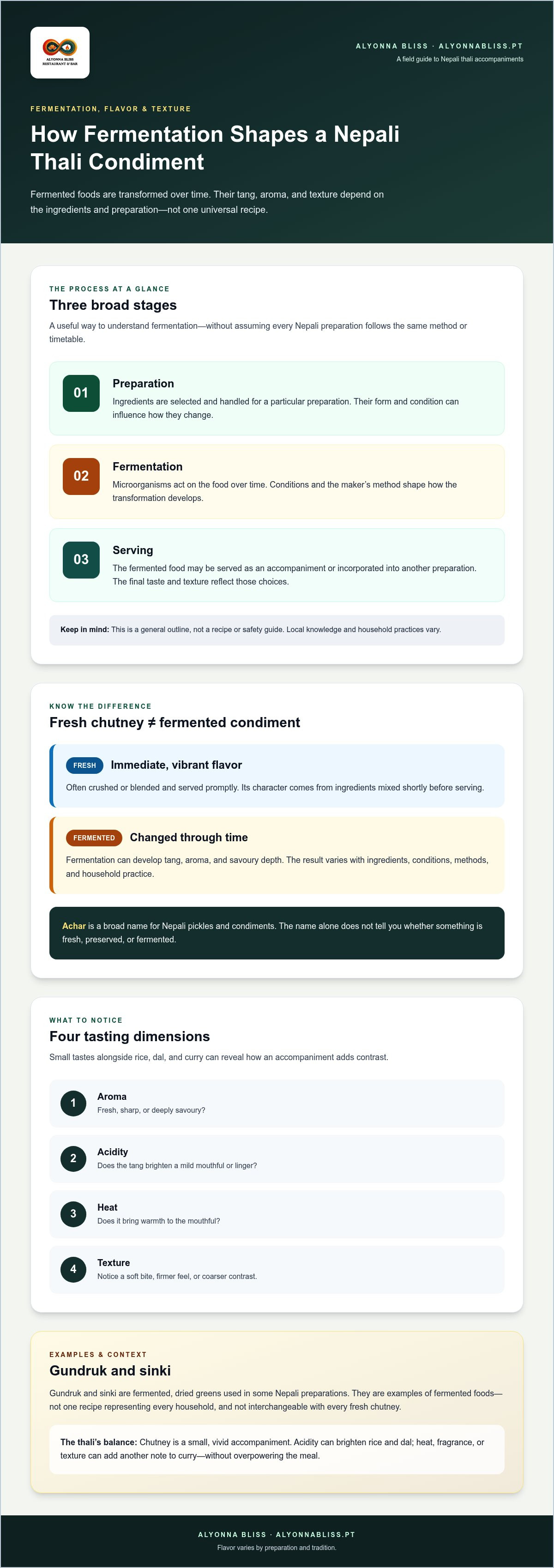
- Aroma: Does it smell fresh, sharp, or deeply savoury?
- Acidity: Does its tang brighten a mild mouthful or linger on the palate?
- Heat and texture: Does it bring warmth, a soft bite, or a coarser contrast?
These small tastes help explain why a thali can feel balanced. The chutney doesn’t need to dominate the rice, dal, or curries. It offers a vivid accent that can make each component easier to appreciate alongside the others.
How Fermentation Shapes Nepali Chutney’s Tang and Aroma
Fermentation is a gradual transformation. Microorganisms naturally present on food or in its surroundings use available sugars and other compounds, creating new substances that can alter taste and smell. In some foods, this activity produces acids that bring a sharper taste; other compounds may add savoury depth or a distinctive aroma. The changes depend on the food and how it is prepared, so no single flavour describes every Nepali condiment.
This differs from the immediate flavour of ingredients freshly crushed or blended together. A fresh mixture can taste bright and direct, while fermentation may round, deepen, or sharpen its character. These are possibilities, not promises: ingredients, conditions, methods, and household practices all influence the result.
From prepared ingredients to a fermented condiment
There isn’t one universal Nepali method or fixed timetable. It’s more useful to think in broad stages: ingredients are prepared, allowed to ferment in a particular way, and then served or used in a dish. The details depend on the food and tradition, so this outline explains the general idea rather than prescribing a recipe.
- Preparation: Ingredients are selected and handled according to the particular preparation. Their form and condition can affect how they change.
- Fermentation: Microorganisms act on the food over time. The surrounding conditions and the maker’s method influence how the process develops.
- Serving: The fermented food may be served as an accompaniment or incorporated into another preparation. Its final taste and texture reflect those choices.
This sequence isn’t a safety guide or a guarantee of a particular outcome. Nor does it mean all Nepali ferments are made alike. Local knowledge and family practice shape techniques, and a general description of fermentation shouldn’t be mistaken for instructions for a specific regional food.
What changes in flavor, aroma, and texture?
A ferment may develop a tang that feels gentle and rounded or bright and pronounced. Alongside acidity, it can gain savoury notes and aromas that weren’t as noticeable in the uncultured ingredients. The balance varies: a sharp scent or sour taste isn’t, by itself, enough to identify how a condiment was prepared.
Texture can change in different ways. Some ingredients may soften as they ferment; others can retain a firmer bite, while drying or later preparation can alter the texture again. Notice how the condiment feels: is it crisp or yielding, cleanly sour or deeply savoury, fragrant or restrained? These observations help you appreciate variation without treating one version as the standard.
Understanding these possibilities adds another layer to the nepali thali fermented chutneys story: fermentation contributes character, but ingredients and technique shape each result. To explore chutney alongside dal, rice, and curries, enjoy it as part of the Nepali Thakali thali at Alyonna Bliss, which includes a variety of chutneys. Appreciate each accompaniment for its own flavour without assuming it is fermented.
Gundruk, Sinki, and Fresh Chutney: How Styles Differ
Gundruk and sinki are useful examples of fermented foods in Nepali cooking, but they aren’t interchangeable names for one chutney. Gundruk is made from fermented leafy greens, while sinki is made from radish taproot. Both are traditionally dried after fermentation and can be used in Nepali preparations, including soup. Their presence in a meal doesn’t mean every accompanying chutney is fermented, or that either ingredient is prepared the same way everywhere.
Gundruk and sinki as fermented ingredients
The plant part is one key difference. Gundruk comes from leafy greens, which may include mustard, radish, or cauliflower leaves; sinki comes from the radish’s root. Both develop sourness through fermentation and are then sun-dried for storage. They illustrate preservation as well as flavour, but their descriptions don’t define one household or regional method, and they shouldn’t be assumed to appear in every thali.
These fermented ingredients may be cooked into a dish or served as part of an accompaniment, depending on the preparation. The important distinction is between an ingredient that has undergone fermentation and a finished chutney made with it. A dish’s name or tangy taste alone can’t establish the method used.
Fermented chutneys versus freshly prepared chutneys
A freshly ground sesame or herb chutney can be made by crushing or blending ingredients for immediate serving. Its flavour comes from those ingredients and how they’re combined. A fermented preparation, by contrast, develops through microbial activity over time. Neither style is inherently more authentic: each belongs to different preparations and preferences, shaped by family and regional traditions.
Use this comparison as a guide to broad differences, not as a recipe or universal description. The finished taste and texture can vary with the ingredients and method.
| Example | Ingredient and preparation | Possible sensory character |
|---|---|---|
| Gundruk | Leafy greens fermented, then sun-dried | Sour, with a concentrated character after drying |
| Sinki | Radish taproot fermented, then sun-dried | Sour, with texture shaped by later preparation |
| Fresh sesame chutney | Sesame ground or blended for serving | Freshly prepared; its character depends on the other ingredients and method |
| Fresh herb chutney | Herbs ground or blended for serving | Fresh and aromatic, with flavour depending on the herbs and preparation |
The ingredient doesn’t prove the process. Sesame can be part of a freshly made chutney, and a chutney containing a fermented ingredient isn’t necessarily fermented itself. For nepali thali fermented chutneys, the clearest distinction is how the condiment was prepared: fermentation must have taken place, rather than the ingredients simply being ground together. Keeping that difference in mind makes room for the variety of Nepali food traditions without reducing them to one recipe.
How Fermented Chutneys Complement a Nepali Thali
A small spoonful can change a mouthful without taking over the plate. Alongside rice, dal, and curry, a tangy chutney may bring brightness, while its aroma, heat, or texture adds another note. The effect depends on both the condiment and the dishes beside it: a sharp, lively accent may suit one combination, while another calls for a gentler touch.
Pairing tangy chutney with rice, dal, and curry
Look for contrast rather than one perfect pairing. A dab of bright chutney beside gently seasoned rice or dal may make their mildness more apparent. With a richer or more deeply spiced curry, a little acidity can sharpen the bite and offer a fresh counterpoint. These are possibilities, not rules. Ingredients and intensity vary, so a chutney that complements one curry may overwhelm another.
Start with a small taste, then notice what it changes. Does it lift the dish, linger alongside it, or compete with its spices? The answer can depend on the chutney’s sourness and heat as well as the curry’s richness. Let your palate guide the pairing, and don’t assume every condiment is meant to accompany every component.
- With rice: Notice whether a tangy accent makes a plain mouthful feel brighter.
- With dal: See whether acidity adds contrast to its gentle, savoury character.
- With curry: Taste whether the chutney balances the spices or adds too much intensity.
Tasting texture and heat one bite at a time
Texture brings its own contrast. A chutney might be coarse, smooth, crisp, or soft, and each quality changes how it meets rice or a tender spoonful of dal. Pause over the aroma, too: it may be sharp, fragrant, or deeply savoury. These details make a condiment more than a burst of sourness or heat.
If the sourness or spice is unfamiliar, begin with a modest portion and taste it alongside one component. Add more only if you enjoy the balance. This isn’t a fixed sequence or a rule of etiquette; it’s a simple way to discover how the flavours interact. The best pairing is the one that lets you appreciate both the accent and the dish beneath it.
To experience chutney as part of a complete meal, enjoy a Nepali Thakali thali at Alyonna Bliss, served with dal, rice, curries, and a variety of chutneys. Savour each accompaniment for its own character without assuming every chutney is fermented.
Experience Nepali Thakali Thali with Chutney at Alyonna Bliss
Learning how fermentation can shape a condiment offers one way to appreciate Nepali food, but a thali also invites you to notice how its different parts work together. At Alyonna Bliss, the Nepali Thakali thali brings dal, rice, curries, and a variety of chutneys into one meal. The chutneys are part of that variety; their presence doesn’t mean they’re fermented.
A condiment’s flavour or place on a thali doesn’t, by itself, tell you how it was prepared. Rather than guessing, enjoy each chutney as served and notice the contrast it brings to the meal. A small taste alongside rice may feel different from the same accompaniment with dal or curry.
A chutney variety alongside the Thakali set
The Thakali set brings together rice and dal, curries, and a variety of chutneys. Each has its place in the meal: the chutneys offer additional accents alongside the other dishes. You can appreciate that variety without needing to identify every ingredient or preparation method.
As you eat, notice what each accompaniment contributes. Consider its aroma, texture, acidity, or heat, then see how it tastes alongside another part of the platter. These observations are a way to enjoy the meal, not a test with a correct answer. Each taste is best discovered at the table.
Bring the flavors to your table
For readers exploring nepali thali fermented chutneys, tasting chutney as part of a complete meal makes the distinction between ingredient, preparation, and pairing easier to appreciate. A thali gives you the chance to enjoy a variety of chutneys alongside dal, rice, and curries, without assuming that any particular accompaniment is fermented.
Enjoy the Nepali Thakali thali as a dine-in meal or through food delivery, and notice how the chutneys sit beside the other dishes. The experience is about more than identifying one sharp, fragrant, or textured note; it’s about seeing how a range of flavours can share the same plate and make a meal feel generous and complete.
Explore the Nepali Thakali thali at Alyonna Bliss, served with dal, rice, curries, and a variety of chutneys.
Let Your Next Thali Be a Tasting Invitation
Understanding nepali thali fermented chutneys can make each meal more curious: taste the contrast, notice what you enjoy, and leave room for traditions that differ from one preparation to another. You don’t need to identify every ingredient or method to appreciate how a condiment adds its own note to the table.
At Alyonna Bliss, the Nepali Thakali set brings dal, rice, curries, and a variety of chutneys together. Explore the chutneys as part of the meal without assuming that they’re fermented. Choose dine-in or food delivery, and notice how each taste works with the other dishes.
Enjoy the Nepali Thakali thali at Alyonna Bliss, with dal, rice, curries, and a variety of chutneys to explore together.
Frequently Asked Questions
Are all chutneys served with a Nepali thali fermented?
No. A Nepali thali’s chutneys aren’t all necessarily fermented. Achar is a broad term for pickles and condiments, and it can refer to preparations made in different ways. A fresh chutney might be ground shortly before serving, while another accompaniment may involve fermentation. The name “achar” alone doesn’t tell you the method. The phrase nepali thali fermented chutneys describes a category, not every chutney on the plate.
Is gundruk the same thing as sinki?
No. Gundruk is made from fermented leafy greens, while sinki is made from fermented radish taproot. They’re distinct ingredients, even though both are associated with fermentation and may be dried for storage. Treat the names separately rather than using them as synonyms. A dish containing either ingredient can vary by preparation, so the name alone doesn’t specify exactly how it will taste or be served.
Can a fermented chutney be mild rather than spicy?
Yes. Fermentation and chilli heat are different aspects of a condiment: fermentation describes a process, while spiciness depends on ingredients and their amounts. A fermented preparation can be mild if it contains little or no chilli, though its tang or aroma may still be pronounced. If you’re sensitive to heat, taste a small amount first. A sharp, sour flavour doesn’t automatically mean the chutney will also be hot.
Does fermentation always make chutney taste sour?
Not always in the same way or to the same degree. Fermentation may develop acidity, but the final impression depends on the ingredients, preparation, and other flavours in the condiment. Sweetness, saltiness, savoury notes, or spices can change how noticeable the tang feels. Some preparations may taste distinctly sharp; others may seem more rounded. Sourness alone also can’t reliably tell you whether a food was fermented.
How should fermented chutney be stored after opening?
Follow the product label or the maker’s storage instructions, since preservation methods and ingredients differ. If there are no specific instructions, handle it cautiously: use a clean utensil, keep the container closed, and refrigerate it rather than leaving it out. Don’t assume fermentation makes a chutney safe indefinitely. If you notice mould, an unexpected appearance, or an unpleasant smell, don’t taste it to check; discard it.
Are fermented chutneys automatically probiotic foods?
No. The word “fermented” doesn’t guarantee that a chutney contains live microorganisms when it’s eaten or that it provides a particular health effect. The food’s preparation, storage, and any cooking after fermentation can affect what remains. Treat fermentation as a way food changes in flavour and character, not as proof of a probiotic benefit. Avoid relying on a chutney to prevent or treat a health condition.
Can fresh chutney be served alongside fermented chutney?
Yes. Fresh and fermented chutneys can sit alongside one another when the meal and its preparations call for that combination. Their contrasting qualities may offer different tastes in the same meal, such as a freshly prepared, aromatic note beside a deeper tang. There’s no requirement to choose one style exclusively. Try a little of each with a dish and notice which flavours complement it best; combinations vary with the chutneys and the rest of the meal.


