

Fragrant steamed rice provides a gentle, grounding base, while spiced lentil dal introduces comforting warmth and savoury depth. Together, dal and bhat form the heart of traditional Nepali dining.
This guide explores the relationship between rice and lentils, explaining what each brings to the table and how regional traditions shape their character. Within a broader Thakali thali, this pairing sits at the centre of a vibrant array of accompaniments. At Alyonna Bliss, the Nepali Thakali thali presents dal and rice alongside freshly prepared chutney, a variety of curries, butter, and more.
Key Takeaways
- Dal refers to slow-cooked lentils, bhat means steamed rice, and a thali is a complete platter presenting multiple dishes together.
- The pairing succeeds through tactile contrast: tender, separate grains of rice absorbing seasoned, savoury lentil broth.
- Regional lentil varieties, cooking broths, and aromatic temperings yield diverse regional profiles across Nepal.
- Alyonna Bliss serves a traditional Nepali Thakali thali featuring dal, rice, chutney, a variety of curries, butter, and more.
What do dal and bhat each bring to the thali?
At its core, dal bhat is an artful study in culinary balance. Rice offers a neutral, absorbent canvas, while dal delivers warmth, moisture, and earthy seasoning.
Dal bhat describes the core pairing of lentils and rice, whereas a thali refers to the broader arranged meal that brings multiple complementary dishes together. Understanding this distinction makes navigating authentic menus simple and intuitive. The Dal Bhat tradition reflects centuries of mountain hospitality and agrarian resourcefulness, adapting naturally to seasonal harvests and regional tastes.
Dal bhat and thali: related, but not interchangeable
While people often use the terms interchangeably in conversation, dal bhat refers specifically to the union of steamed grains and seasoned pulse soup. A thali, by contrast, is the round metal platter upon which a full feast is arranged. A complete thali invites dal and bhat to share the stage with seasonal vegetable preparations, vibrant pickles, fresh greens, and rich curries, transforming a simple domestic staple into an expansive dining ritual.
The flavour and texture foundation
Steamed rice acts as the soothing, steady anchor of the meal. Cooked until tender yet distinct, the grains capture the savoury broth of the lentils without dissolving into mush. The neutral sweetness of the grain softens the bolder spices of accompanying dishes, creating a restful baseline between mouthfuls.
Dal provides the savoury, spoonable counterpoint. Prepared from split pulses gently simmered with turmeric, cumin, garlic, and ginger, it ranges from a light, brothy soup to a velvety, unctuous sauce. As the warm dal flows through the rice, it releases an earthy fragrance that ties every element on the plate into a cohesive whole.
The interplay of texture, aroma, and seasoning in dal bhat
The magic of dal bhat lies in its tactile adaptability. The consistency of the lentils determines how the dish behaves on the palate—whether it coats the grains lightly or envelops them in a dense, rich embrace.
Aromatic harmony comes from the deliberate layering of herbs, whole spices, and heat. From the gentle earthiness of ground coriander to the sharp puncture of fresh ginger, every seasoning choice introduces subtle nuances that elevate everyday ingredients into soul-warming comfort food.
How seasoned lentils coat and soften the rice
When spooned over a fresh mound of steaming rice, a well-balanced dal seeps between the grains, moistening them while preserving their individual structure.
Aromatic tempering and spice infusions
Much of dal’s expressive fragrance originates in the technique of tempering—flash-heating whole spices such as cumin seeds, fenugreek, dried chillies, and crushed garlic in hot oil before folding them into the simmering lentils. This brief sizzle awakens volatile aromatic oils, imparting a gentle smokiness and savoury perfume that blooms the moment the dish is served.
Why dal bhat varies across households and regions
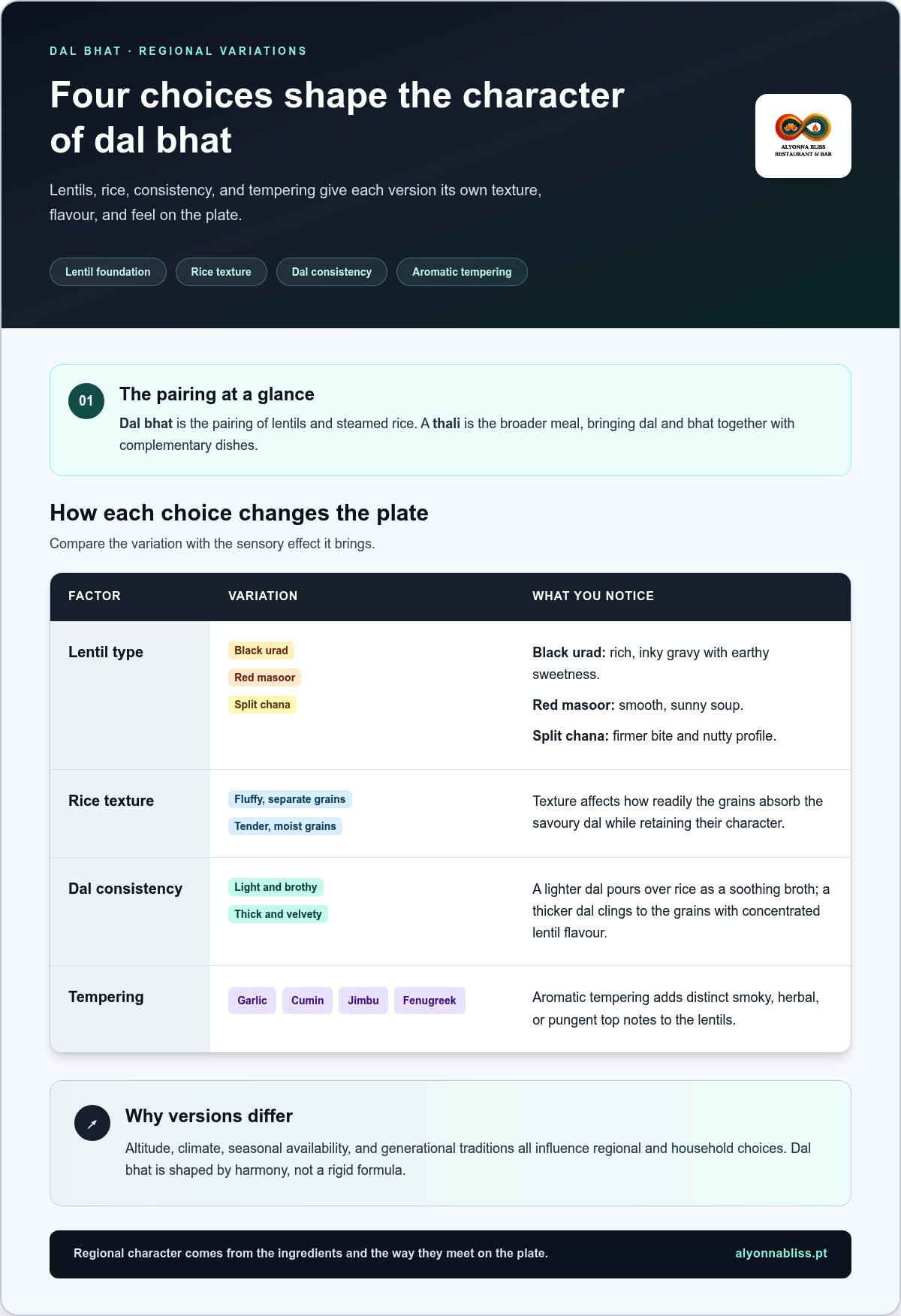
The combination adapts to altitude, climate, seasonal availability, and generational traditions. Regional kitchens use different lentils, seasonings, and cooking styles to shape its character.
Dal bhat is defined by thoughtful harmony rather than a rigid formula. From grain texture to pulse variety, small culinary adjustments give every household’s presentation its own distinct voice and character.
Lentil selections and rice textures: different foundations, distinct character
The choice of pulse dramatically alters the depth and colour of the broth. Maas Ko Daal, crafted from black urad lentils, yields a rich, inky gravy with an earthy sweetness often celebrated in festival cooking. Red lentils (masoor) cook down into a smooth, sunny soup, while split yellow peas (chana dal) retain a firmer bite and nutty profile.
| Element | Culinary Variation | Sensory Impact on the Plate |
|---|---|---|
| Lentil Type | Black urad, yellow masoor, or split chana | Shifts broth density, colour, and earthy richness |
| Rice Texture | Fluffy and separate vs. tender and moist | Influences how readily grains absorb the savoury dal |
| Consistency | Brothy and light vs. thick and velvety | Determines whether dal acts as a drinkable broth or coating gravy |
| Tempering | Garlic, cumin, jimbu, or fenugreek | Imparts distinct smoky, herbal, or pungent top notes |
Broth consistency and seasoning styles
The thickness of the dal often reflects how the meal is enjoyed. A more liquid dal is poured liberally over the rice, creating a soothing, spoonable mixture ideal for washing down robust, spicy curries. Thicker preparations cling directly to the grains, offering a concentrated burst of savoury lentil flavour with every forkful.
How to experience and balance dal bhat on the plate
Appreciating dal bhat does not require rigid dining etiquette. It invites intuitive exploration, encouraging you to calibrate each bite according to your preferences for texture, temperature, and heat.
A simple three-step tasting approach
- Appreciate the aroma. Breathe in the fragrant steam rising from the dal, noting hints of roasted cumin, sweet garlic, and earthy turmeric.
- Savour the primary pairing. Spoon a small ladle of dal over a mound of rice, tasting them together to observe how the savoury liquid tenderises the grains.
- Incorporate accompaniments. Take a bite of seasoned vegetables or tart chutney alongside the rice and dal, observing how acidity and spice refresh the palate.
Adjusting proportions for your personal palate
Every bite can be tailored as you dine. If the accompanying dishes bring intense chili heat, fold an extra portion of plain steamed rice into your dal to soften the spice. If a bite feels slightly dry, introduce another spoonful of warm lentil broth to restore rich, comforting moisture.
Discover dal bhat within Alyonna Bliss’s Nepali Thakali thali
The pairing of dal and rice reaches its culinary pinnacle when framed by the rich hospitality of Thakali dining traditions. Originating along ancient Himalayan trade routes, Thakali cuisine is celebrated for its generous presentation, meticulous seasoning, and balanced culinary assortment.
A classic pairing at the centre of a Thakali platter
At Alyonna Bliss, customers can choose the main protein in their Nepali Thakali thali, such as pork, chicken, fish, or mutton, while the remaining items stay the same. Warm, comforting dal and fragrant rice anchor the plate, surrounded by vibrant house-made chutney, a varied assortment of rich curries, butter, and more. Each accompaniment contributes its own note—piquant, earthy, savoury, or mildly spiced—allowing you to journey through different culinary dimensions in a single sitting.
An invitation to explore Nepali flavours
Dining on a Thakali platter is a feast designed for unhurried enjoyment and shared discovery.
Discover the warmth and generous hospitality of South Asian dining by tasting the Nepali Thakali thali at Alyonna Bliss.
Bringing harmony to your next Nepali plate
Whether enjoyed as an everyday lunch or as part of a festive spread, the interplay of steamed grain and aromatic pulse provides an inviting gateway into the culinary traditions of the Himalayas.
When you next sit down before a traditional thali, take a moment to savour the craft behind this timeless pairing—where every grain of rice and ladle of spiced lentils carries a heritage of genuine warmth and shared connection.
Frequently Asked Questions
Is dal bhat usually eaten for breakfast, lunch, or dinner?
Dal bhat serves as an everyday staple throughout Nepal, traditionally eaten twice daily as substantial late-morning and evening meals. Household routines, work schedules, and regional customs determine specific dining hours across different communities.
Can dal bhat be made vegan?
Yes. The essential combination of rice and lentils is entirely plant-based. When prepared using vegetable cooking oils and plant-based seasonings, the core dish is naturally vegan. Always verify specific accompaniments and sides, as some platter elements may incorporate dairy ingredients like butter.
Can I make dal bhat with brown rice?
Yes. Brown rice pairs nicely with lentil dal, offering a firmer chew and an earthy, nutty undertone. Cooking times and liquid requirements are higher for unpolished whole grains, so adjust preparation accordingly to ensure the rice is tender enough to absorb the broth.
Is dal bhat always spicy?
No. Lentil dal itself is typically mild, seasoned gently with aromatic spices like turmeric, cumin, and garlic rather than fierce chili. Heat on the platter usually comes from accompanying side dishes, pungent fresh pickles, and spicy vegetable or meat curries.
Is dal bhat gluten-free?
Rice and lentils are naturally gluten-free ingredients. However, depending on kitchen practices, pre-mixed spice blends or certain prepared curries and sides may introduce gluten. Always check specific culinary preparation and cross-contact measures if dining with dietary restrictions.
How do you pronounce dal bhat?
English speakers commonly pronounce the pairing as "dahl bhaat." The first word rhymes with "doll," while the second word carries an elongated "ah" sound rather than the short vowel heard in the English word "bat."


