

What makes a thali feel varied: a list of dishes, or the way tastes meet from one bite to the next? The idea of ayurvedic flavors in thali offers a way to notice those differences. The Sanskrit terms may sound unfamiliar at first, but the basic invitation is simple: pause between bites and look for sweetness, tang, salt, heat, bitterness, or a drying, puckering quality.
If you’ve wondered whether every thali must include all six tastes, you’re not alone. Ayurveda offers a traditional way to think about variety and contrast, not a rulebook for judging every meal. This guide explains each taste in everyday language and shares a practical way to explore them without specialist knowledge.
We’ll look at what each taste means, how different elements create contrast, and how a Nepali Thakali thali, served with dal, rice, chutney, a variety of curries, butter, and more, can offer a varied plate to explore. Treat these ideas as a lens for sensory discovery, not as medical advice or a promise of health outcomes.
Key Takeaways
- Learn what “rasa” and “shad rasa” mean, and why a thali is best understood as a meal of varied dishes rather than a fixed recipe.
- Recognize the six tastes through simple sensory cues, without confusing taste with a dish’s aroma or texture.
- Use ayurvedic flavors in thali as a flexible way to notice contrast and variety, not as a checklist every meal must satisfy.
- Try a four-step tasting approach: observe the plate, taste dishes separately, compare them, then notice how they come together.
- Explore how the components of a Nepali Thakali thali create a varied shared meal, without assuming it follows a prescribed Ayurvedic formula.
What Do Ayurvedic Flavors in a Thali Mean?
A thali invites you to taste across a meal rather than focus on one dish alone. The idea of ayurvedic flavors in thali brings together two concepts: an Ayurvedic way of describing taste and a platter that may hold several preparations. Used thoughtfully, this framework helps you notice how tastes contrast and mingle, without turning lunch into a test with right or wrong answers.
What Are Rasa and Shad Rasa?
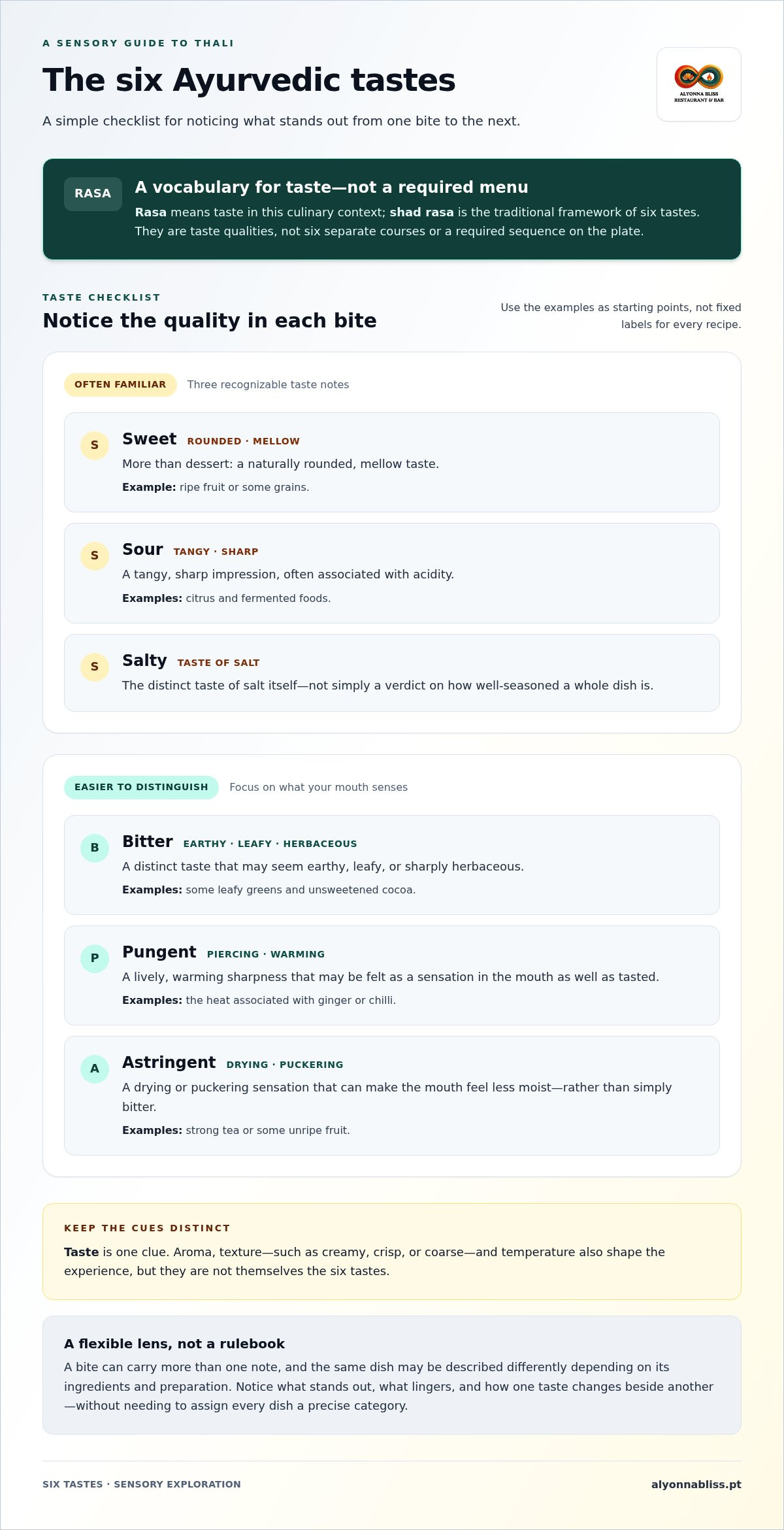
Rasa is the Sanskrit word for taste in this culinary context, while shad rasa refers to the traditional framework of six tastes. In Ayurveda, these are sweet, sour, salty, bitter, pungent, and astringent. The terms describe taste qualities, not six separate courses or a required sequence on the plate.
Think of the framework as vocabulary for paying closer attention. A taste may stand out on its own or alongside others, and the same dish can be described differently depending on its ingredients and preparation. Ayurvedic traditions and individual recipes may interpret food in their own ways, so these categories are useful guides rather than a universal code for labelling every dish.
Why Does a Thali Invite Flavor Exploration?
A thali brings multiple dishes together in one meal, so you can move between different tastes and textures at your own pace. The word can refer to the platter itself as well as the meal served on it; Thali, an Indian-style meal also reflects how the format varies across regions and food traditions. There isn’t one fixed recipe that defines every thali.
That variety makes a thali a natural setting for sensory exploration. Taste one preparation, pause, and compare it with another. Notice what feels distinct, what seems to soften or sharpen a neighbouring bite, and how the combination changes as you eat. You don’t need to assign every dish a precise Ayurvedic category to enjoy the contrast.
It also helps to separate taste from other sensations. Aroma reaches you before a bite; texture might feel creamy, crisp, or coarse; temperature can shape the experience too. These details contribute to how food feels overall, but they aren’t themselves the six rasa. Naming the difference makes tasting more attentive without making it complicated.
Ayurveda’s six tastes belong to a traditional food philosophy. They can offer a thoughtful lens for describing a meal, but they aren’t a substitute for nutrition science, medical guidance, or individual dietary advice. A varied plate may invite curiosity and pleasure without making a claim about health. Approach the framework as a way to explore, compare, and appreciate what is on the table.
The Six Ayurvedic Tastes: A Clear Guide to Their Flavor Qualities
Ayurveda’s six tastes are sweet, sour, salty, bitter, pungent, and astringent. Together, they offer vocabulary for describing what you sense on the tongue, not a promise of a particular health effect or a formula every plate must follow. In a thali, use them as prompts: what stands out, what lingers, and what changes when you take another bite?
Sweet, Sour, and Salty: Three Familiar Taste Notes
These first three may feel easiest to recognize, but each describes a taste quality rather than a specific dish or course. A single bite may carry more than one note, so treat the examples as starting points, not labels that fit every recipe.
- Sweet means more than dessert. It can describe a naturally rounded, mellow taste, such as the sweetness of ripe fruit or some grains. In this framework, the word names a taste, not a place in the meal.
- Sour brings a tangy, sharp impression, often associated with acidity. Citrus and fermented foods can offer familiar examples, though their intensity and character vary with ingredients and preparation.
- Salty is the distinct taste of salt itself. It isn’t simply a verdict on whether a whole dish is well seasoned; other ingredients and tastes can shape how saltiness comes across.
Bitter, Pungent, and Astringent: Three Easily Confused Notes
The remaining tastes are easier to distinguish when you focus on what your mouth senses. Bitter is a taste; pungent is a lively, warming sharpness; astringency is a drying or puckering sensation that can make the mouth feel less moist. These qualities may overlap in a bite, but noticing their differences makes tasting more precise.
- Bitter can seem earthy, leafy, or sharply herbaceous. Some leafy greens and unsweetened cocoa are familiar examples, though cooking can soften or alter the impression.
- Pungent has a piercing, warming edge, like the heat associated with ginger or chilli. Unlike bitterness, it may be felt as a sensation in the mouth as well as tasted.
- Astringent feels dry or puckering rather than simply bitter. Strong tea or some unripe fruit can offer a recognisable example; individual perception and preparation make a difference.
These categories aren’t sealed boxes. A food may seem both sharp and warming, or leave a drying finish after another taste has come forward. Aroma, temperature, and texture add to the experience, but they’re separate sensory clues. Focus on taste first, then notice how those other qualities shape the bite.
As you explore ayurvedic flavors in thali, let the names help you describe what you notice, not dictate what a dish should taste like. With several preparations on the plate, compare one bite with the next and form your own impressions. To experience a varied platter, explore the Nepali Thakali thali at Alyonna Bliss, served with dal, rice, chutney, a variety of curries, butter, and more.
Does Every Thali Need All Six Ayurvedic Tastes?
No. The six tastes are a traditional Ayurvedic framework, not a checklist that every thali must satisfy. Some explanations of Ayurvedic food describe including all six as an ideal, but that doesn’t mean every platter, restaurant meal, or family recipe is designed around that principle. A meal can be varied and satisfying without being assessed against six categories.
This distinction matters because a familiar idea can easily become a rigid rule. Use the framework to notice and describe taste, not to label a thali as incomplete, deficient, or medically beneficial because one quality seems absent.
A Traditional Principle Is Not a Fixed Restaurant Recipe
Culinary traditions can offer principles for thinking about meal composition while leaving room for the habits of individual kitchens. Thalis vary by region, household, season, and cook. Their dishes and arrangements reflect different food cultures, ingredients, and occasions, rather than one universal template.
So, don’t infer a cook’s Ayurvedic intention from a platter alone. Unless a meal is explicitly presented as following a particular Ayurvedic approach, it’s more accurate to appreciate its components on their own terms. The six-taste framework can still be a helpful lens, but it doesn’t prove how a dish was planned or prepared.
For example, a thali with several preparations may offer plenty to compare, even if you can’t confidently identify every taste. That’s a reason to explore, not to mark the meal as failing a formula.
Taste, Flavor, and Wellness Claims Are Not Interchangeable
Basic taste impressions are only one part of eating. Aroma reaches you as you lift a bite; texture might feel smooth, crisp, or dense; temperature and spice can also shape the experience. These sensations work together, but they aren’t interchangeable. A fragrant dish isn’t automatically sweet, and warming heat isn’t the same thing as a basic taste.
Ayurvedic discussions may also connect foods and tastes with doshas, concepts within that traditional system. Those associations aren’t clinical diagnoses or proof that a particular dish will produce a health outcome. Treat them as part of a cultural food philosophy, not as a substitute for evidence-based nutrition guidance.
If you have a health condition, allergies, or specific dietary needs, rely on advice from a qualified healthcare professional rather than using rasa categories to decide what is safe or suitable for you. That keeps sensory curiosity separate from personal medical decisions.
In practice, let the six tastes sharpen your attention without turning the meal into a scorecard. Notice what stands out, how one bite differs from the next, and what you enjoy. Alyonna Bliss’s Nepali Thakali thali brings dal, rice, chutney, a variety of curries, butter, and more together on a platter. Explore it as a varied meal, not as a claim that it follows a prescribed Ayurvedic formula. Explore the Nepali Thakali thali.
How to Notice Ayurvedic Flavors Across a Thali
A thali gives you several places to begin, but there’s no need to identify every taste in every dish. Try a small, attentive tasting: sample each component on its own, compare what you notice, then see how the impressions shift when you combine bites. This flexible approach makes ayurvedic flavors in thali a practical way to explore, not a test with a correct score.
Keep the categories in mind as prompts. You might notice sweetness, tang, salt, bitterness, pungent heat, or a drying sensation. You may also find that no single label quite fits. Tasting notes depend on each recipe and diner. Ingredients, preparation, and personal perception all shape the experience.
A Simple Sequence for Exploring the Plate
Start with what’s in front of you. Choose a small taste of one component before bringing anything else into the bite. A moment’s pause can help you separate your first impression from the way other foods change it.
- Observe. Look across the plate and notice its different components, such as dal, rice, chutney, and curries. Take in their appearance and aroma, remembering that these are clues to the wider experience, not rasa themselves.
- Taste separately. Try a little of one item on its own. Notice whether a taste quality stands out, such as tang, salt, heat, or dryness, without feeling obliged to name it.
- Compare. Choose a second component and pay attention to how its taste differs. Does the first impression feel more noticeable, softer, or simply different by contrast?
- Combine. Bring two components together in a bite. Notice what changes and whether one taste leads, several impressions overlap, or the combination feels hard to categorise.
Build a Personal Flavor Map, Not a Scorecard
A short note can help you remember a meal without turning it into a checklist. For a component, try writing three cues: a dominant impression, a supporting one, and a contrast you noticed beside another bite. Keep the wording everyday and specific to your own experience.
- Dominant: the taste quality that caught your attention first.
- Supporting: another impression present alongside it.
- Contrast: a quality that seemed different when you tasted another component.
A component may suggest more than one taste, or none clearly enough to name. That’s perfectly fine. Aroma, texture, and temperature can make a bite seem vivid, smooth, crisp, or warm, but keep those observations separate from your taste note. Your map records what you noticed, not an expert verdict on the recipe.
Leave the tally behind. The value is in paying attention to how a meal unfolds, one taste and combination at a time. Put this tasting approach into practice with a varied platter: explore Alyonna Bliss’s Nepali Thakali thali, served with dal, rice, chutney, a variety of curries, butter, and more.
Explore a Thakali Thali Through Flavor and Shared Dining
A Nepali Thakali thali offers a grounded way to explore how different components come together. At Alyonna Bliss, the set includes dal, rice, chutney, a variety of curries, butter, and more, served together on a platter. It’s a varied meal to experience at your own pace, without needing to decide in advance which Ayurvedic taste belongs to each part.
Approach a Thakali Set with Curiosity
Begin by taking in the platter as a whole, then choose one component for a small first taste. Pause before moving on. Notice your own impression, whether a taste seems prominent, subtle, familiar, or difficult to name. The components are prepared as specific recipes, and no two diners need describe them in exactly the same way.
Next, try another component on its own, then consider combining it with a little rice or another part of the meal. That simple shift can change what you notice. A taste may become more noticeable, recede, or blend into the bite. The point isn’t to assign a fixed rasa to the dal, chutney, or curries; it’s to discover how separate tastes and combinations register for you.
There’s no required order. Move between the components naturally, returning to one you’d like to taste again. The platter invites an unhurried rhythm: a little sampling, a moment to reflect, and another bite when you’re ready.
Bring the Flavor Conversation to the Table
A meal shared with others can make tasting feel less like an exercise and more like an open conversation. One person might notice tang, another warmth or richness; someone else may describe a contrast between two bites. These impressions can all be valid. They reflect individual palates, the recipe, and what else is being tasted alongside it.
Try offering a simple observation rather than a verdict: “This tastes brighter beside that,” or “I notice a different quality when I combine these.” You don’t need to agree on a label, identify every one of the six tastes, or rank the meal by how many categories appear. Let the conversation stay curious and generous, with room for different impressions around the table.
Alyonna Bliss’s Nepali Thakali thali is a real-world example of a varied platter, not a claim that the meal follows a prescribed Ayurvedic formula. Exploring it through ayurvedic flavors in thali can simply mean paying attention to what you taste, how combinations change, and what you enjoy. To experience this Nepali meal and explore Alyonna Bliss’s Indian and Nepali cooking, discover the restaurant’s menu.
Bring More Curiosity to Your Next Meal
Let your next thali be an invitation to slow down and notice what you enjoy. The idea of ayurvedic flavors in thali offers a fresh way to pay attention, but there’s no need to turn a meal into a test or expect every taste to appear. Stay curious, trust your own impressions, and let shared food create space for conversation and discovery.
Alyonna Bliss welcomes guests to explore Indian and Nepali cooking through dine-in, delivery, and private events. Enjoy a meal at the table or share it with others: explore Alyonna Bliss’s Indian and Nepali dining.
Bring an open palate and an appetite for discovery. Every meal offers another chance to notice something new.
Frequently Asked Questions
Are the six Ayurvedic tastes the same as six courses in a thali?
No. The six tastes describe sensory qualities, not a meal’s number of courses. A course is a serving or part of a meal; a taste can appear in a single bite or be noticeable across several dishes. You might encounter more than one taste in one preparation. Think of the framework as a way to talk about food, not a prescribed order for serving it.
Does every traditional thali include all six Ayurvedic tastes?
No universal rule means every traditional thali must contain all six. Some Ayurvedic teachings describe including them as an ideal, but thali menus and home meals vary with culinary tradition and the choices of the cook. A plate’s appearance alone can’t tell you whether it was planned according to Ayurvedic principles. Enjoy the meal as it’s served rather than judging it by a taste checklist.
Can one dish have more than one Ayurvedic taste?
Yes. A dish can create several taste impressions, with one coming forward first and another lingering afterwards. A preparation might seem tangy at the start and leave a different impression as you chew, for instance. Ingredients, cooking, and what you eat alongside the dish can all affect what stands out. Describe those impressions without forcing the dish into a single category.
Is pungent the same as spicy in Ayurvedic taste descriptions?
Not exactly. Pungent describes a sharp, warming taste sensation, while “spicy” is a broad everyday word that can refer to heat from chilli or to a dish seasoned with spices. The words may overlap in conversation, but they don’t always mean the same thing. To distinguish them while eating, notice whether you’re describing a taste quality or the heat you feel in your mouth.
Are Ayurvedic taste categories a guide to a food’s nutritional value?
No. Taste categories describe sensory qualities within a traditional food philosophy; they don’t provide a nutrition label or establish a food’s nutrient content. A dish’s taste can’t tell you its full nutritional profile, and the categories shouldn’t be used to diagnose a condition or promise a health effect. For nutrition needs or medical concerns, consult a qualified healthcare professional and use reliable nutrition information.
How can I explore the tastes in a thali without knowing Ayurveda?
You can start with ordinary words. Choose a small bite, notice what you taste first, then pay attention to what lingers. Is it tangy, gently sweet, salty, warm, bitter, or drying? Compare that impression with a different part of the meal, and describe what changes in your own words. You don’t need Sanskrit terms to enjoy the variety or decide which combinations you like.


