

If you’re wondering how to eat nepali momo, start with a simple approach: notice the wrapper and filling first, then try the accompanying dip in a small amount. There’s no strict ritual to follow, and you can use your fingers or cutlery. What matters is taking care with a hot dumpling and finding the balance of flavors and textures you enjoy.
A freshly steamed momo can hold hot, savory juices, so let it rest briefly or take a small, careful bite before eating more. Notice the tender wrapper and warm filling on their own, then try a little dip if one is served. Add more only if you like the contrast; dipping is a matter of taste, not a test.
This guide explains what makes Nepali momo distinctive, how to approach a first bite, and what to expect from steamed and fried versions. At Alyonna Bliss, handmade momo are served steamed or fried with traditional Himalayan seasonings, making them a flavorful part of a relaxed dine-in meal.
Key Takeaways
- Notice the wrapper and filling before adding dip, so you can taste the momo’s own seasoning.
- Take a careful first bite, then adjust the amount of dip to suit your palate.
- Choose steamed momo for a softer wrapper or fried momo for a firmer, crisper texture.
- At a shared table, take a comfortable portion and use serving utensils when provided.
- Alyonna Bliss serves handmade momo steamed or fried with traditional Himalayan seasonings.
What Is Nepali Momo? Meet the Dumpling Behind the First Bite
Nepali momo are filled dumplings enjoyed across Himalayan food traditions. A thin wrapper is gathered around a savory centre, forming a small parcel that can be eaten on its own or with an accompanying dip. The wrapper sets the first impression, the filling brings warmth and substance, and a dip can add a contrasting flavor.
Momo may be steamed or fried. Steaming leaves the wrapper soft and tender, while frying gives it a firmer, more browned surface. Neither preparation is the only legitimate choice. Momo also vary from region to region and kitchen to kitchen. For broader context on momo’s history, variations, and place in Nepal and neighbouring food traditions, see Momo (food).
Nepali momo have a particular Himalayan food story, but they are not one fixed recipe or one universal way of serving dumplings. That distinction can help first-time diners approach momo without expecting the same wrapper, filling, or accompaniment as a familiar dumpling. If you’re learning how to eat nepali momo, begin by tasting the dumpling itself before deciding how much dip to use.
What should a first-time diner notice about momo?
Look at the wrapper and how it has been cooked. A steamed momo usually has a soft surface, while a fried one has a more textured exterior. The filling is enclosed inside, so take a careful bite and notice how its warmth and seasoning combine with the wrapper. Starting this way gives you a clear sense of the dumpling before a dip adds another flavor.
Why is achar served alongside momo?
Achar is a flavorful accompaniment that can contrast with the dumpling and add another layer to each bite. Recipes and heat levels vary, so don’t assume every achar tastes the same or has the same intensity. Try a little alongside a bite, then adjust to your preference. You don’t need to cover the momo; the dip is there to complement its flavor.
Think of the first taste as getting acquainted, not as a test with one correct answer. The wrapper, filling, cooking method, and dip all contribute to the experience. Your preferred balance may become clear after a few bites, so take time to notice the warmth and texture before deciding what you like best.
How to Eat Nepali Momo: A Gentle First-Bite Guide
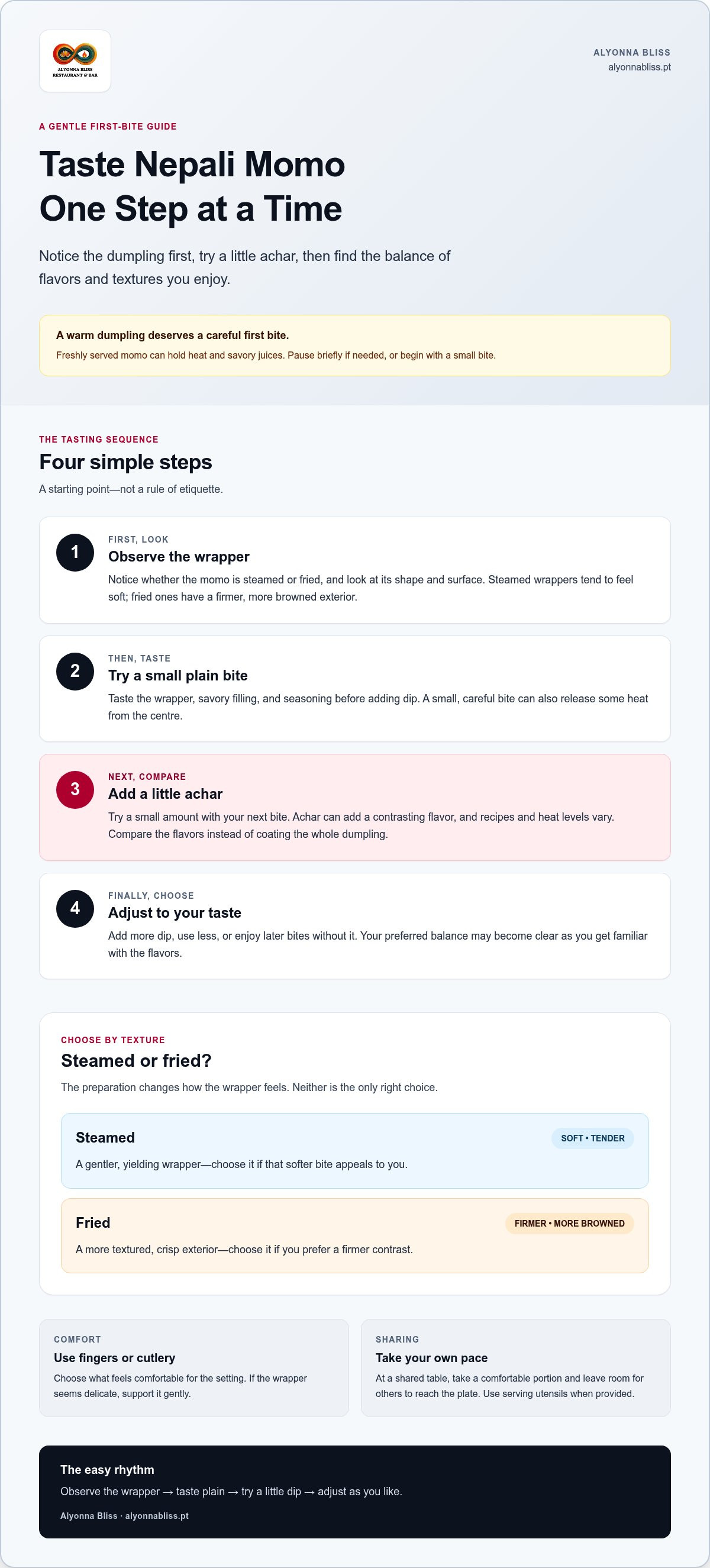
If you’re unsure how to eat nepali momo, let curiosity set the pace. There’s no required ritual, but this four-step sequence helps you taste the dumpling before deciding how much dip you prefer. Take particular care with a freshly served momo, as the centre can hold heat.
- Observe. Notice whether the momo is steamed or fried and look at its shape and surface. This gives you a clue about whether the wrapper will feel soft or crisp.
- Taste it plain. Take a small, careful bite without dip. You’ll get a clearer sense of the wrapper, filling, and seasoning, and the opening can release some heat.
- Add a little dip. Try a small amount of achar with your next bite. Compare the flavors rather than coating the whole dumpling straight away.
- Adjust to your taste. Add more dip, use less, or enjoy later bites without it. You can change your approach as you get familiar with the flavors.
Observe, taste plain, add a little dip, then adjust to suit your palate. Treat this sequence as a starting point, not a rule of etiquette. You can change it at any time, or leave the dip aside. The best approach is the one that lets you enjoy the food comfortably.
Should you taste momo before adding achar?
A plain bite is a helpful introduction, not a requirement. It lets you notice the dumpling’s own seasoning before achar adds another flavor. Then try a small amount of dip and compare. If you enjoy the contrast, use more; if you prefer the momo on its own, that works too.
How can you handle a hot or delicate dumpling?
If you see steam or the first touch feels too hot, pause briefly. A small, careful bite can release heat and let the filling cool before you continue. Use a fork or your fingers, depending on the setting and what feels comfortable. If the wrapper seems delicate, support it gently and take a manageable bite.
At a shared table, leave room for others to reach the plate and take your time. There’s no need to match anyone else’s pace or dipping style. Put this first-bite guide into practice with handmade momo at Alyonna Bliss, served steamed or fried with traditional Himalayan seasonings.
Steamed or Fried Momo: Choose the Texture That Suits You
The preparation changes how a momo feels before you reach the filling. Steamed momo tend to have a soft, yielding wrapper; fried momo have a more browned, firmer surface. Neither preparation has to stand for one idea of authenticity. Choose according to the texture you enjoy and the kind of first bite you’re in the mood for.
Use this quick guide to choose by feel:
| Preparation | Texture to expect | A preference cue |
|---|---|---|
| Steamed | Soft, tender wrapper | Choose it if you enjoy a gentler bite. |
| Fried | More browned, crisp exterior | Choose it if you’re drawn to firmer texture. |
These are broad sensory cues, not guarantees that every dumpling will feel exactly the same. Shape, cooking, and the moment you take a bite all contribute. At Alyonna Bliss, momo are served steamed or fried with traditional Himalayan seasonings, so you can experience both preparations without treating one as the correct choice.
As you explore how to eat nepali momo, consider texture alongside the savory centre. A soft wrapper makes for a gentler first impression; a fried exterior adds a crisp contrast. Notice how the wrapper, filling, and seasoning work together instead of deciding which preparation is “better” after one bite.
What does steamed momo feel like to eat?
A steamed momo generally gives way with a soft wrapper and a gentler first bite. Its surface is tender rather than crisp, letting the centre come forward as you chew. Notice the warmth, fragrance, and seasoning without guessing at ingredients. If you prefer a supple texture without a crunch, steaming may be a comfortable place to begin.
What makes fried momo a different experience?
Fried momo bring a more browned or crisp exterior around a warm centre. That contrast can make each bite feel firmer and more pronounced. If you enjoy a crisp edge, this preparation may suit you. Take care with the first bite, since the centre can still be hot beneath the more textured surface.
There’s no need to settle on a favourite straight away. If you’re sharing a meal, trying both preparations makes the contrast easy to notice. Pay attention to the wrapper first, then how the centre feels against it. Do you prefer softness, or a little more crispness? That simple observation can guide your next choice, while leaving room for your tastes to change.
Momo at the Table: Dip, Share, and Find Your Own Rhythm
A plate of momo can bring everyone’s attention to the middle of the table, where warm dumplings and a shared dip invite a relaxed meal. If you’re learning how to eat nepali momo, remember that the table is a place to enjoy the food together, not to demonstrate perfect etiquette. Take a comfortable portion, leave enough for others to begin, and follow the group’s pace where it feels natural.
Hands or cutlery? Either can be comfortable, depending on the setting and your preference. Use what helps you handle the dumpling with ease, especially if it’s hot or delicate. If serving utensils are provided for a shared plate, use them to take your portion. Then enjoy it in whatever way feels comfortable.
Good momo etiquette is simple: share considerately, choose what feels comfortable, and stay flexible about the dip.
How do you share momo comfortably?
When the plate is shared, take turns or use serving utensils if they’re available. This keeps the meal easy for everyone and gives each diner room to choose a portion and pace. Dipping customs differ between households and restaurants, so don’t assume one approach applies everywhere. If you’d rather not share a dipping bowl, keeping some dip on your own plate is a considerate option.
How can you find your preferred dip balance?
Begin with a small amount of achar, then adjust gradually between bites. Notice whether its flavor complements the momo’s seasoning or becomes the strongest note. You might prefer a light touch, a generous dip, or the sauce separately. Each choice can make the meal your own.
Let the meal unfold at an unhurried pace. Enjoy one momo with dip and another without, then decide whether you want more contrast or prefer the dumpling’s own flavor. At a dine-in meal, you may notice how other diners enjoy theirs, but their preferences don’t have to guide yours. A gracious table leaves room for different tastes.
Bring that easy spirit to a shared meal at Alyonna Bliss, where handmade momo are served steamed or fried with traditional Himalayan seasonings. Enjoy momo around the table at Alyonna Bliss.
Enjoy Handmade Nepali Momo at Alyonna Bliss
Knowing how to eat nepali momo is less about mastering a ritual and more about noticing what’s on the plate. At Alyonna Bliss, an Indian and Nepali dine-in restaurant, handmade momo are served steamed or fried with traditional Himalayan seasonings. The choice of preparation lets you explore a softer or more textured bite, while the dine-in setting gives you time to enjoy the meal at your own pace.
Start with the dumpling itself. Notice its warmth, the feel of the wrapper, and the savory centre before deciding how you’d like to enjoy it. There’s no need to rush toward a dip or copy another diner’s method. A first momo can be a simple introduction, and a shared plate can make that first taste part of a relaxed meal.
What can you expect from Alyonna Bliss momo?
Each momo is handmade and served steamed or fried with traditional Himalayan seasonings. The steamed preparation offers a tender wrapper, while the fried version brings a firmer, more textured exterior. These are useful ways to anticipate the bite, not promises that every dumpling will feel identical. Notice how the preparation, warmth, and seasoning come together at the table.
A small pause can make the first taste more enjoyable. It lets you discover the dumpling without needing to know every detail in advance. If you’re sharing a plate, compare impressions with the people around you, or simply enjoy each bite at your own pace. Either way, the meal is an invitation to be curious, not an examination of etiquette.
Take your first momo experience to the table
Keep your approach uncomplicated: taste a momo, try dip if you like, and adjust as you go. If the filling feels hot, pause before taking another bite. Choose fingers or cutlery according to what feels comfortable in the setting. These small choices make it easier to focus on the food and company instead of worrying about a single “correct” way to eat.
A dine-in meal also gives you time to notice what you enjoy most. Perhaps it’s the softness of the steamed wrapper, the added texture of a fried exterior, or the way a little dip changes the flavor. Let your preference emerge naturally. You don’t need to settle on a favourite in advance, and people at the same table can enjoy momo in different ways.
Bring your curiosity and enjoy handmade Nepali momo as part of a welcoming meal at Alyonna Bliss. Enjoy Nepali momo at Alyonna Bliss.
Let Your First Momo Lead to the Next
The first bite doesn’t need to be perfect. Let it be the beginning of a new food memory, shaped by curiosity, good company, and the pleasure of discovering a tradition at the table. Now that you know how to eat nepali momo, give yourself room to find a rhythm that feels natural. How you hold the dumpling, how much dip you enjoy, and which texture you prefer can all be part of that discovery.
Food feels welcoming when there’s time to pause, taste, and share the moment. Bring that open-minded spirit to Alyonna Bliss for a dine-in meal and a chance to experience Nepali momo in person. Let the first taste introduce you, then follow your appetite from there.
Enjoy Nepali momo at Alyonna Bliss and settle in for a flavorful meal.
Frequently Asked Questions
What is Nepali momo traditionally served with?
Nepali momo are commonly served with achar, a flavorful accompaniment for dipping, and some meals include a clear soup alongside. The exact presentation can differ between kitchens and styles of momo, so dip or soup isn’t a fixed part of every plate. If you’re sharing, keep the sauce on the side and add it to individual bites, making it easier for everyone to enjoy the dumplings their own way.
Are Nepali momo and other Asian dumplings the same?
No. Nepali momo belong to the broader family of filled dumplings, but that doesn’t make them identical to dumplings from other Asian food traditions. Wrappers, fillings, cooking methods, sauces, and the place a dish holds in a meal can all vary. Appreciate momo on its own terms rather than expecting it to taste or be served exactly like a dumpling you already know.
Can Nepali momo be eaten as a full meal?
Yes, momo can be enjoyed as a meal, though whether they feel filling enough depends on your appetite and the portion served. For a more varied Nepali dining experience, Alyonna Bliss also serves a Thakali set with dal, rice, chutney, curries, butter, and more. This platter offers another way to build a meal around several dishes, rather than treating momo only as a snack or starter.
Is Nepali momo always spicy?
No, Nepali momo aren’t necessarily spicy. Heat can depend on the dumpling’s seasoning and what accompanies it. Achar may range from mild to very spicy, so the sauce can bring more heat than the momo itself. If you’re sensitive to spice, taste a small amount of dip separately before adding it to a dumpling. This helps you gauge the heat without overpowering the first bite.
Can people with food allergies safely eat momo?
Not automatically. Momo recipes and preparation methods vary, and ingredients in the wrapper, filling, seasoning, or accompanying sauce may matter to someone with an allergy. Cross-contact during food preparation can also be a concern. Tell restaurant staff about your allergy and ask for ingredient and cross-contact information before ordering. If the risk isn’t clear, don’t eat the dish. People with severe allergies should follow their clinician’s advice.
Are Nepali momo eaten with hands or cutlery?
Either can work; there’s no single utensil rule that every diner must follow. Choose what feels comfortable and suits the setting. At a shared meal, use serving utensils if they’re provided, then use your hands or a fork for your portion. If you’re still learning how to eat nepali momo, cutlery can make a hot or delicate dumpling easier to handle, while fingers offer a direct, tactile way to enjoy it.


