

What if the best lunch spice level isn’t the boldest one, but the one that lets you savour every bite and feel comfortable through the afternoon? Choosing heat can feel uncertain when “mild” and “hot” mean different things from one kitchen to another. Good lunch spice level selection starts with your own comfort, then considers how chilli works with a dish’s aroma, texture, and other flavours.
A little warmth can brighten a meal; too much can crowd out fragrant spices, tender fillings, or crisp edges. This guide will help you choose lunch heat with confidence, whether you’re settling in with handmade momo, exploring a Nepali thakali thali, or considering an Indian curry. Learn to look beyond a dish’s heat label, weigh your own tolerance and the afternoon ahead, and approach unfamiliar flavours at a pace that feels right. The aim isn’t to avoid spice or chase it, but to find a comfortable balance that leaves room for pleasure, discovery, and a complete midday meal.
Key Takeaways
- Use your past experience, appetite, heat sensitivity, and afternoon plans to guide your lunch spice level selection.
- Look beyond chilli heat: aroma, acidity, savouriness, and richness all shape how a dish tastes.
- When a dish is unfamiliar, start with a level of heat you already know and enjoy.
- Describe your comfort with spice in plain language instead of relying only on labels such as “mild” or “hot.”
- Let comfort, not bravado, set the pace as you enjoy a complete midday meal, including Alyonna Bliss’s dine-in three-course lunch deal.
Lunch Spice Level Selection Starts with Your Own Comfort
Your preferred amount of chilli says nothing about how adventurous or knowledgeable you are about food. Some diners love chilli’s fragrant lift but prefer not to feel a lingering burn; others enjoy heat that builds slowly across a meal. Both preferences are welcome. The best lunch spice level selection is the one that lets you enjoy the dish, not prove a point.
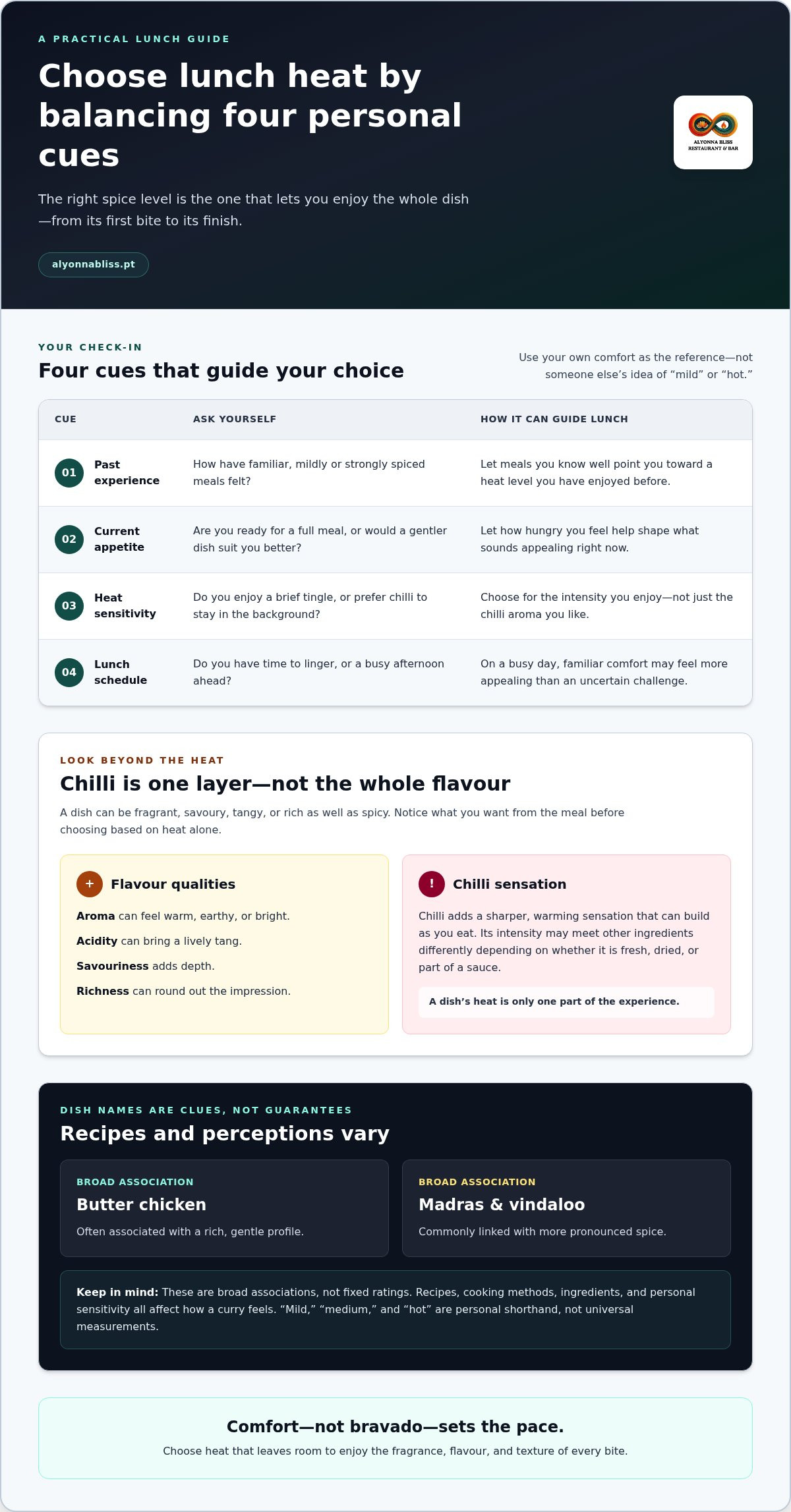
Before choosing, take a moment to check in with yourself:
- Past experience: How have familiar, mildly or strongly spiced meals felt?
- Current appetite: Are you ready for a full meal, or would a gentler dish suit you better?
- Heat sensitivity: Do you enjoy a brief tingle, or prefer chilli to stay in the background?
- Lunch schedule: Do you have time to linger, or a busy afternoon ahead?
“A comfortable spice level is heat that leaves the flavour enjoyable from the first bite to the last.” Use that as your guide. Words like “mild,” “medium,” and “hot” can help describe a dish, but they’re personal shorthand rather than universal measurements. Even the Scoville scale and capsaicin, which help explain how chilli heat is measured and produced, can’t tell you exactly how a particular dish will feel to you.
How to recognise your usual chilli tolerance
Think back to meals you know well. After a mildly spiced curry or a more strongly seasoned dish, did you feel pleasantly warmed and ready for another bite, or distracted by a burning sensation that lingered? Notice the difference between enjoying chilli’s aroma and enjoying its intensity. A fragrant chilli note may appeal even if persistent heat doesn’t. On a busy day, let those memories guide you towards familiar comfort rather than an uncertain challenge.
Why lunch comfort can differ from dinner comfort
The same level of heat may feel different at midday. Consider how much time you have to eat, whether you’re meeting someone or returning to a full schedule, and how substantial the meal sounds. Appetite and fatigue can also shape what feels appealing; a large meal or a tiring day may make you prefer gentler flavours, while another day might invite more warmth. These responses vary from person to person, so treat them as useful clues, not fixed rules.
Give yourself permission to choose differently from one lunch to the next. If you’re curious about a dish but unsure how its heat will suit you, start with flavours you know. A comfortable choice leaves room to notice the layers around the chilli: the dish’s fragrance, savouriness, texture, and finish.
Understand Chilli Heat Without Losing Sight of Flavour
Chilli heat is one sensation in a dish, not a summary of everything it tastes like. Aroma reaches you first: fragrant spices can smell warm, earthy, or bright before the chilli registers. Acidity may bring a lively tang, savouriness gives depth, and richness can round out the overall impression. Paying attention to these qualities helps you decide whether you want more chilli, rather than judging a dish by its heat alone.
The Scoville Scale offers a way to measure pepper pungency, but a number cannot fully predict how a prepared dish will feel. The NIST guide to measuring pepper heat with the Scoville Scale explains the measurement; your experience at the table still depends on the dish and your own perception. Chilli may be fresh, dried, or incorporated into a sauce, and those choices can change how its intensity meets other ingredients.
A dish’s name can suggest a style, but it can’t precisely predict how hot it will taste. Butter chicken is often associated with a rich, gentle profile, while madras and vindaloo are commonly linked with more pronounced spice. Those are broad associations, not fixed ratings or guarantees. Recipes and cooking methods differ, and a curry’s aroma, savoury depth, and texture are part of its character too.
Heat is not the same as a dish’s full flavour
Think of a curry as a layered experience. Fragrant spices can lend warmth and complexity without making every mouthful intensely hot. A richly savoury sauce may taste deep and rounded, while chilli adds a sharper, warming sensation that can build as you eat. One quality doesn’t cancel out the others. Noticing each layer helps you choose for the flavour you want, not simply the strongest heat you imagine.
This distinction is useful when exploring familiar Indian curry names. Rather than expecting one dish to be mild and another hot in every kitchen, consider whether you’re drawn to richness, aroma, or a more noticeable chilli presence. That wider lens makes lunch spice level selection more thoughtful and keeps the focus on enjoying the whole plate.
Why the same dish can feel different to different diners
Personal sensitivity and previous exposure shape how quickly chilli becomes noticeable. Someone accustomed to chilli may experience the same bite differently from a diner who usually chooses gentler flavours. The recipe matters too: ingredients, proportions, and cooking methods influence the final balance. So even a familiar curry name can’t promise an identical sensation from one preparation to another.
When choosing lunch, let the name guide your curiosity, then weigh it alongside what you know about your own palate. If you enjoy aromatic curries but aren’t seeking a persistent burn, focus on the flavour qualities that appeal to you. At Alyonna Bliss, you can explore Indian curries served for lunch with that distinction in mind, giving aroma, richness, and chilli their own place in the meal.
Use This Checklist to Match Spice with Your Lunch
A good lunch choice brings the dish, the rest of the plate, and the shape of your afternoon together. Before ordering, move through this practical checklist. It can help you settle on a familiar level of warmth while leaving room to explore an unfamiliar cuisine or combination of flavours.
- Check your tolerance. Choose a heat level you’ve enjoyed before, especially if you have plans soon after lunch. Remember whether you prefer gentle warmth or a more lingering chilli sensation.
- Consider how familiar the dish is. If its ingredients or preparation are new to you, keep the chilli level within your usual comfort zone. That way, you can discover the dish’s character without making heat the only thing you notice.
- Think about the meal’s size. A substantial plate may call for a different balance from a lighter lunch. Rice or bread can offer a mild, filling contrast alongside a strongly seasoned dish, helping round out each mouthful.
- Factor in your companions. If you’re sharing, consider the person who prefers the gentlest heat. A familiar, milder choice alongside a more boldly flavoured dish gives everyone room to enjoy the table.
- Look ahead to the afternoon. A relaxed lunch with time to linger may invite more experimentation than a quick meal between commitments. Let your schedule inform your choice, without treating any preference as a rule.
Match heat with the dish and the rest of the plate
Ask yourself whether the dish’s aroma and texture appeal before you consider its chilli. A Nepali thakali thali brings several components together, including dal, rice, chutney, and a variety of curries. Rather than focusing on one element in isolation, think about how your preferred level of warmth might sit among the plate’s different tastes. Rice or bread can complement a more intense bite, while the other components add variety. The chemistry behind chilli’s sensation is explored in the science of capsaicin and spiciness, but your own comfort remains the best guide to your choice.
For a lunch with several courses, consider the meal as a sequence rather than expecting every course to bring the same level of heat. You might prefer a familiar, gentle start, then choose a more distinctive flavour in another course, keeping the overall experience balanced. This simple pacing can make the whole meal feel considered and enjoyable.
Choose differently when sharing lunch
Shared dishes are an invitation to make space for different preferences, not to compare who handles the most heat. If one diner is more sensitive, let a gentler, familiar accompaniment anchor the meal; those who enjoy bolder flavours can still choose something with more character. Everyone can follow their own pace, enjoying warmth, aroma, and texture in the way that feels right.
With this checklist, lunch spice level selection becomes a practical choice rather than a test of bravery. Start from what you know, balance the plate, and let curiosity grow at a comfortable pace.
A Midday Spice Checklist for Ordering with Confidence
A few clear questions before ordering can turn uncertainty into a choice that feels right for your palate and your afternoon. Keep this quick checklist in mind as you read a menu:
- What level of chilli feels pleasant to you? Think of a familiar dish and whether you enjoy gentle warmth or more noticeable, lingering heat.
- Is the dish familiar? If its ingredients or style are new, let your usual comfort level be the starting point.
- What follows lunch? A full afternoon of meetings or errands may lead you towards a choice you already know you enjoy.
- Are you sharing? Consider everyone’s preferences and choose a balance that lets the table enjoy the meal together.
- Do you have an allergy? State dietary allergies separately from a preference for less chilli. They’re different kinds of information and should be communicated clearly.
Clear preference language can help you choose with greater confidence. Rather than relying only on labels such as “mild” or “hot,” which can mean different things to different people, describe the sensation you enjoy. For example: “I like gentle warmth,” or “I enjoy noticeable but balanced heat.” You can also mention how a similar dish has felt for you before: “I enjoy the aroma of chilli, but not a strong lingering burn.” These details express your preference without assuming every dish follows a fixed or adjustable spice scale.
How to describe the heat you enjoy
Keep it simple and specific. Say whether you want chilli to sit quietly behind the other flavours or be a clear part of the experience. If you’ve eaten a similar curry before, naming that experience can give useful context. This isn’t a test of the right vocabulary; it’s a way to describe what you enjoy and set your expectations for the meal.
Allergies deserve a separate, direct mention. A request for less chilli describes taste, while an allergy concerns an ingredient or dietary need. Don’t treat one as a substitute for the other. State your preference and dietary information distinctly.
What to do if the first bite feels hotter than expected
Pause between bites and give your palate a moment before continuing. If rice or bread is part of your meal, try them alongside the dish for a gentler contrast. A cooling dairy accompaniment may suit some diners, but only choose it if it fits your dietary needs. There’s no need to rush through a meal that feels hotter than expected. Keep a comfortable pace and enjoy the aromas, textures, and other flavours at your own speed.
Bring these simple habits to your next lunch at Alyonna Bliss’s dining room, and describe your spice comfort clearly as you choose.
Enjoy a Three-Course Lunch at the Spice Level That Suits You
Spice choice isn’t a test of bravery. It’s a way to shape lunch around what you enjoy, what the dish brings to the table, and the afternoon ahead. The checklist can help you decide whether to stay with familiar warmth or explore a new flavour, without letting chilli become the only measure of the meal.
Alyonna Bliss’s dine-in three-course lunch deal offers a complete midday meal. Bring your own sense of comfort to the choice: think about your appetite, the dishes you already know, and how much heat you want alongside their aroma, savouriness, and texture. Recipes and individual tolerance vary, so familiar dish names are useful context rather than promises of a particular spice level.
Build a satisfying meal around your preferred heat
Look beyond chilli and consider the shape of the whole meal. Alyonna Bliss serves traditional Nepali dishes and Indian curries, from handmade momo and Nepali thakali thali sets to butter chicken, madras, and vindaloo. If you know and enjoy a particular dish, it may feel like a reassuring starting point; if you’re curious about something new, choose with your usual heat comfort in mind. Let fragrance, richness, and texture matter as much as warmth.
A thakali thali, with dal, rice, chutney, and a variety of curries, brings different tastes together on one platter. Consider how much chilli you’d enjoy across that mix, rather than judging the meal by its most intense-sounding component. Rice can provide a familiar, grounding contrast, while each part adds its own character. The aim is balance, not a plate where every bite competes for attention.
Make lunch an easy moment of discovery
Curiosity can begin gently. If a dish is unfamiliar, start from the level of warmth you already enjoy, then notice its other qualities: the aroma, the softness or crispness of its textures, and the way its flavours come together. You don’t need to make every course a new adventure. A familiar choice alongside one new flavour can make lunch feel both comforting and full of discovery.
This is the heart of thoughtful lunch spice level selection: choose for enjoyment, not comparison. Whether sharing the table or taking a quiet moment for yourself, let your appetite and preferences set the pace. There’s room for gentle warmth, deeper spice, and everything you find satisfying in between.
Settle in for lunch at Alyonna Bliss, explore the Nepali and Indian dishes at a pace that feels right, and enjoy a comfortable midday meal.
Let Your Next Lunch Follow Your Own Rhythm
There’s no single right answer to how much chilli belongs on your plate. Let your appetite, curiosity, and plans shape the choice, and discover new flavours without turning lunch into a challenge. A thoughtful lunch spice level selection leaves room to notice the fragrance of a curry, the char from a tandoor grill, and the pleasure of sharing a meal at an easy pace.
At Alyonna Bliss, the dining room brings together traditional Nepali dishes, including Newari khaja sets and thakali thalis, with Indian curries, handmade momo, and charcoal tandoor grills. A dedicated three-course lunch deal makes space for a complete midday meal, with each flavour chosen to suit your comfort.
Explore the three-course lunch experience at Alyonna Bliss and make your next lunch an opportunity for warmth, discovery, and enjoyment. Trust your palate, follow your curiosity, and savour the meal your way.
Frequently Asked Questions
Can I enjoy Indian or Nepali food if I prefer mild spice?
Yes. Indian and Nepali cooking includes a broad range of flavours, and chilli is only one part of that culinary picture. At Alyonna Bliss, the menu spans Nepali dishes, handmade momo, and Indian curries, with recipes and perceived heat varying from dish to dish. If you usually prefer delicate seasoning, choose a dish whose other qualities appeal too, such as its aroma, texture, or richness.
Is a dish’s name enough to tell me how spicy it will be?
No. A name can hint at a dish’s style, but it can’t reliably describe the exact heat you’ll taste. Ingredients, preparation, and personal sensitivity all play a part. Two diners can share the same curry and experience its chilli differently. Treat a name as a clue, not a precise heat rating, and let your familiarity with similar flavours help guide your choice.
What can I eat with spicy food to balance the heat?
Plain rice or bread can provide a mild, filling contrast beside a chilli-forward dish. If it suits your dietary needs, a cooling dairy accompaniment may also complement the warmth. Try alternating small bites rather than adding more heat to each mouthful; this lets you notice the dish’s other flavours and decide whether the overall balance is enjoyable. Choose accompaniments that work for your appetite and dietary requirements.
Does choosing mild spice mean a dish is less authentic?
No. Authenticity isn’t a contest to see who can tolerate the most chilli. A dish’s character comes from its ingredients, culinary traditions, and preparation, not simply its heat. Choosing flavours that feel comfortable lets you appreciate their aroma and depth. Your preference can differ from another diner’s and still be a genuine way to enjoy Indian or Nepali food.
How should I explain my preferred spice level when ordering lunch?
Use a clear description of the sensation you like, such as “I prefer a subtle warmth” or “I enjoy a little chilli, but not a lasting burn.” For lunch spice level selection, it can also help to name a similar dish you’ve enjoyed and say what worked for you. Mention any allergy separately and plainly, since a dietary restriction is different from a taste preference.
Can I try a new spicy dish at lunch if I have a busy afternoon?
Yes, if you’re comfortable with some uncertainty, but you can make the choice more measured. Try a dish with familiar ingredients or flavours, even if its overall style is new to you, and avoid making every part of lunch an experiment. If your schedule is tight, choosing a meal you already know you enjoy may leave more attention for the afternoon ahead.
What should I do if a dish tastes hotter than I expected?
Slow down and pause between bites rather than feeling obliged to finish quickly. If your meal includes rice or bread, alternate a little with the spicier portion to create a gentler contrast. A suitable dairy accompaniment may appeal if it fits your dietary needs. Eat at a comfortable pace, and remember that you can enjoy the aroma and texture without taking another bite until you’re ready.


