
When weighing multi-course lunch vs a la carte, ask yourself whether you would enjoy a planned sequence or prefer to choose every dish. The difference is more than how many plates reach the table: it affects the meal’s rhythm, your freedom to follow a craving, and how much you decide before lunch begins.
A multi-course lunch gives the meal a clear structure, while à la carte lets you build it dish by dish. Neither is automatically the better choice. Your appetite, schedule, menu preferences, and the occasion all matter. This guide compares pace, choice, and portion planning, then explains what to expect from Alyonna Bliss’s three-course lunch deal: a starter, main, and accompaniment at a fixed price. Use these points to decide which format suits your next lunch and the people around your table.
Key Takeaways
- Compare structure, choice, pacing, and portion planning to see how each lunch format shapes the meal.
- Use your appetite, available time, and interest in variety to choose between a planned sequence and individual dishes.
- The multi-course lunch vs a la carte decision comes down to whether you prefer a guided progression or want to build your own lunch.
- Before sitting down, consider how much flexibility you want and whether a full sequence or selected dishes suits the occasion.
- Alyonna Bliss’s dine-in three-course lunch deal brings together a starter, main, and accompaniment at a fixed price.
Multi-Course Lunch vs À La Carte: What Changes at the Table?
Both a multi-course lunch and an à la carte meal can make a satisfying midday break. The main difference is how you choose and receive the food: one follows a planned sequence, while the other lets you select individual dishes. The format alone does not determine food quality, value, or how filling the meal will be. The menu and portions matter too.
In a multi-course lunch, dishes arrive in a set structure, often beginning with a starter and moving to a main. Some menus include an additional course or accompaniment. The sequence gives the meal a natural rhythm and lets you focus on each course as it arrives, rather than making every choice at once. For an overview of courses and common arrangements, see this explanation of a full course dinner.
With à la carte, you choose dishes individually from the menu instead of following one fixed progression. You might order one dish, add another if you are still hungry, or choose several items to share. This gives you more control over what you order, though your options depend on the menu.
What does a multi-course lunch include?
A common progression starts with a starter, continues with a main course, and may include another course, such as dessert. The sequence is useful if you want a meal with a clear beginning and progression without working out each part yourself. Menus differ in the courses and portions they include, so check the descriptions rather than assuming every set lunch has the same format or amount of food.
What does ordering à la carte mean?
Ordering à la carte means choosing each dish separately, without a required sequence. It can suit a lighter appetite or a diner with a particular dish in mind. You can also decide whether to order more than one item or share, depending on the menu and your preferences. Check how dishes are described and whether sides are included before settling on your order.
The practical difference in multi-course lunch vs a la carte is structure versus selection. A set sequence gives lunch a ready-made shape; à la carte leaves more decisions to you. To work out which will suit, look at the dishes, what each format includes, and how much you want to choose for yourself.
Multi-Course vs À La Carte: Pace, Choice, and Appetite
Picture how you want lunch to unfold. A set sequence provides a path from one course to the next, while à la carte lets you decide which dishes to order. Neither format guarantees a quicker meal, a lower total cost, or a more filling lunch. Serving pace, preparation, menu prices, and portions all affect the experience.
| What to consider | Multi-course | À la carte |
|---|---|---|
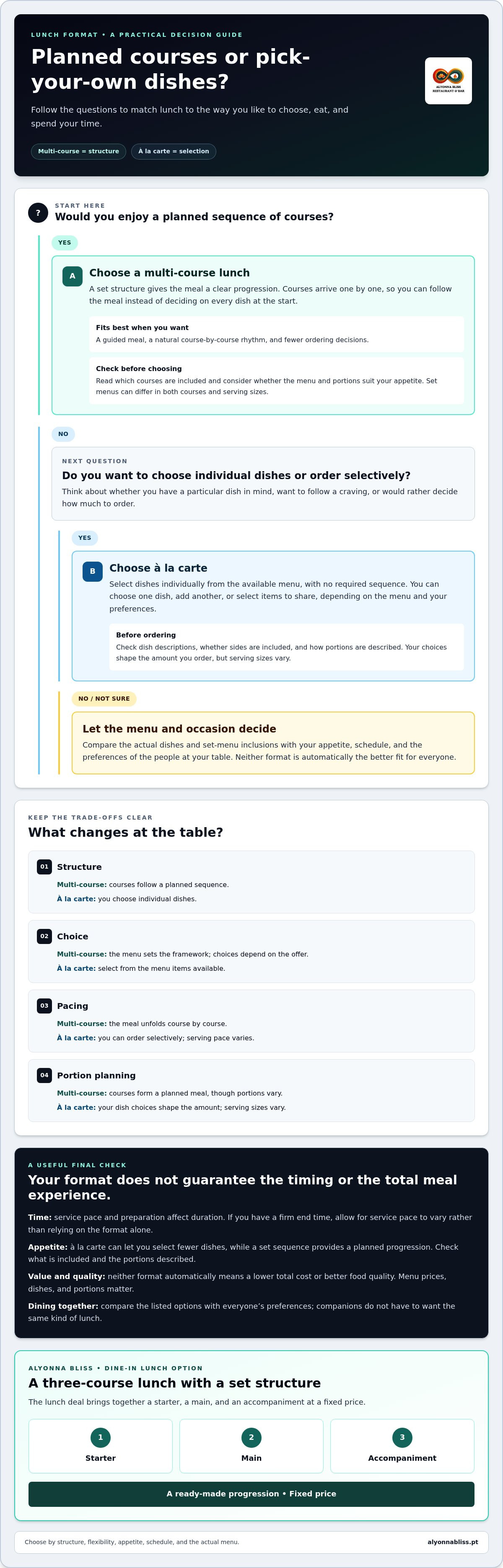
| Structure | Courses follow a planned sequence. | You choose individual dishes. |
| Choice | The menu sets the framework, with choices depending on the offer. | You select from the available menu items. |
| Pacing | The meal unfolds course by course. | You can order selectively; serving pace varies. |
| Portion planning | The courses form a planned meal, though portions vary. | You shape the amount by choosing dishes, though serving sizes vary. |
Which lunch style gives you more freedom to choose?
À la carte generally gives you more freedom to choose dishes. It can be a good fit if you have a specific craving, want to combine different options, or prefer to decide how much to order. A set sequence offers a different advantage: fewer decisions, with the meal already arranged into courses. Choose that structure if you would rather settle in and follow the meal as it arrives.
How do time and appetite affect the choice?
Consider how much time you have, but do not assume the format determines the meal’s duration. A planned progression creates a course-by-course rhythm; ordering à la carte lets you select fewer dishes if that better suits your appetite. The kitchen’s preparation and service pace also affect timing. If you have a firm end time, allow for service pace to vary rather than relying on the menu style alone.
For the multi-course lunch vs a la carte decision, start with how much flexibility you want and whether a guided sequence appeals to you. If you would enjoy a planned meal, explore Alyonna Bliss’s three-course lunch deal.
When Should You Choose a Multi-Course Lunch Instead of À La Carte?
There is no universal winner in the multi-course lunch vs a la carte choice. Begin with what you want from this meal: a guided progression, the freedom to follow a craving, or a balance of both. Your appetite, interest in variety, schedule, and the occasion can help you decide. Then compare those preferences with the actual menu.
Dining with others does not mean everyone has to want the same kind of lunch. Companions may have different preferences or appetites, so look at the available dishes and the structure of any set meal. A set menu is not automatically unsuitable for a diner, and à la carte is not automatically more accommodating. The useful question is whether the listed options work for the people at your table.
A multi-course lunch may suit diners who enjoy a guided meal
Choose a planned progression if you like the idea of a complete meal with a clear sequence, rather than deciding what to order at each step. Having the courses laid out can simplify your choice and help you settle into lunch. Before ordering, read what the menu includes and consider whether the courses suit your appetite. A set sequence provides structure, but it does not tell you exactly how large the portions will be.
À la carte may suit diners who value control
If you have one dish in mind, want a more selective lunch, or prefer to put together your own combination, individual ordering gives you greater control. You can choose what appeals to you and, if the menu and your dining companions make it practical, order items to share. Portion sizes and sharing expectations vary, so check the menu descriptions instead of assuming one dish or a shared selection will be enough for everyone.
Use these prompts to make the choice more concrete:
- Appetite: Do you want a sequence of courses, or would you rather choose only what you feel like eating?
- Variety: Would you enjoy a meal in planned stages, or prefer to choose specific dishes yourself?
- Flexibility: Does a ready-made structure sound appealing, or do you want to adjust your order?
- Occasion and schedule: Are you looking for a guided lunch to savour, or a meal shaped around your plans? Neither format guarantees a particular service duration.
Choose a sequence if its structure fits your appetite and the occasion. Choose à la carte if selecting individual dishes feels more satisfying. The right lunch is the one that suits the menu, the moment, and what you want from the meal.
How to Decide Between a Set Lunch and À La Carte Before You Sit Down
A few practical questions can make the choice clearer. Consider how hungry you are, how much freedom you want, and whether a course-by-course meal sounds enjoyable. Then read the menu. The listed dishes and course structure help you compare the actual options without relying on assumptions about portion size or pace.
A simple four-question lunch decision
- How hungry are you? Decide whether you want a full progression of dishes or just one or two items. Let your appetite guide the amount you order.
- How much choice do you want? A set structure can simplify the decision; ordering individual dishes gives you more control over the meal.
- What kind of lunch are you hoping for? Consider whether a complete set suits the occasion or whether you would rather select particular dishes.
- What does the menu say? Read the course descriptions and check what the set includes. This lets you compare the actual options rather than judging by format alone.
Make room for different preferences at one table
Sharing a table does not mean everyone has to choose the same style of lunch. One person may enjoy a planned sequence, while another prefers individual dishes. When the menu offers individual selections, each diner can choose according to their tastes. A set option may suit someone who welcomes a little guidance. If you plan to share, read the dish descriptions together and consider whether the portions and selection will work for everyone.
For a set meal, consider how the listed courses fit together and whether that progression sounds appealing. If you are thinking about flavours and course combinations, a guide to choosing three-course lunch pairings can offer another perspective.
There is no need to turn the decision into a rule. Match the menu’s structure to your appetite, preferences, and plans, while leaving room for everyone at the table to choose what feels right. For a guided lunch with a starter, main, and accompaniment, explore Alyonna Bliss’s three-course lunch experience.
Alyonna Bliss’s Three-Course Lunch: A Structured Alternative to À La Carte
Alyonna Bliss offers a dine-in three-course lunch deal for guests who enjoy a meal with a clear structure. The deal brings together a starter, a main, and an accompaniment at a fixed price. Instead of building lunch one dish at a time, you can follow a planned progression from course to course.
What the three-course lunch format offers
The format includes a starter, a main, and an accompaniment. If you like knowing that lunch is arranged as a complete sequence, this offers a structured alternative to selecting individual dishes. The specific dishes are set out on the lunch menu, so use that description to see what is included rather than assuming particular items from the wider menu are part of the deal.
Alyonna Bliss brings Indian and Nepali dining traditions together across its menu. Guests can enjoy handmade momo, Indian curries, charcoal tandoor grills, wok-fired dishes, and traditional Nepali Thakali thali and Newari khaja sets. These dishes show the wider variety available for dine-in, but they are not a list of items included in the three-course lunch deal.
Choose the dining experience that feels right
À la carte suits diners who want to choose individual dishes around a particular craving or appetite. The three-course lunch deal offers a different experience: a complete meal with a defined structure and fewer decisions along the way. Neither approach is automatically better. Think about whether you want to select each dish yourself or follow a guided progression.
That is the heart of multi-course lunch vs a la carte: choosing between a meal with a planned structure and one you shape yourself. If a starter, main, and accompaniment sound right for your next lunch, discover the Alyonna Bliss lunch experience.
Choose the Lunch That Suits Your Appetite
The choice between multi-course lunch vs a la carte comes down to the meal you want. A set sequence brings structure and fewer decisions, while à la carte gives you more control over which dishes you choose. Consider your appetite, how much flexibility you want, and whether you are in the mood for a complete progression or a more selective lunch. Neither format is automatically better, quicker, or more filling; the menu and portions matter too.
At Alyonna Bliss, the dine-in three-course lunch deal includes a starter, main, and accompaniment at a fixed price. It sits alongside a broader menu that brings Indian and Nepali culinary traditions together, with dishes and sets to explore beyond the lunch deal.
If a structured meal sounds right for your next lunch, Enjoy a thoughtfully paced lunch at Alyonna Bliss. Choose the format that suits your appetite and enjoy a meal with good company.
Frequently Asked Questions
Is a multi-course lunch the same as a set menu?
Not always, though the terms can overlap. A multi-course lunch describes a meal served in a planned sequence, while a set menu specifies what is included. Restaurants use these labels in different ways, so read the menu description rather than relying on the name alone. Check the course structure, available choices, and accompaniments to understand what the meal includes.
Can you choose your dishes in a multi-course lunch?
It depends on how the menu is designed. Some set lunches offer a fixed selection, while others let diners choose between options for one or more courses. À la carte generally gives you more control over individual dishes, but the available choices still depend on the menu. Read the descriptions before deciding, especially if you have a particular dish in mind or want to know which parts of the meal you can select.
Which is better for lunch, multi-course or à la carte?
Neither is universally better; the right fit depends on what you want from lunch. A multi-course meal may suit you if you enjoy a complete experience with a clear sequence, while à la carte can work well if you prefer choosing individual dishes or keeping your meal selective. Consider your appetite, desired flexibility, schedule, and the occasion. The multi-course lunch vs a la carte choice is personal, not a fixed rule.
Does a multi-course lunch take longer than à la carte?
Not necessarily. Courses can give lunch a more gradual rhythm, but the total time depends on preparation, service pace, and how long you choose to linger. À la carte can also involve ordering several dishes, so it does not automatically mean a shorter meal. If your schedule is tight, consider how the menu is structured and allow for service pace to vary.
Is a three-course lunch enough for a full meal?
A three-course lunch is arranged as a complete meal, but how filling it feels depends on your appetite, the portions, and the dishes served. Alyonna Bliss’s dine-in lunch deal includes a starter, main, and accompaniment. Consider your appetite when deciding whether that structure suits you. The number of courses alone cannot tell you exactly how full you will feel, since portions and dishes vary.
Can a group choose à la carte instead of a set lunch?
Yes. À la carte lets each diner select individual dishes, which can suit a group with varied tastes or appetites. A set lunch offers a shared structure, with choices depending on the menu. You do not have to assume everyone at the table wants the same format. Look over the options together and decide whether individual selections or a guided sequence would make the meal more enjoyable for your group.
What is included in Alyonna Bliss’s three-course lunch deal?
Alyonna Bliss’s dine-in three-course lunch deal includes a starter, a main, and an accompaniment at a fixed price. The specific dishes are described on the lunch menu, so do not assume every dish from the wider Indian and Nepali menu is part of the deal. Read the lunch menu to see the dishes and how the courses are arranged.


