
What if a short lunch could feel like a full journey through South Asian flavours? Searching for a quality lunch set menu can raise practical questions: what’s included, how much choice is there, and will three courses fit your break? A good set lunch should make those details easy to understand, with a clear sequence from the first course to the last.
At Alyonna Bliss, the three-course lunch deal is structured around a starter, a main, and an accompaniment. It offers a guided way to enjoy Nepali and Indian cooking at the table. The specific dishes may vary, so check the current menu rather than assuming that favourites from the wider menu, such as momo or Indian curries, are included. This guide explains what to check, how to decide between a set meal and à la carte, and how to choose an option that suits your appetite and schedule.
Key Takeaways
- A set menu gives lunch a planned sequence, so you can enjoy several courses without selecting every dish individually.
- Compare the course structure and current inclusions rather than assuming all set menus contain the same dishes or extras.
- Before ordering, ask about ingredients, allergens, spice levels, dietary needs, and the pace of service.
- Choose between a set menu and à la carte based on whether you prefer a guided meal or more control over each selection.
- Alyonna Bliss offers a dedicated dine-in lunch deal alongside a wider menu of Nepali and Indian dishes.
Why choose a lunch set menu for a more complete midday meal?
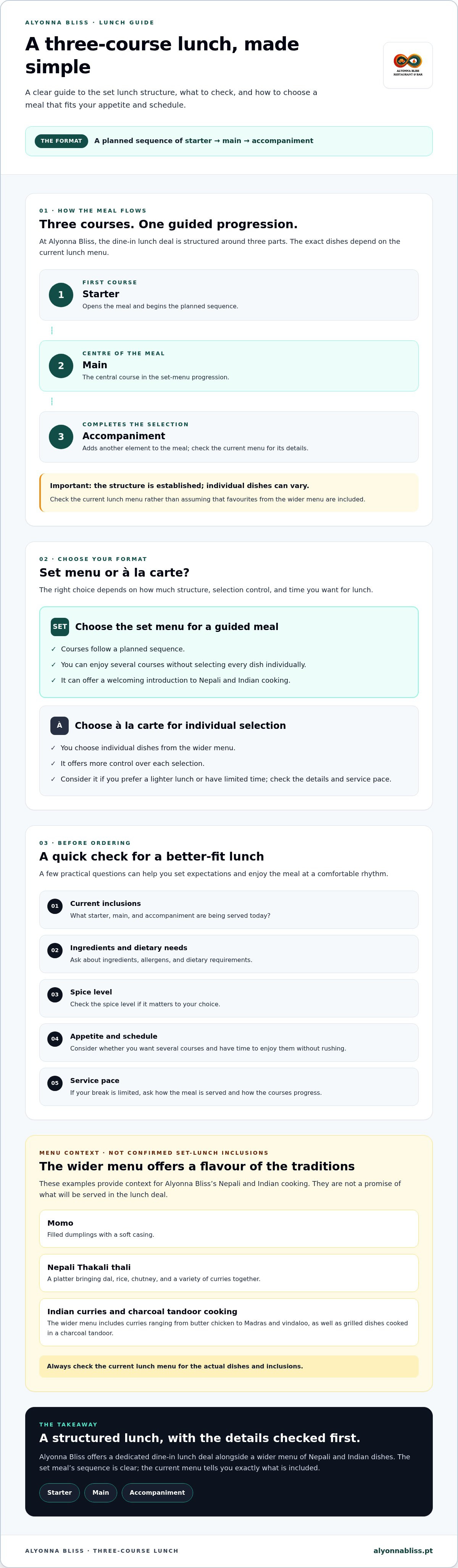
A lunch set menu gives a meal a clear shape: courses arrive in sequence, following a planned structure rather than asking you to choose every element separately. The idea is closely related to the table d'hôte, a set meal with a defined selection. At Alyonna Bliss, the three-course lunch deal is structured around a starter, a main, and an accompaniment.
This sequence can make lunch feel considered as well as convenient. The starter opens the meal, the main provides its centrepiece, and the accompaniment completes the selection. Depending on the dishes, the courses may offer contrasting flavours and textures. A set format can also make ordering simpler because you follow a planned progression instead of building a meal one dish at a time.
There is no universal template for a set lunch. Dishes, portions, and service pace depend on the current menu and restaurant. Check the lunch offering before visiting, and ask how the meal is served if you have a limited break.
What makes a set lunch feel like a complete meal?
Completeness comes from how the courses work together, not from assuming every set menu contains the same dishes. A starter can offer a lighter beginning before a more substantial main, while the accompaniment adds another element to the meal. In a South Asian setting, that structure can be a welcoming introduction to varied flavours and textures. The exact dishes at Alyonna Bliss depend on its current lunch menu, so check what is included rather than relying on examples from the wider menu.
Who might enjoy a structured midday meal?
A set lunch can suit diners who appreciate a clear plan, as well as first-time guests curious about Nepali and Indian food but unsure where to begin. With courses arranged as a meal, you can focus on tasting and ask questions about ingredients or spice as needed.
Your appetite and available time matter, too. A multi-course meal may suit a break when you can enjoy each stage without rushing. If you prefer a lighter lunch or have little time, check the course details and ask about the pace of service before ordering. That helps you choose with realistic expectations and enjoy the meal at a comfortable rhythm.
What can a South Asian three-course lunch set menu include?
At Alyonna Bliss, the confirmed lunch structure is a starter, a main, and an accompaniment. The specific dishes should be checked on the current lunch menu rather than guessed from the restaurant’s wider offerings. For anyone comparing a lunch set menu lisbon option, this distinction matters: the format is established, while individual inclusions depend on the current menu.
A structured meal often moves from an opening taste towards a more substantial centrepiece. The accompaniment may add a different flavour or texture alongside the main. To see how varied a central course can be, explore The Guardian’s collection of main course recipes. It offers examples of how a main dish can anchor a meal, while a set menu creates its own progression around it.
How might the courses unfold at the table?
Think of the courses as a sequence, not a promise of particular dishes: the first course opens the meal, the main becomes its heart, and the accompaniment adds another note. Depending on what is served, it might bring a contrasting texture or flavour to the plate. These are ways courses can complement each other, not confirmed descriptions of the current lunch deal. Ask what is being served that day if you want to know how the dishes come together.
How do Nepali and Indian flavours add variety?
Alyonna Bliss’s wider menu gives context for the traditions behind the lunch deal, although these examples are not confirmed inclusions. Momo are filled dumplings with a soft casing. A Nepali Thakali thali set brings dal, rice, chutney, and a variety of curries together on a platter. Indian curries range from butter chicken to Madras and vindaloo, while charcoal tandoor cooking gives grilled dishes their distinctive char.
These wider-menu examples offer a starting point for understanding the range of flavours and textures available, not a preview of exactly what will arrive as part of the set lunch. Check the three-course lunch details before dining in to confirm the current courses.
Lunch set menu or à la carte: which suits your midday plans?
The right format depends on what you want from lunch. A set menu gives the meal a planned sequence, while à la carte lets you choose individual dishes. When comparing a lunch set menu lisbon option with ordering from a wider menu, consider how much choice and flexibility you want, along with how much time you have.
| Consideration | Set menu | À la carte |
|---|---|---|
| Structure | Courses follow a planned sequence. | You select dishes individually. |
| Choice | Choices follow the current set offering. | You can choose from currently available individual dishes. |
| Pacing | Courses arrive as part of a coordinated meal. | You have more say in what and how much you order. |
| May suit | Diners who like a guided meal and fewer decisions. | Diners with specific cravings or varied appetites. |
Neither format is automatically better. A set meal can simplify decisions, while à la carte gives you more control over your order. Planning ahead can help you make choices that suit your needs, as Harvard Health Publishing explains in its article on the benefits of planning your meals. The current menu determines the available dishes, portions, and timing, so check the details before deciding.
When is a set menu the more convenient choice?
A planned sequence can reduce time spent deciding what to order. It may also appeal if you enjoy tasting a meal as it unfolds, with each course forming part of a coordinated whole. A set menu does not guarantee a particular service speed, however. If your break is tight, ask the restaurant about current serving times and course pacing before planning your visit.
When might ordering individual dishes suit you better?
À la carte may be a better fit if you have a particular dish in mind, want more control over your selection, or have an appetite that does not suit a set meal. It can also offer flexibility when people at the same table want different dishes. Check which items and ordering options are currently available rather than assuming every wider-menu dish can be ordered at lunch.
How to choose a lunch set menu that fits your appetite and schedule
A little preparation can make a three-course lunch feel straightforward rather than uncertain. Before choosing a lunch set menu lisbon option, consider your appetite, the time you have, and the flavours you enjoy. Then check the current details with the restaurant. Menus and service arrangements can change, so asking directly is more reliable than assuming.
Use this checklist to make your choice:
- Check the courses. Read the current menu to see what the starter, main, and accompaniment include, and whether any choices are available.
- Consider your appetite. If you prefer a lighter meal or are especially hungry, ask about portions before ordering.
- Review spice and ingredients. Share your preferences and ask about ingredients, allergens, and dietary needs. Don’t assume a dish can be adjusted or is suitable without checking.
- Confirm practical details. Ask about current lunch service times, how long the courses typically take, and whether you need to order in advance.
These questions help you decide whether the meal fits your break without relying on a promised duration. They also give staff useful context to guide you, whether you enjoy warming spices or prefer gentler flavours.
What should you check before choosing?
Start with the current menu. Look for course descriptions, available selections, and details that help you judge whether the meal suits your appetite. If anything is unclear, ask about ingredients, allergens, dietary requirements, and spice levels. Then confirm service times and ordering arrangements, including whether advance ordering is needed. That way, you can plan using information about the current offer.
How can first-time diners approach unfamiliar dishes?
You do not need to know every dish in advance. Ask staff to describe unfamiliar names in plain language, and explain what you enjoy, such as mild or lively heat, a particular texture, or ingredients you avoid. Wider-menu examples such as momo, Nepali Thakali thali sets, and Indian curries offer a glimpse of the restaurant’s cooking, but do not assume they are included in the lunch deal.
For a more confident visit, explore Alyonna Bliss’s three-course lunch deal and check the current menu and practical details before dining in.
Enjoy a three-course lunch at Alyonna Bliss
Alyonna Bliss welcomes dine-in guests to its dedicated three-course lunch deal, which brings a clear structure to a midday meal. For diners considering a lunch set menu lisbon option, it offers a way to explore South Asian flavours through a planned sequence, while the wider menu reflects the restaurant’s Nepali and Indian cooking.
The lunch deal follows a starter, main, and accompaniment format. The specific dishes should always be confirmed against the current lunch menu. This lets you understand the shape of the meal without assuming that a particular dish from elsewhere on the menu will be included.
What makes the Alyonna Bliss lunch experience distinctive?
The wider menu draws on Nepali and Indian traditions, with examples including handmade momo, Nepali Thakali thali sets, Indian curries, and tandoor dishes. These offer different ways to explore the menu, from filled dumplings to a platter bringing dal, rice, chutney, and curries together. They are examples of the wider offering, not promised courses in the lunch deal.
That variety offers diners different flavours, textures, and culinary traditions to discover. Whether you already know South Asian food or are trying it for the first time, asking about the menu can help you find a comfortable place to begin. Take time to savour the meal at your own pace and enjoy a lunch that feels more considered than a quick pause in the day.
How can you plan your visit with confidence?
Before visiting, check the current lunch menu and confirm practical details directly with the restaurant. Ask which dishes are included, when the lunch deal is served, whether advance ordering is needed, and whether your dietary needs can be accommodated. Prices, service times, and availability can change, so rely on current information rather than assumptions.
Once you have those details, you can focus on the meal: a planned sequence and the chance to discover Nepali and Indian flavours. Explore the Alyonna Bliss lunch offering and check the current details before visiting.
Make Your Next Lunch a Moment to Savour
A set menu can bring structure to the middle of the day, guiding you through courses without asking you to choose every dish separately. The right option still depends on your appetite, available time, and preferences. Check the current menu and ask about ingredients, spice, and pacing before ordering.
For anyone exploring a lunch set menu lisbon, Alyonna Bliss offers a dedicated three-course midday meal for dine-in guests, alongside a wider menu rooted in Nepali and Indian food traditions. The lunch deal follows a starter, main, and accompaniment format; confirm the specific dishes and practical details before you visit.
Review the current offering, then settle in ready to discover the flavours at your own pace. Explore the Alyonna Bliss lunch offering and plan a midday meal that feels welcoming, considered, and complete.
Frequently Asked Questions
What is included in a three-course lunch set menu?
Alyonna Bliss’s three-course lunch deal is structured around a starter, a main, and an accompaniment. The exact dishes and any choices depend on the current lunch menu, so check what is included before visiting rather than assuming wider-menu favourites are part of the set. The format gives you a clear idea of the meal while leaving room to discover the dishes being served that day.
Is a lunch set menu a good choice if I have limited time?
It can simplify ordering, but there is no confirmed dining duration for a three-course meal. If your lunch break is short, ask the restaurant about course pacing and how long service may take before deciding. Check current serving times, too, so you can choose based on the information available rather than assuming the meal will be quick.
Can I ask for a milder dish or dietary adjustments?
Ask staff about spice levels, ingredients, and dietary needs before ordering. Whether a dish can be made milder or adjusted is not confirmed, so explain your preferences and check what is possible rather than assuming changes can be made. If you have an allergy or strict dietary requirement, describe it clearly and ask whether the current menu can accommodate it before choosing a course.
How do I choose between a set menu and ordering à la carte?
Choose a set menu if you like a planned sequence and want fewer decisions; choose à la carte if you prefer selecting individual dishes or controlling how much you order. Your appetite, available time, and interest in exploring different flavours can all guide your choice. Check the current menu to see what the set includes and which individual dishes are available.
What should I expect when trying Nepali food for the first time?
Expect a range of dishes and textures, and ask staff to describe anything unfamiliar in plain language. Momo are filled dumplings, while a Nepali Thakali thali set brings dal, rice, chutney, and curries together on a platter. These are examples from Alyonna Bliss’s wider menu, not guaranteed lunch-deal inclusions. Mention any preferences around spice or ingredients before ordering.
Do I need to pre-order a lunch set menu?
Advance ordering requirements are not confirmed, so contact the restaurant or ask staff before planning your visit. Check whether you can order the lunch deal when you arrive, and confirm its current serving times and availability. This is especially useful if you have a limited lunch break or need to plan around dietary requirements. Do not assume pre-ordering is either required or unnecessary without checking.
Is every dish on the restaurant menu part of the lunch deal?
No. The lunch deal has a three-course structure, but dishes from Alyonna Bliss’s wider menu are not automatically included. Momo, Indian curries, Thakali thali sets, and tandoor dishes are examples of other offerings, not confirmed lunch-set courses. Check the current lunch menu for the exact starter, main, and accompaniment, and ask staff if you have a particular dish in mind.


