

What if the best way to choose an indian restaurant is to start with the kind of meal you want, not the dish name you recognise? An unfamiliar menu can make spice levels, accompaniments, and meal formats feel like a guessing game, especially when Indian and Nepali dishes appear side by side.
That uncertainty is understandable. An Indian curry with tandoor flatbread offers a different kind of meal from a Nepali Thakali set, where dal, rice, chutney, and curries come together on one platter. Momo and Newari khaja sets bring still more options, and you don’t need to know every culinary tradition before you sit down.
This guide will help you choose a restaurant that suits the occasion, read a menu with greater confidence, and build a meal around the flavours you enjoy. You’ll find ways to compare curries, tandoor dishes, set meals, and wok cooked plates, along with practical questions to ask about ingredients and spice. With a little guidance, choosing what to order can become part of the pleasure.
Key Takeaways
- Choose an indian restaurant by the kind of meal and dining experience you want, then use the menu to explore beyond familiar names.
- Compare set meals, curry dishes, charcoal tandoor grills, and wok cooked plates to find a format that suits your occasion.
- Recognise Thakali and Newari sets as distinct Nepali dining traditions, not interchangeable names for the same meal.
- Order with confidence by choosing a meal format, selecting a main, adding an accompaniment, and asking the restaurant about anything unclear.
- Discover how Alyonna Bliss brings Indian and Nepali dishes together for on premise dining, from momo and curries to set meals and tandoor dishes.
What to Expect When Choosing an Indian Restaurant
An indian restaurant centres its menu on dishes and culinary traditions from India. That describes a culinary focus, not a guarantee that every familiar dish will be available or prepared the same way. An Indian restaurant is defined by its culinary focus; its menu reflects the individual kitchen, not a fixed list of dishes.
When comparing places to eat, look at meal format as well as dish names. A curry ordered separately, a set meal that brings several elements together, and dishes chosen for the table can all make for different dining experiences. Start by asking yourself what you want from the meal: a particular curry, a range of flavours on one platter, or a mix of dishes to share.
The traditions within Indian cuisine are shaped by regional histories, ingredients, and cooking practices. One restaurant may focus on certain regions or techniques, while another offers a different selection. Even familiar categories can vary in seasoning, texture, and preparation. Check the menu directly rather than assuming every restaurant serves the same regional dishes.
What does an Indian restaurant menu usually include?
Depending on the restaurant, you may find curries, grilled foods, breads, rice, and dishes designed for sharing. These categories are a starting point, not a checklist. One kitchen might offer charcoal grilled dishes and freshly baked tandoor flatbread; another may focus on a different range of regional specialities. Read descriptions for clues about cooking method and suggested accompaniments. If a dish’s ingredients or preparation aren’t clear, ask before ordering.
How can a first-time diner feel at ease?
Curiosity is enough. Choose a dish that sounds appealing, then ask a member of staff what an unfamiliar name means or how it’s prepared. If the menu describes spice, use that as a guide, but don’t assume every dish has the same heat. You can ask whether a dish is mild, warming, or notably spicy, and whether its description refers to chilli or a fuller blend of spices.
You don’t need expert knowledge to enjoy the meal. Take your time, share what you like, and let the menu and conversation guide your order. A simple question can turn unfamiliar names into an invitation to discover fragrant sauces, charred edges, warm bread, and new favourites together.
Explore Indian and Nepali Dishes Without Confusing Their Traditions
Alyonna Bliss brings Indian and Nepali cooking to one table while keeping each tradition distinct. A shared menu offers a chance to explore both, but it doesn’t make the cuisines interchangeable. A restaurant can serve Indian and Nepali dishes side by side without making their culinary traditions the same.
That distinction helps you choose with intention. An Indian restaurant menu might draw you towards a curry or a charcoal grilled dish; a Nepali set meal offers a different way to eat, bringing several elements together on a platter. Momo, noodles, and rice add further options, each with its own preparation and place on the menu. For examples of restaurants presenting Indian cuisine in varied ways, see the MICHELIN-Starred Indian Restaurants feature.
How do Indian curries and tandoor dishes differ?
A curry is a sauce based choice: its seasoning, texture, and heat shape the character of the dish. At Alyonna Bliss, examples include butter chicken, madras, and vindaloo. The names identify different dishes, but don’t rely on a name alone to predict the spice level. Ask staff about the preparation and heat if you’re unsure.
Tandoor cooking offers another experience. Charcoal tandoor grills bring a cooked over fire character, while freshly baked tandoor flatbreads provide a warm accompaniment. A curry with flatbread and a grilled dish are different ways to build a meal, so consider whether you’re in the mood for a saucy main, grilled flavours, or a combination. For more context on the restaurant’s dishes, explore the Indian and Nepali menu.
What makes Nepali set meals and momo distinctive?
A Thakali thali is a platter combining dal, rice, chutney, a variety of curries, butter, and more. Instead of choosing each part separately, you can try a range of flavours together in one set meal. The Newari khaja set is a separate Nepali set meal option, not another name for a Thakali thali.
Momo offer a different way to begin or share a meal. These handmade dumplings are available steamed or fried, giving you a choice between a tender bite and a crispier finish. Alongside these Nepali dishes, the menu includes Indian curries, tandoor grills and flatbreads, chowmein, and fried rice. If a preparation is unfamiliar, ask about it, then choose a combination that suits your appetite and the company around your table.
How to Compare Indian Restaurants Before You Choose
A useful comparison starts with your appetite and the occasion, not a ranking. One indian restaurant may suit a curry dinner, while another menu might offer set meals, grilled dishes, or wok cooked plates. Indian and Nepali food shouldn’t be reduced to one flavour profile: recipes, seasoning, and cooking methods differ. Compare the specific dishes on the menus rather than relying on broad assumptions.
| What to compare | What to look for | May suit you if… |
|---|---|---|
| Menu fit | Check whether the menu has the kind of dish you’re craving, such as a curry, set meal, grilled dish, or noodles. | You have a particular appetite or want to explore a new category. |
| Cooking style | Look for descriptions of saucy curries, charcoal grilling, baked flatbreads, or wok cooking. | You’re choosing between rich, smoky, soft, or quickly cooked textures. |
| Meal format | See whether dishes come as a set or are ordered separately. | You’d like several complementary elements together or prefer to build your own combination. |
| Dine-in needs | Confirm that the restaurant serves guests on the premises and that its service suits your planned meal. | You’re looking for a place to sit down for lunch or dinner. |
Which menu style suits the meal you have in mind?
A set meal can suit you if you’d like several complementary elements brought together on one platter. A curry with flatbread is a familiar, flexible pairing: choose the sauce based main, then consider bread as an accompaniment. For a different texture, look for a charcoal grilled dish. Wok cooked noodles or rice may appeal if you’d like a dish prepared in another style. These are ways to narrow your options, not rules about what you should order.
What should you check before deciding?
Menus and dish availability can change, so review the current selection and confirm details directly with the restaurant. If ingredients, allergens, or spice levels affect your decision, ask staff rather than guessing from a dish name. Finally, check that the venue offers the dine in experience you want. A thoughtful choice brings the food, format, and occasion together, while leaving room to discover something new.
How to Order Confidently at an Indian Restaurant
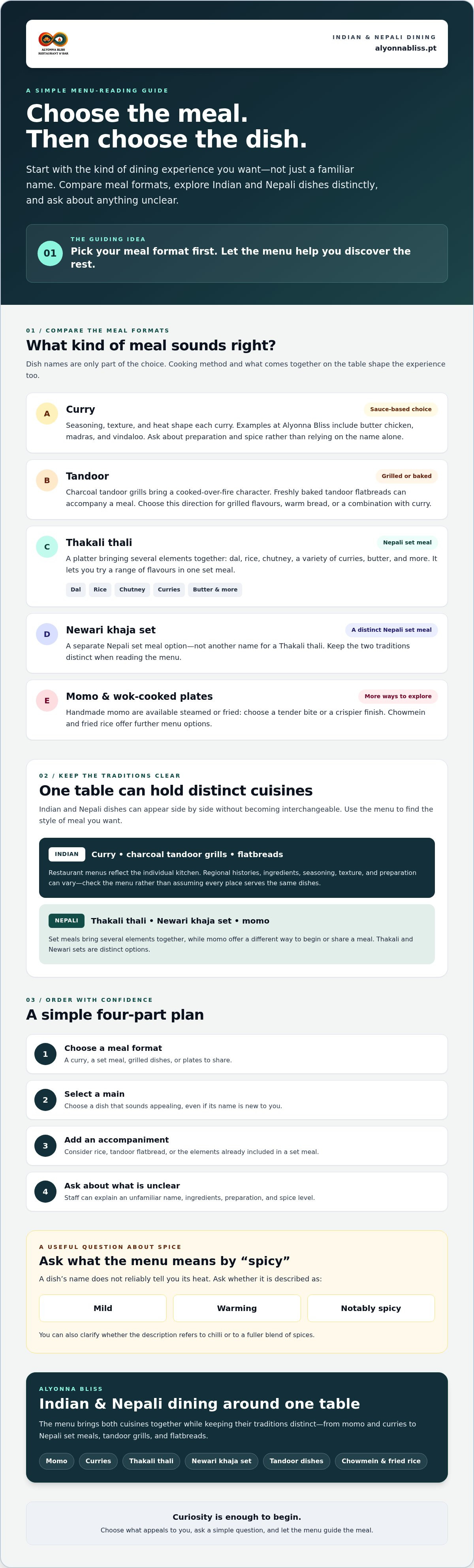
A simple order can follow four steps: choose the meal format, select a main, add an accompaniment if you’d like one, then ask about anything unclear. This gives you a path through an Indian restaurant menu without needing to know every dish in advance. Keep your appetite and the occasion in mind, then use the menu descriptions and staff guidance to make your final choice.
A set meal brings several elements together as a named option, while ordering separate dishes lets you choose each item individually. Don’t assume a portion size or combination beyond what the menu describes. Check the listing or ask staff how the meal is served if you’re unsure.
How can you build a balanced meal from the menu?
If you’d like several flavours in one choice, consider a Thakali thali. Its confirmed components include dal, rice, chutney, a variety of curries, butter, and more, brought together on a platter. For a more focused pairing, choose an Indian curry with freshly baked tandoor flatbread. The bread is an accompaniment, while the curry’s sauce and seasoning remain at the centre of the meal.
You can also start with another menu category. Momo may suit you if you’re drawn to handmade dumplings; chowmein or fried rice offer a noodle or rice based option. First decide whether you’d prefer a set meal, a main with an accompaniment, or one of these alternatives. That small decision makes it easier to narrow the menu without guessing.
What should you ask when a dish is unfamiliar?
Ask a member of staff to explain the ingredients, preparation, and expected spice level. A dish name alone can’t confirm its heat or suitability for your preferences. If you have an allergy or need specific ingredient information, check directly with the restaurant before ordering. Don’t infer allergen details from a description or assume a dish is suitable.
It’s helpful to share what you enjoy, what you’d rather avoid, and whether you’re choosing for yourself or the table. Staff can clarify the available choices, while you stay in control of the order. A clear question can make an unfamiliar menu feel welcoming.
Ready to explore these choices over a dine in meal? Explore Indian and Nepali dining at Alyonna Bliss.
Alyonna Bliss: Indian and Nepali Dining Around One Table
Alyonna Bliss is a dine in restaurant serving Indian and Nepali dishes, with a menu that gives you more than one way to explore South Asian cooking. You might choose a Nepali set meal, a curry with fresh flatbread, a charcoal grilled dish, or a wok cooked option. The traditions remain distinct, while the shared menu makes it easy to discover what appeals to you.
For a structured midday meal, the three course lunch deal offers a dedicated dine in option. Check the current menu for details, then choose with the occasion in mind, whether you’re planning a lunch break, an unhurried meal, or a chance to try something new. As with any indian restaurant, the menu is the best guide to the dishes currently offered and how they’re described.
What can diners discover on the menu?
Nepali choices include the Thakali thali, a platter with dal, rice, chutney, a variety of curries, butter, and more, and the Newari khaja set, a separate set meal option. Handmade momo are available steamed or fried, so you can choose the softer or crispier preparation.
For Indian flavours, the menu includes curries such as butter chicken, madras, and vindaloo, alongside charcoal tandoor grills and freshly baked tandoor flatbreads. The grill offers a different texture and character from a curry, while flatbread can accompany a saucy dish. Chowmein, fried rice, and pad thai add wok cooked options for diners drawn to noodles or rice. Together, these choices invite discovery without asking you to treat Indian and Nepali dishes as the same tradition.
If you’re choosing with others, compare what everyone feels like eating: a set meal, dumplings to share, curry and bread, or a grilled or wok cooked dish. Ask staff about ingredients, preparation, and spice if you need guidance. Don’t assume those details from a dish name alone.
How can readers take the next step?
Before visiting, explore the current menu and restaurant information to see which dishes and details are listed. If you have a question about ingredients, allergens, or spice, check directly with the restaurant. A little preparation leaves more room at the table for good conversation, new flavours, and the pleasure of choosing together.
Explore Alyonna Bliss’s current menu and restaurant information, then find the dishes that make you curious. Choose a meal that suits your appetite and the company you bring.
Choose Your Next Meal with Confidence
A memorable South Asian meal starts with what suits your appetite and occasion. When choosing an indian restaurant, look beyond familiar dish names: consider whether you’d enjoy a set meal, a curry with flatbread, charcoal grilled flavours, or a wok cooked dish. Indian and Nepali cooking each bring their own traditions to the table.
Alyonna Bliss serves both cuisines for on premise dining, with handmade momo, Indian curries, charcoal tandoor dishes, and Nepali Thakali and Newari set meals. For a structured midday meal, there’s also a dedicated three course lunch deal. If you’re unsure about ingredients or spice, ask the restaurant directly and check the current menu before visiting.
Explore the menu and plan a welcoming meal at Alyonna Bliss. Take your time choosing, bring your curiosity, and discover a new flavour around the table.
Frequently Asked Questions
What should I order at an Indian restaurant for the first time?
Start with a dish whose description appeals to you, then ask staff about its preparation and spice level if you’re unsure. At an indian restaurant, you might choose a curry with tandoor flatbread, a charcoal grilled dish, or a set meal if you’d like several elements together. You don’t need to know every dish name in advance. Mention the flavours and textures you enjoy, and let the menu guide your first choice.
Is Indian food always spicy?
No, Indian food isn’t always spicy, and dishes can vary in seasoning and heat. A menu name alone may not tell you how much chilli a dish contains or how warm its spice profile feels. Ask restaurant staff what to expect and explain your preference, whether you enjoy gentle seasoning or more heat. If spice affects your choice, confirm the details directly rather than assuming all dishes are prepared alike.
What is the difference between Indian and Nepali food?
Indian and Nepali cuisines have distinct culinary traditions, though each includes a wide range of regional dishes and flavours. Indian menus may feature curries and tandoor cooking, while Nepali choices at Alyonna Bliss include Thakali and Newari set meals and handmade momo. These examples aren’t a complete definition of either cuisine. Compare specific dish descriptions and ask how they’re prepared instead of assuming all South Asian food tastes the same.
What is a Nepali Thakali thali?
A Nepali Thakali thali is a platter that brings several elements together in one meal. At Alyonna Bliss, it includes dal, rice, chutney, a variety of curries, butter, and more. It offers a different format from choosing each dish separately, but check the current menu for its description and details. If you’re unfamiliar with an ingredient or preparation, ask staff before ordering so you can choose with confidence.
Are momo steamed or fried?
Momo at Alyonna Bliss are handmade and available steamed or fried. Steamed momo offer a tender dumpling texture, while fried momo have a crispier finish. If you’re deciding between the two, consider which texture sounds more appealing or ask staff for guidance. You can also check the current menu to confirm the available preparation. If you have ingredient or allergen questions, ask the restaurant directly rather than relying on the dish name.
Does Alyonna Bliss offer dine-in lunch and dinner?
Yes. Alyonna Bliss serves guests on the premises, with a dedicated three course lunch deal and full dinner service. The lunch deal provides a structured midday meal, while the broader menu includes Indian and Nepali dishes such as curries, set meals, momo, and charcoal tandoor grills. Check the restaurant’s current information before visiting for details about the menu and service, as specific hours and dish availability can change.


