

Searching for authentic nepali momo? Start with the basics: momo are handmade Nepali dumplings, and the choice between steamed and fried changes their texture. Traditional Himalayan seasoning brings character to each bite, while a broader Nepali meal can introduce you to more than dumplings alone.
If unfamiliar menu names leave you wondering where to begin, it helps to know what to expect at the table. Recipes vary, so there is no single shape or filling that defines every momo. This guide explains how preparation affects the bite, how to enjoy momo on a first visit, and how they can fit into a wider Nepali meal.
At Alyonna Bliss, momo are handmade and served steamed or fried, with traditional Himalayan seasoning. You can enjoy them on their own or explore other Nepali dishes, including Thakali thali and Newari khaja sets. Use texture as your starting point, then follow your curiosity from there.
Key Takeaways
- Momo are Nepali dumplings whose character comes from their preparation, seasoning, and place in a meal.
- Hand-shaped dough can give each momo its own appearance and bite; there is no universal shape or folding style.
- Choose steamed momo for a softer texture or fried momo for a crisp outer bite.
- Handmade momo with traditional Himalayan seasoning can offer an introduction to Nepali food.
- Momo can be enjoyed on their own or as part of a broader Nepali meal, including a Thakali thali or Newari khaja set.
What Is Nepali Momo? Understanding the Dumpling Beyond Its Name
Momo are dumplings associated with Nepali cuisine, made by enclosing a filling in dough and cooking the shaped parcels. That description gives you the basic idea, but not the whole experience. Dumplings appear in many food traditions; the preparation, seasoning, and way momo fit into a meal give each version its character.
If you’re trying momo for the first time, it’s natural to wonder what might be inside, how they’re cooked, and how to eat them. Recipes and restaurant preparations vary, so there is no single shape, filling, or accompaniment that defines every version. For a broad overview of the dish’s variations and context, see What is Momo?
How Is Nepali Momo Different from a Generic Dumpling?
Calling momo a dumpling describes its broad form, much as calling a dish “bread” tells you little about its ingredients or traditions. Shape alone can’t identify a culinary heritage. Dough, filling, cooking method, and seasoning all contribute to a particular preparation, and recipes differ between kitchens. Himalayan influences offer useful context, but Nepali momo aren’t limited to one canonical recipe. Approach each plate on its own terms rather than expecting one fixed version.
Why Momo Has a Place in Nepali Food Culture
Momo are a familiar part of Nepali food culture and can be enjoyed in a range of dining settings. Their appeal isn’t only in the dumplings themselves: sharing a plate can bring people together and invite conversation about different textures and flavours. There is no single ritual for every momo meal. The dish can be satisfying and sociable, with room for personal preference at the table.
For a first taste, start with curiosity rather than a search for the “correct” way to eat. Notice the dough, seasoning, and cooking style, then take your time with the flavours. At Alyonna Bliss, handmade momo are served steamed or fried and seasoned in a traditional Himalayan style. They can also be enjoyed alongside other Nepali dishes for an introduction to flavours beyond the dumpling itself.
From Hand-Shaped Dumpling to Plate: What Defines Momo Craft?
A momo starts with dough gathered around a filling and shaped into a parcel for cooking. The details vary from kitchen to kitchen: some may look rounded, while others are folded or gathered. No single outline defines every momo. The aim is to bring wrapper and filling together in a cohesive bite, not to match one ideal shape.
Careful shaping helps the dough hold together around its filling as the momo cooks. A finished bite may offer a tender wrapper, a warm centre, and aromatic seasoning. The exact result depends on the dough, filling, preparation, and the cook’s hand, so appearance and texture can vary.
What Can Diners Notice in a Well-Made Momo?
Notice whether the parcel holds its shape, then pay attention to the wrapper as you bite through it. The dough and filling should come together in a balanced mouthful, rather than one overwhelming the other. Appearance varies, so a different fold or size doesn’t make a momo less authentic. Handmade dumplings may have small differences from piece to piece.
At Alyonna Bliss, momo are handmade. That describes how they’re prepared, not a requirement that every piece look identical or follow one universal shaping method. Focus on the bite: the wrapper’s texture, the warmth of the centre, and how the seasoning brings the elements together.
How Traditional Seasoning Shapes the Experience
Seasoning gives a dumpling character beyond its dough and filling. Aroma may greet you before the first bite, while savoury warmth can bring the different elements into balance. The impression depends on the recipe, so there’s no need to expect every Nepali momo to taste alike or to look for one particular flavour.
Alyonna Bliss seasons its handmade momo in a traditional Himalayan style. Taste them slowly and notice how the seasoning meets the wrapper and filling. To enjoy them as part of a dine-in meal, enjoy handmade Nepali momo.
Steamed or Fried Nepali Momo: How the Cooking Style Changes the Bite
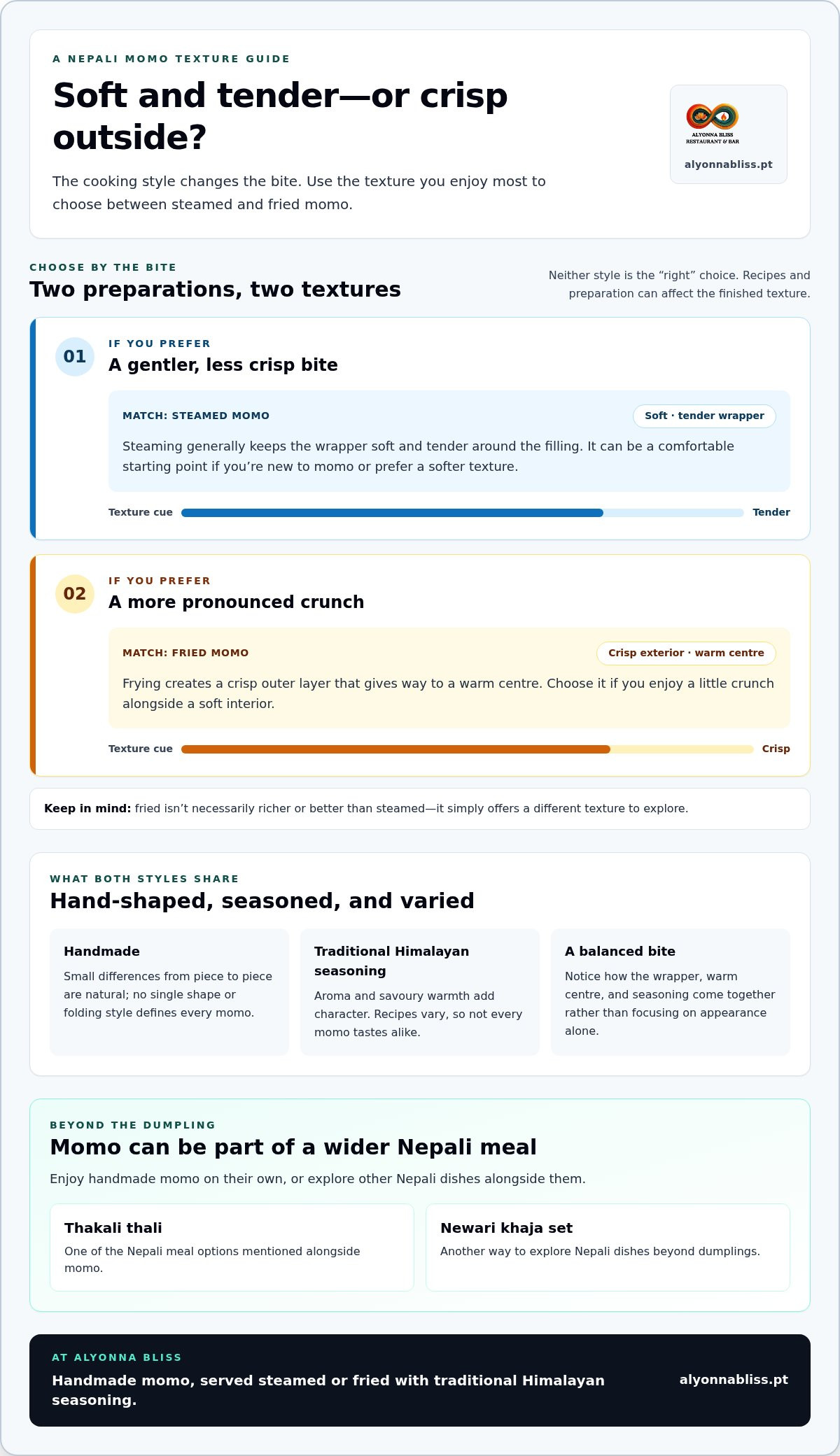
The same kind of dumpling can feel quite different depending on how it’s cooked. Steaming generally keeps the wrapper soft and tender, while frying creates a crisp outer texture. Neither style is the “right” choice. Think about the bite you’d enjoy most, then let that preference guide your order.
Use this simple comparison to picture the difference. The finished texture can vary with the recipe and preparation.
| Preparation | General texture | You might enjoy it if you prefer |
|---|---|---|
| Steamed | Soft, tender wrapper | A gentler, less crisp bite |
| Fried | Crisp exterior with a warm centre | A more pronounced crunch |
What Should I Expect from Steamed Momo?
Steamed momo tend to foreground the softness of the dough, creating a tender wrapper around the filling. They’re a comfortable starting point if you’re new to momo or prefer a gentler texture without a crisp exterior. Take a bite slowly and notice how the wrapper and filling come together; you don’t need to know a particular recipe to enjoy the contrast.
What Changes When Momo Is Fried?
Frying introduces a crisp outer layer that gives way to a warm centre. The contrast is more noticeable than with steamed momo, so this preparation may appeal if you enjoy a little crunch alongside a soft interior. It isn’t necessarily richer or better than steaming; it simply offers a different texture to explore.
At Alyonna Bliss, handmade Nepali momo are served steamed or fried and seasoned in a traditional Himalayan style. If you’re choosing nepali momo lisbon for your first taste, start with the texture that sounds most inviting. For a side-by-side look at the two methods, compare the softer bite of steamed momo with the crisp exterior of fried momo.
How to Enjoy Nepali Momo on a First Visit
Your first plate doesn’t call for a rulebook. Begin with the texture you enjoy, notice the aroma, then taste at an unhurried pace. Momo can be a simple introduction to Nepali dining: a warm, savoury bite that leaves room to explore the rest of the meal if you wish.
- Choose a style. Pick steamed momo for a softer bite or fried momo for a crisp exterior. Choose the one that sounds most inviting.
- Pause for the aroma. Notice the fragrance before tasting, without trying to identify particular ingredients.
- Taste slowly. Start with the momo as served, then try any accompaniment that comes with it.
How Do You Eat Momo?
Try the first bite on its own so you can notice the dough, filling, and seasoning together. If an accompaniment is served, taste a little alongside the next bite and see how it changes the flavour. Customs and accompaniments vary, so there’s no rigid ritual to follow; eat in the way that feels comfortable.
A slower first taste can help you work out what you enjoy most. Is it the tender wrapper, the warm centre, or the way the seasoning lingers? Let those impressions guide you instead of worrying about whether you’re eating momo the “right” way.
What Else Can You Pair with Momo?
Enjoy momo on their own or make them part of a broader dine-in meal. Nepali Thakali thali and Newari khaja sets offer two distinct ways to explore more Nepali food. A Thakali thali brings dal, rice, chutney, and a variety of curries together on a platter, while a Newari khaja set offers another Nepali meal option.
At Alyonna Bliss, handmade momo are served steamed or fried and seasoned in a traditional Himalayan style. Keep your meal centred on dumplings or explore a wider selection of Nepali dishes. If you’re looking for nepali momo lisbon, start with the texture that appeals to you and enjoy the experience at the table.
Enjoy handmade momo at Alyonna Bliss as part of a dine-in meal.
Discover Handmade Nepali Momo at Alyonna Bliss
Momo offer a welcoming introduction to Nepali cooking. These handmade dumplings bring dough, filling, and seasoning together, with the cooking style shaping the texture. At Alyonna Bliss, enjoy momo steamed or fried and seasoned in a traditional Himalayan style. Choose a softer bite or a crisp outer texture to suit your preference.
A Welcoming Introduction to Nepali Food
Take your time with a plate of momo. Notice the aroma, then let the wrapper and filling reveal themselves bite by bite. The experience is simple, but it can open the door to a wider Nepali menu. Dumplings shared around the table invite conversation and discovery without requiring prior knowledge of unfamiliar dishes.
At Alyonna Bliss, momo are served as part of an on-premise meal, so you can settle in and enjoy them at the table. Whether you choose steamed or fried, the handmade preparation and traditional Himalayan seasoning offer a distinctive starting point for exploring Nepali flavours.
From Momo to a Broader Nepali Meal
If you’d like to explore beyond dumplings, Nepali Thakali thali and Newari khaja sets offer other ways to experience the cuisine. A Thakali thali brings dal, rice, chutney, and a variety of curries together on a platter. Newari khaja is another Nepali meal option. Each offers a different direction for curious diners, while momo remain inviting on their own or alongside a broader meal.
Take the menu one step at a time: begin with momo that suit your texture preference, then consider a Nepali platter if you’re in the mood to explore further. To enjoy Nepali food at the table, discover Alyonna Bliss.
Let Your First Momo Meal Be the Beginning
Nepali momo are more than dumplings defined by shape alone. Their hand-worked preparation, seasoning, and place at the table all contribute to the experience. Steamed momo tend to have a softer bite, while fried momo bring a crisp outer texture. Choose the preparation that sounds most inviting and take time to savour it.
At Alyonna Bliss, handmade momo are served steamed or fried with traditional Himalayan seasonings. Enjoy them on their own or alongside other Nepali dishes, including Thakali thali and Newari khaja, for a broader dine-in experience. If you’re exploring nepali momo lisbon, let curiosity, not worry about ordering “correctly,” guide your first taste.
Discover handmade Nepali momo at Alyonna Bliss and enjoy a Nepali meal at the table. Choose steamed or fried, then explore the menu at your own pace.
Frequently Asked Questions
What is Nepali momo?
Nepali momo are dumplings associated with Nepali cuisine, made by enclosing a filling in dough and cooking the shaped parcels. Their character comes from more than their shape: preparation, seasoning, and their place in a meal all matter. Recipes vary, so there is no universal form. At Alyonna Bliss, momo are handmade and seasoned in a traditional Himalayan style.
Are Nepali momo steamed or fried?
Nepali momo can be steamed or fried, and the cooking style changes the outer texture. Steaming generally keeps the wrapper soft and tender, while frying gives it a crisp exterior. Neither preparation is more correct; choose according to the bite you prefer. Alyonna Bliss serves handmade momo in both styles.
What are momo made of?
Momo consist of dough wrapped around a filling, then cooked until ready to serve. The exact filling and wrapper can vary between recipes and restaurants, so there isn’t one ingredient list that describes every momo. Alyonna Bliss serves handmade momo with traditional Himalayan seasonings. Think of momo as a flexible dumpling rather than one fixed recipe.
How do you eat Nepali momo?
Enjoy Nepali momo at a relaxed pace: begin with a bite as served, then try any dipping accompaniment and notice how it changes the flavour. Customs and accompaniments vary, so there’s no single required method or rigid etiquette to follow. Pay attention to the wrapper, warm centre, and seasoning. If you’re exploring nepali momo lisbon for the first time, let your own taste guide you.
Are Nepali momo spicy?
Not necessarily. The flavour and heat of momo depend on the recipe, seasoning, and any accompaniment served with them; the word “momo” alone doesn’t tell you how spicy a dish will be. Alyonna Bliss seasons its handmade momo in a traditional Himalayan style, but that doesn’t indicate a specific heat level. Taste at an unhurried pace and enjoy the seasoning as part of the whole bite.
What is the difference between momo and other dumplings?
Momo belong to the broad family of dumplings found in many food traditions, but “dumpling” is a general label rather than a full description of Nepali food. Shape alone doesn’t define a tradition. Preparation, seasoning, and the meal around the dumpling help shape its identity, while recipes and accompaniments can vary. Nepali momo are best understood in that culinary context, not as one exclusive or unchanging form.
Can momo be part of a larger Nepali meal?
Yes. Momo can be enjoyed on their own or as part of a broader dine-in meal. At Alyonna Bliss, other Nepali options include Thakali thali, served as a platter with dal, rice, chutney, and a variety of curries, as well as Newari khaja sets. Begin with dumplings and explore these dishes for a wider experience of Nepali cooking at the table.


