

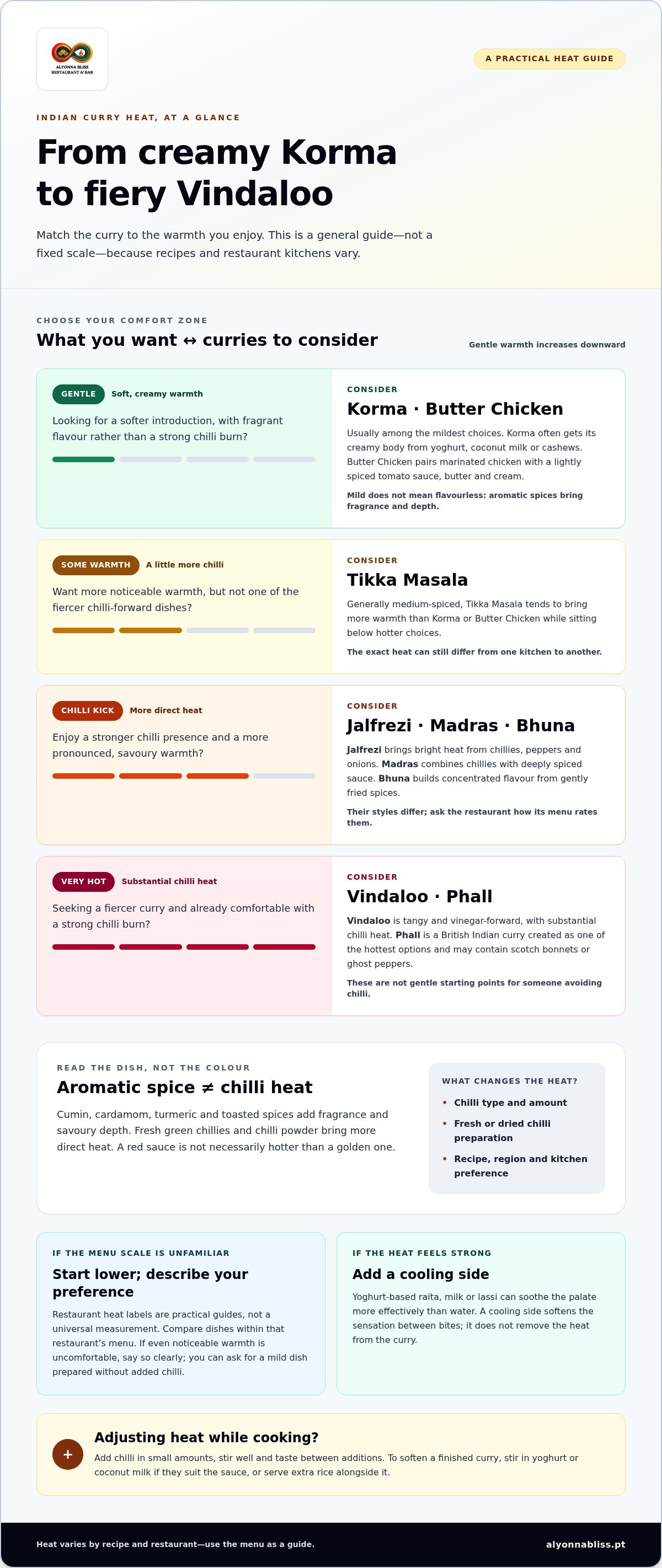
The mildest Indian curries are usually Korma and Butter Chicken, while Tikka Masala tends to bring a little more warmth. Knowing how to choose Indian curry heat starts with that distinction: creamy, gently spiced sauces offer a softer introduction, while chilli-forward dishes like Madras and Vindaloo build to a much fiercer finish.
If you’re unsure, part of the pleasure is exploring the menu: heat can vary from one kitchen to another, and colour alone won’t tell you how fiery a curry will be. This guide compares Korma, Butter Chicken and Tikka Masala with Madras and Vindaloo, explains how restaurant spice levels work, and offers a simple way to find a dish that feels welcoming rather than overwhelming. Expect fragrant spices and layered flavour at every level, from a gentle first taste to lingering chilli warmth.
Key Takeaways
- Korma and Butter Chicken are usually among the gentlest choices, while Tikka Masala often brings more warmth.
- Madras, Jalfrezi and Vindaloo are better suited to diners who enjoy a stronger chilli kick.
- Colour isn’t a reliable guide to heat; ingredients, regional recipes and each kitchen’s approach all shape the result.
- Restaurant spice scales are general guides, so choose a lower heat level when you’re unsure and build from there.
- Alyonna Bliss’s 3-Course Lunch Deal offers a welcoming way to enjoy a meal alongside the restaurant’s South Asian flavours.
How do Indian restaurant spice levels actually work?
A restaurant’s heat labels are practical guides, not a universal measurement. Chilli choice, recipe and kitchen preferences shape how each curry tastes.
Recipe and Regional Heat Variation
Regional traditions and individual recipes affect a curry’s heat through the type, amount and preparation of chilli. A dish cooked with fresh green chillies can feel sharper than one using a measured amount of dried chilli, even when both share a name.
Are Indian curry heat levels different in restaurants outside India? Yes. Recipes and menu scales vary between countries and kitchens, so “medium” has no fixed intensity worldwide. Treat a restaurant’s labels as comparisons within its own menu.
Aromatic Spices Versus Chilli Heat
Aromatic spices build fragrance and flavour, while chilli creates the familiar burning sensation. Cumin, cardamom, turmeric and toasted spices can make a curry deeply savoury without making it hot. Fresh green chillies and chilli powder add more direct heat.
This explains why a richly seasoned dish may still suit someone who avoids chilli. Colour offers little certainty, too: a red sauce isn’t necessarily hotter than a golden one. The recipe’s chilli ingredients matter more than appearance or aroma.
Matching Curries to Spice Tolerance
Choose according to the heat you enjoy, not the level you think you should manage. Korma and Butter Chicken are often milder starting points; Madras and Jalfrezi suit diners seeking a stronger chilli presence. Vindaloo is commonly among the hottest menu choices.
If you’re unfamiliar with a restaurant’s scale, choose a lower level and describe your preference plainly. If you’re sensitive to chilli, ask for a mild dish prepared without added chilli. Saying that even noticeable warmth is uncomfortable gives the kitchen a clearer guide than simply saying “not too spicy.”
Ingredients That Add or Reduce Heat
Which ingredients make Indian curry spicy, and which reduce the heat? Fresh chillies and chilli powder add heat; yoghurt-based raita, milk or lassi can cool the palate. Capsaicin, the compound behind chilli burn, is oil-based, so dairy often soothes more effectively than water.
How can you make an Indian curry less spicy after cooking? Stir in yoghurt or coconut milk if they suit the sauce, or serve extra rice alongside it. How can you increase curry heat gradually while cooking? Add small amounts of chilli, stir well and taste between additions to preserve the balance of spices as the warmth builds.
Mild curries such as Korma and Butter Chicken
Korma and Butter Chicken offer gentle entry points, but a mild curry can still have layered flavour. The sauce, protein and accompaniments shape the meal as much as the chilli does.
Korma and Butter Chicken
Korma is typically creamy, with yoghurt, coconut milk, cashews and mild korma masala. Butter Chicken, also called murgh makhani, pairs marinated chicken with a lightly spiced tomato sauce, butter and cream. Both lean on fragrant ingredients rather than a strong chilli burn. Cardamom, fenugreek and toasted spices add warmth and depth, while the sauce gives each dish a smooth, generous texture. If you prefer a softer first taste, these curries are useful starting points.
Matching proteins and vegetables
Chicken suits a wide range of curry sauces, so it works in both mild Korma and richer tomato-based dishes. Paneer absorbs rich, buttery gravies, making it a satisfying choice if you prefer a vegetarian curry. Saag, made with greens, brings a fresh, earthy flavour that contrasts with creamy sauces. Coconut-based curries can pair with chicken, shrimp, vegetables or chickpeas. Consider texture as well as heat: tender chicken, soft paneer and firm vegetables each change how the sauce feels with every bite.
Hot curries: Jalfrezi, Madras and Bhuna
For a more pronounced chilli presence, Jalfrezi, Madras and Bhuna offer distinct routes. Jalfrezi is stir-fried with peppers, onions and chillies, bringing bright, direct heat. Madras combines chillies with garam masala, cumin and turmeric for a fiery, deeply spiced sauce. Bhuna builds flavour differently: spices are gently fried in oil before meat or vegetables cook in their own juices. The result is a concentrated sauce, where fried spices bring warmth and savoury depth. Tikka Masala is generally medium-spiced, placing it between gentler curries and these hotter choices.
Very hot curries and cooling sides
Vindaloo is a tangy, vinegar-forward curry with substantial chilli heat. Phall, a British Indian curry, was created as one of the hottest options and may contain scotch bonnets or ghost peppers. If you enjoy chilli but want a gentler contrast at the table, yoghurt-based raita, lassi or milk can soothe the palate more effectively than water. A cooling side doesn’t remove the heat from the curry, but it can soften the sensation between bites.
For a meal that lets you explore familiar curry styles, browse authentic Indian curries from Butter Chicken to Madras and Vindaloo.
What is the mildest Indian curry?
Korma is generally one of the mildest Indian curries, alongside Butter Chicken, makhani-style dishes and pasanda. Their gentle character comes from the balance of sauce and seasoning, not from a lack of flavour. Tomato, yoghurt, coconut, nuts and aromatic spices can create richness without the sharp chilli burn found in hotter recipes. Knowing how to choose Indian curry heat starts with recognising what the sauce contributes, as well as how much chilli the recipe uses.
Creamy sauces and gentle warmth
Korma is often creamy, with yoghurt, coconut milk, cashews and a mild korma masala blend. These ingredients give the sauce body and a rounded taste, while mild aromatic spices carry fragrance. Butter Chicken, also known as murgh makhani, combines marinated chicken with a lightly spiced tomato-based sauce, butter and cream. Cardamom, fenugreek and toasted spices deepen the flavour without making chilli the main event. It suits diners who want spice in the broader sense of layered flavour, but prefer less chilli intensity. Pasanda is another mild choice, traditionally made with lamb marinated in yoghurt and cooked in a gentle sauce with cumin or cardamom.
Tomato, coconut and regional styles
A tomato base can taste bright and savoury, as in Butter Chicken, but tomato alone doesn’t determine heat. Chilli content and the kitchen’s recipe matter more than colour or sauce base. North Indian curries tend towards cream- and tomato-based sauces, while South Indian styles often use coconut and tamarind. Coconut brings a soft, rich texture; tamarind adds a tart edge. These regional tendencies offer clues to flavour, not fixed rules for every curry. To choose Indian curry heat, treat sauce style as a flavour guide and ask about chilli for a clearer sense of intensity.
Reduced sauces and concentrated flavour
Some curry methods produce a thicker, more concentrated sauce. In bhuna cooking, spices are gently fried before meat or vegetables cook in their own juices. This builds depth and a clinging texture, but the method doesn’t automatically make a dish fiery. The amount and type of chilli still shape its heat. A reduced sauce can make spices feel especially present, so diners who prefer mild dishes may find a creamy Korma more comfortable than a richly concentrated bhuna.
For the mildest choice, look for Korma, Butter Chicken or pasanda, then consider the sauce’s texture and flavour. Creamy sauces often feel rounder; tomato sauces can be tangy, while coconut and tamarind bring another balance. The variety of Indian curries means sauce style can help you anticipate richness, but chilli determines the burn. If mild is your priority, choose a dish described that way rather than judging its colour or name alone.
Jalfrezi, madras and vindaloo for heat lovers
Jalfrezi, Madras and Vindaloo bring chilli forward, but each delivers heat differently. Jalfrezi combines fresh peppers, onions and chillies in a stir-fried curry. Madras layers chilli with garam masala, cumin and turmeric. Vindaloo pairs substantial chilli warmth with garlic and vinegar, giving its heat a tangy edge.
Jalfrezi: bright, direct chilli heat
Jalfrezi’s peppers and onions bring sweetness and texture alongside fresh chillies. Stir-frying keeps the vegetables distinct, so each bite can offer fragrant spice, savoury sauce and a clear chilli kick. It’s often described as the spiciest mainstream everyday curry, though recipes vary between restaurants. Choose it if you enjoy lively heat with ingredients you can taste individually, rather than a sauce whose main impression is deep, sustained chilli intensity.
Madras: layered warmth and spice
Madras builds its fiery character from chillies, garam masala, cumin and turmeric. Those aromatic spices add complexity, while chilli supplies the sharper burn. Its heat can feel more blended into the sauce than Jalfrezi’s fresh pepper-and-onion contrast. Diners who enjoy Thai or Sichuan heat may find Madras a familiar direction, though Indian restaurant recipes differ. Consider whether you want the fragrance of several spices alongside chilli, not heat alone.
Vindaloo: a Goan curry with Portuguese roots
Goan Vindaloo has a culinary history shaped by Portuguese influence. Its roots trace to carne de vinha d’alhos, a Portuguese preparation of meat marinated in wine or vinegar and garlic. In curry form, vinegar and garlic remain characteristic, balanced against substantial chilli heat. Kashmiri chillies appear in descriptions of fiery Goan Vindaloo, bringing colour and warmth to the sauce. Recipes vary between kitchens, so the name signals a style, not a fixed heat measurement.
On most Indian menus, Vindaloo is among the hottest choices, and some versions use stronger chillies. A bright red appearance doesn’t tell you how fierce it will taste; the chilli variety and amount matter more. If you enjoy a tangy, garlic-rich sauce, Vindaloo offers more than raw heat. When choosing between these curries, Jalfrezi gives fresh chilli with peppers and onions, Madras offers a fragrant spice blend, and Vindaloo brings vinegar-led intensity. Select the flavour profile you want as well as the burn.
Butter chicken and tikka masala heat comparison
Butter Chicken and Tikka Masala can both look warmly red, but their heat profiles differ. Butter Chicken is usually mild, while Tikka Masala is generally medium-spiced. The useful distinction is more than chilli: sauce, seasoning and the way each flavour unfolds all shape the experience. If you enjoy aromatic masala but want only gentle warmth, Butter Chicken is usually the softer choice.
Butter chicken: creamy, lightly spiced comfort
Butter Chicken, also called murgh makhani, combines marinated chicken with a lightly spiced tomato-based sauce, butter and cream. Its rounded richness softens the sharper edges of seasoning, leaving gentle warmth rather than a pronounced chilli burn. Tomato brings savoury brightness, while the creamy sauce gives each bite a smooth finish. Cardamom and other aromatic spices can add fragrance without making the dish fiery. It suits diners who want spice in the broader sense of layered flavour, but prefer less chilli intensity.
Tikka masala: a step towards medium heat
Tikka Masala is generally medium-spiced, with a tangy tomato and onion sauce. That often gives it a brighter, more savoury edge than Butter Chicken’s creamier profile. Its masala seasoning can feel more prominent, although the level of chilli varies by recipe and restaurant. The contrast is subtle in some kitchens and clearer in others. Choose Tikka Masala if you enjoy tomato-led depth and noticeable warmth, but don’t want the fiercer heat associated with Madras or Vindaloo.
Which one better suits your palate?
Think of the choice as a flavour and heat decision. Butter Chicken favours a mellow, creamy sauce; Tikka Masala adds tang and usually moves into medium warmth. Neither name guarantees an identical result across restaurants, so consider the dish’s description alongside your own tolerance. If chilli tends to overwhelm the flavour for you, start with Butter Chicken. If you welcome a warm finish and enjoy a lively tomato sauce, Tikka Masala may be more satisfying.
Chicken appears in both curries, but the sauce changes the impression: Butter Chicken feels softer, while Tikka Masala brings tangier spice. For a stronger contrast, Madras moves further into chilli heat. That progression helps you choose by intensity without treating colour as a reliable guide. Think creamy, tangy, then fiery, and select the point that matches the warmth you want from dinner.
Explore Butter Chicken and other Indian curries to find the flavour that suits your appetite.
Alyonna Bliss: 3-Course Lunch Deal
Alyonna Bliss’s 3-Course Lunch Deal offers a relaxed way to enjoy a midday meal after exploring curry styles and heat levels. For a different texture alongside your meal, choose Tandoor Flatbread or Chowmein, each bringing its own character to the table. The deal suits diners looking to make lunch a fuller dining experience, whether sharing a meal or settling in for a thoughtful pause in the day.
For a warm welcome and a meal to enjoy at your own pace, visit Alyonna Bliss.
Let your next curry match your appetite
Your next curry can be a small adventure in flavour, not a test of endurance. Consider the warmth you enjoy, the sauce texture you’re drawn to and whether you want chilli to lead or simply linger. How you choose Indian curry heat can change with the occasion, too: a familiar favourite suits a quiet meal, while a new spice level can make dinner feel like a discovery.
If you’re dining with different tastes, a shared table can leave space for everyone’s preferences. Alongside curry, momos offer another way to enjoy a meal, with their own savoury character and inviting texture. Choose what sounds good today, rather than feeling obliged to order the hottest dish.
For your next meal, contact Alyonna Bliss to discuss your curry choice and explore the menu. Get in touch with Alyonna Bliss, and let the next plate bring warmth, fragrance and pleasure to the table.
Frequently Asked Questions
What about the cream-and-spinach curries?
Creamy spinach curries can taste earthy and rich, but spinach doesn’t determine their chilli level. Saag describes a spinach-based style, and recipes may use different amounts of chilli and dairy. If you enjoy green, savoury flavours, ask whether the version is mild or chilli-forward. The sauce’s colour and creamy texture hint at its ingredients, but aren’t dependable measures of how much heat you’ll taste.
What is the difference between korma and vindaloo?
Korma is usually a creamy, gently spiced curry, while Vindaloo is typically tangier and much hotter. Their flavour contrasts are useful when choosing: Korma’s rounded sauce suits a softer, fragrant meal, while Vindaloo’s vinegar and garlic create a sharper, more assertive taste. If you’re sharing dishes, ordering them together makes the contrast between mellow richness and chilli intensity easy to notice.
Is vindaloo always very spicy?
Vindaloo is commonly one of the hottest curries on a menu, but its exact intensity differs between recipes. The chilli variety and amount shape the burn, while vinegar and garlic contribute its recognisable tang. If you enjoy the flavour profile but not an intense chilli sensation, ask for a milder preparation before ordering. Don’t assume the curry’s red colour alone reveals its heat.
Quick Summary: Which Curry is Right for You?
For a gentle meal, choose Korma or Butter Chicken; for a little more warmth, consider Tikka Masala. Madras or Jalfrezi can suit diners who enjoy a stronger chilli presence, while Vindaloo is a bold choice for heat lovers. Think about your tolerance and preferred sauce flavour, then choose accordingly. If you’re uncertain, describe the heat you usually enjoy rather than relying on a dish’s colour.
What are the common heat levels for Indian curries, from mild to very hot?
A common guide runs from mild to medium, hot, very hot and extreme, sometimes shown with one to five chilli symbols. These labels help compare dishes on a particular menu, but they aren’t a shared measurement used by every restaurant. Read them as a rough progression, not a promise that two kitchens’ “medium” curries will taste identical.
How do chili type and quantity affect curry heat?
Both the type and amount of chilli matter: mild capsicum measures zero Scoville Heat Units, while jalapeños measure in the low thousands. The hottest curries can use chillies measuring in the tens or hundreds of thousands of Scoville Heat Units. These figures describe chilli heat, not the finished curry exactly; the recipe and other ingredients also shape how the burn feels.
How can you ask for a specific spice level at an Indian restaurant?
Use a clear preference, such as “mild, please” or “medium heat, not very hot,” rather than asking only whether a curry is spicy. You can also name a reference point, such as a dish you’ve enjoyed before, and ask for a lower chilli level. This gives the restaurant a practical indication of your comfort zone, even if its menu uses different labels.
Do Indian restaurants use standardized terms such as mild, medium, and hot?
There is no universal restaurant standard making “mild,” “medium” or “hot” mean the same heat everywhere. Some menus add chilli symbols or extra categories, but each kitchen’s recipe and scale guide the result. Treat labels as comparisons within that restaurant’s menu. If the distinction matters to your meal, explain your preference plainly and ask which dishes best match it.


