

The best Indian curry to order depends on how much heat you enjoy, not on which dish has the boldest name. Butter chicken versus Madras curry is a clear contrast: butter chicken is creamy, gently sweet and mild, while chicken Madras is chilli-hot with a punchier, savoury flavour. Choose butter chicken for a soft, comforting sauce, or Madras for a livelier burn.
Both curries use fragrant spices and a tomato-rich sauce, but they taste quite different. Butter chicken’s smooth gravy coats tender chicken in mellow, rounded warmth. Madras is more vivid, with chilli lending its red colour and heat alongside savoury spices. Use this comparison of flavour, texture and heat to choose the curry that suits your meal, whether you want gentle comfort or a more spirited spice.
Key Takeaways
- Choose butter chicken for a smooth, creamy sauce and gentle sweetness; its marinated chicken and tomato base build a mellow, rounded flavour.
- Pick chicken Madras when you want a stronger chilli kick. Its red colour comes from chilli powder, while spices bring savoury depth.
- Use your heat preference as the first guide, then consider whether you’re craving a richer, softer gravy or a punchier curry.
- Alyonna Bliss’s 3-Course Lunch Deal offers a midday meal, with choices such as momo, tandoor flatbread and chowmein.
Butter chicken’s marinade and tomato-based sauce
Butter chicken combines marinated chicken with a smooth tomato gravy. Madras takes a more chilli-led approach, making the sauces a useful contrast in richness, heat and texture.
Makhani Sauce and Onion-Tomato Gravy
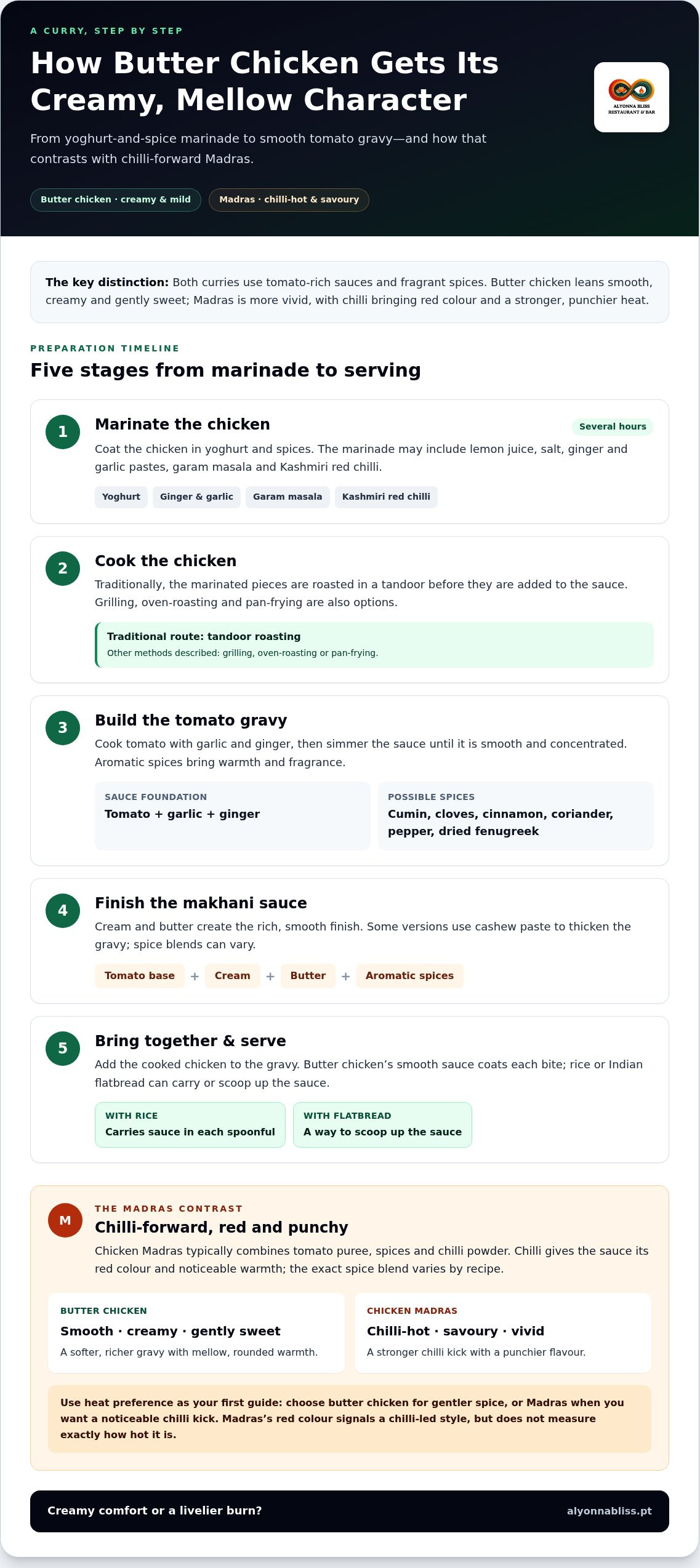
Makhani is the creamy tomato gravy used for butter chicken. The tomato base is cooked with garlic and ginger, then finished with cream and aromatic spices. An onion-tomato gravy, by contrast, gets its savoury body from cooked onions and tomatoes. Makhani tastes softer and richer, while onion-based sauces have a more direct savoury flavour.
Sauce Texture and Variations
Before cooking, butter chicken is marinated in yoghurt and spices for several hours. The marinade may include lemon juice, salt, ginger and garlic pastes, garam masala and Kashmiri red chilli. Traditionally, the chicken is roasted in a tandoor before being added to the sauce. Grilling, oven-roasting and pan-frying are also options.
The tomato, garlic and ginger sauce simmers until smooth and concentrated. Some versions use cashew paste as a thickener, with spices such as cumin, cloves, cinnamon, coriander, pepper and dried fenugreek leaves. These variations affect the aroma and texture while keeping tomato at the sauce’s base. Madras, by contrast, gets its punch from spices and tomato puree.
Typical Ingredients and Serving Styles
Madras sauce typically includes tomato puree, spices and chilli powder. Chilli gives it a red colour and punchy heat. Spice blends vary by recipe, but chilli is central to the dish’s character. Butter chicken, on the other hand, has a creamy, generally milder sauce, making the two styles easy to distinguish.
Both curries are commonly served with rice or Indian flatbread. Rice carries the sauce in each spoonful, while flatbread can scoop it up. Butter chicken’s smooth gravy coats each bite; Madras brings stronger chilli warmth and savoury spice. Paneer is also used in Indian cuisine, although these two dishes are most often made with chicken.
| Option | Sauce base | Flavour emphasis | Texture |
|---|---|---|---|
| Butter chicken | Tomato, cream and spices | Mild, rounded richness | Smooth, sometimes thickened with cashew paste |
| Chicken Madras | Tomato puree, spices and chilli | Hot, punchy savouriness | Tomato-led, with chilli warmth |
Choose butter chicken for creamy comfort, or Madras for a more chilli-forward sauce.
Chicken Madras’s chilli heat and red colour
Chicken Madras is a hot, chilli-forward curry with a punchy, savoury flavour. Chilli powder gives its sauce a red colour and noticeable warmth, though the exact spice blend varies between recipes.
Butter chicken is milder, richer and creamier, with a gentle sweetness. Madras brings stronger chilli heat; its red colour signals a chilli-led style, but doesn’t measure exactly how hot it is. If you enjoy a noticeable kick, Madras is the bolder choice. For gentler spice, choose butter chicken.
Chicken tikka masala can offer a middle ground. Its tangy tomato-and-onion sauce is medium-spiced, making it a useful option if you want more warmth than a mild curry without Madras’s stronger chilli presence.
To make a hot Madras meal more comfortable, pair it with rice or bread and take smaller bites. Raita can offer a cooler contrast if the heat feels intense. These accompaniments soften each mouthful, but don’t change the curry itself.
Butter chicken is stated to contain about 470-630 calories per serving. Its cream-rich sauce contributes to its fuller character; Madras’s chilli mainly defines its heat and flavour. For either curry, ingredients and portion size affect the meal’s overall nutrition.
Butter chicken’s ingredients and creamy tomato-butter gravy
Butter chicken’s sauce brings tomato, cream, butter and aromatic masala together in a smooth gravy. Garlic and ginger deepen the tomato base, while spices such as cardamom, cumin and dried fenugreek leaves add warmth and fragrance.
For a silky texture, the tomato mixture is simmered until concentrated before cream and butter are added. Some recipes use cashew paste to thicken the sauce. Spice blends vary: one version may highlight cardamom’s fragrance, while another brings cumin or fenugreek to the fore.
Chicken is the usual choice for butter chicken and Madras. Vegetarian versions can use paneer or vegetables, which take on the character of the curry sauce.
Traditionally, butter chicken is cooked in a tandoor before being simmered in its gravy. Grilling, oven-roasting and pan-frying are also ways to cook the chicken. The tender pieces absorb the tomato-and-butter sauce, while their roasted surface adds another layer of flavour.
The cooking method is a choice about how the chicken enters the gravy, not a change to the dish’s tomato-and-butter character. Butter chicken’s chicken is traditionally cooked in a tandoor, though it can also be grilled, oven-roasted, or pan-fried. Each option offers a different way to prepare the pieces before they meet the sauce, while keeping the gravy central to the finished dish. A cook can choose the traditional tandoor route or one of the alternatives without changing the basic pairing of chicken and creamy tomato-butter gravy. The aim is to let the pieces remain part of the dish rather than lose their presence beneath the sauce; the gravy and chicken should read together in each serving.
Thinking about the cooking method alongside the gravy helps keep the finished result balanced. The chicken is prepared separately from the sauce, then brought together with it, so the cooking choice can be made with the final texture and overall character in mind. A tandoor connects the dish to its traditional preparation, while grilling, oven-roasting, and pan-frying are also possible routes. None of these options requires a different sauce: the tomato, butter, cream, and masala still provide the dish’s rich, aromatic base. The method is therefore best treated as one part of the preparation, not as a replacement for the gravy’s defining ingredients. Whichever route is chosen, the goal is a serving in which tender chicken and smooth sauce complement one another, with the familiar butter chicken character coming from the whole combination. This flexibility makes it possible to retain the dish’s central identity while adapting how the chicken is cooked.
Choosing between creamy comfort and a savory curry
Let your preferred balance of richness and heat guide your choice. Butter chicken suits a meal built around creamy comfort, with tomato, cream and butter softening the spices. Chicken Madras is the more savoury, chilli-forward option. Choose butter chicken for a gentle sauce, or Madras if you want chilli to take the lead.
Consider how you want each bite to feel. Butter chicken’s smooth gravy gives tender chicken a rounded, mellow coating. Madras offers a livelier contrast, with chilli heat and savoury spices creating a punchy finish. Neither is simply “better”; they suit different appetites. The key difference in butter chicken versus Madras curry is richness versus heat.
Use these cues to match the curry to your appetite:
- Choose butter chicken for a creamy sauce, gentle spice and a slightly sweet finish.
- Choose chicken Madras for a noticeable chilli kick and a more savoury flavour.
- Choose chicken tikka masala for a medium-spiced route, with tangy tomato and onion sauce.
- Choose a cream-based curry if strong chilli heat isn’t what you want from Indian food.
Your heat tolerance matters more than the sauce’s colour. Madras is red from chilli powder, but colour alone doesn’t tell you how hot it will taste. Think about the chilli level you enjoy in dishes you already know. If a strong chilli bite is uncomfortable, butter chicken is a gentler choice. If chilli brings welcome warmth, Madras offers a more spirited meal.
Richness can guide your choice, too. Butter chicken’s cream and butter create a fuller mouthfeel, while tomato keeps the sauce lively. Garlic, ginger and spices add savoury depth beneath its smooth finish. Madras puts chilli and spices at the forefront rather than using cream to soften them. Those differences shape each bite, from the first taste to the last spoonful of sauce.
For a practical decision, picture the meal you want. After a long day, butter chicken may suit a craving for soft, mellow comfort. If you want a sharper, warmer taste, Madras is a stronger match. Both dishes use chicken, but their sauces create distinct experiences. Yoghurt-marinated chicken with creamy gravy points to butter chicken; a chilli-led sauce points to Madras.
Choose the curry that fits the experience you want, not just the name you know best. For mild, rounded richness, go with butter chicken. For a punchier, savoury curry with more chilli heat, choose Madras. If you’re between the two, chicken tikka masala offers a medium-spiced option between creamy comfort and a hotter finish.
Butter chicken’s mild, sweet flavour
Butter chicken offers a gentler taste than chilli-led curries, with creamy richness and a slight sweetness at its centre. Tomato brings a soft tang, while cream and butter round the sauce into a smooth, mellow finish. Mild aromatic spices add warmth without making hot chilli the main event. The result is comforting rather than fiery, suited to diners who want spice fragrance without a pronounced burn.
Sweetness is part of butter chicken’s overall balance, not the only flavour in the bowl. Tomato, garlic and ginger provide savoury depth, while spices such as cardamom, cumin and dried fenugreek leaves add fragrance. Cream softens the tomato’s tang, and butter gives the gravy a fuller feel. Sweetness and richness meet aromatic spice rather than competing with strong chilli.
Recipe variations can shift the balance. Some butter chicken sauces use ground nuts or coconut alongside cream, creating a richer texture and a slightly different flavour. The masala blend varies, too: cardamom can taste floral, while cumin brings earthy warmth. These differences help explain why butter chicken varies between restaurants, even when its familiar creamy tomato character remains.
Chicken tikka masala offers a useful flavour comparison. It has a medium-spiced, tangy tomato-and-onion sauce. Butter chicken is generally milder and sweeter, with a less complex spice blend in its gravy. Choose butter chicken for softness and gentle sweetness, or tikka masala for more tang and a stronger spice presence.
For a first taste of Indian curries, butter chicken can be a comfortable starting point if you prefer gentle flavours. Its smooth gravy and tender chicken make each mouthful rich and rounded, with mild spice that doesn’t dominate. Diners who enjoy a sharper chilli edge may prefer Madras. Choose according to whether creamy sweetness or chilli warmth sounds more appealing.
Try the sauce with rice or flatbread to notice how its texture shapes the meal. Rice carries the gravy in soft, separate mouthfuls; flatbread gathers a thicker coating of sauce. Chicken with tomato, cream and ginger tastes rounded, while a spoonful of sauce lets its spice aroma come forward. These pairings reveal different parts of the same curry.
If you’re choosing between these flavours for your next meal, explore butter chicken and Madras curry and follow the taste you’re craving: creamy, mellow comfort or a more pronounced chilli kick.
Alyonna Bliss: 3-Course Lunch Deal
Alyonna Bliss brings the curry choice from the page to the table, with butter chicken and Madras among its Indian curry offerings. The 3-Course Lunch Deal suits a midday meal when you want to enjoy a full dining experience without overthinking the choice between creamy comfort and chilli warmth.
Pair a curry with Tandoor Flatbread, or choose chowmein if you’d prefer a wok-tossed dish. The menu offers different textures and flavours for a relaxed lunch, whether you’re drawn to fragrant spices, soft flatbread or noodles with a savoury finish.
For a midday meal, explore Alyonna Bliss’s 3-Course Lunch Deal, or visit the restaurant’s website to discover more.
Make Your Next Meal a Flavour Discovery
Let your curry choice reflect the meal you want, whether that means familiar comfort or a brighter, more spirited taste. Butter chicken versus Madras curry is a starting point, not a rule for every visit. Your appetite may change, and trying a different dish can reveal a new favourite.
Alyonna Bliss brings that sense of discovery to the table with Indian curries, momo and other dishes. For a shared meal, momo adds a different shape and texture to the spread, while Tandoor Flatbread is a familiar way to enjoy curry sauce. Follow your curiosity and let the meal unfold at its own pace.
For a welcoming table and a new South Asian flavour to explore, contact Alyonna Bliss today. Choose the dish that speaks to you, bring your appetite, and enjoy the pleasure of discovering what you’ll want to try next.
Frequently Asked Questions
What is the best Indian curry to order?
The best curry to order is the one that suits your appetite for richness, spice and texture. For a gentle introduction, try a creamy curry such as butter chicken. If you enjoy a clear chilli kick, chicken Madras is a bolder choice. You can also choose by what you want alongside it: a smooth sauce to scoop up with bread, or a sharper, spicier flavour with rice.
Quick Summary: Which Curry is Right for You?
Choose butter chicken for a mild, creamy meal, and Madras for stronger chilli heat. If neither sounds quite right, consider how much spice you usually enjoy and whether you prefer a rich sauce or a sharper, savoury one. A medium-spiced curry such as chicken tikka masala can suit those looking for a middle ground. Let your appetite, rather than the dish’s name, guide your choice.
Which is the tastiest Indian dish?
There isn’t one tastiest Indian dish for every diner; personal preference shapes what tastes best. Someone who loves silky sauces may favour butter chicken, while a chilli enthusiast may prefer Madras. Others might enjoy biryani, where rice is cooked with meat or vegetables. Consider the flavours and textures you already like, then choose a dish that brings those qualities to the meal.
What is butter chicken?
Butter chicken is an Indian chicken curry known for tender pieces of chicken in a creamy tomato-based sauce. Its flavour is built from aromatic spices, with tomato and cream creating a rounded, gentle taste. The chicken is often marinated before cooking, then combined with the gravy so it absorbs its flavour. It’s a classic choice for diners who enjoy a rich sauce without strong chilli heat.
How do butter chicken and Madras curry differ in flavor and ingredients?
Butter chicken gets its rounded richness from a creamy tomato sauce and aromatic spices. Madras takes a more chilli-forward approach, with tomato puree and spices creating a punchier, savoury taste. When choosing, consider whether you want a soft, mellow sauce or chilli bringing a sharper edge to each bite.
Which is hotter: butter chicken or Madras curry?
Madras is hotter than butter chicken because chilli is prominent in its flavour. Butter chicken is generally mild, with its creamy sauce balancing aromatic spices rather than delivering a strong chilli burn. Madras recipes vary in their spice blends, but it is the more heat-forward choice. If you’re sensitive to chilli, choose the milder curry; if you enjoy a noticeable kick, Madras is a stronger match.
What are the typical ingredients in butter chicken sauce?
Butter chicken sauce typically combines tomato, garlic, ginger, cream and aromatic spices. Depending on the recipe, cardamom, cumin, cloves, cinnamon, coriander or dried fenugreek leaves may add fragrance. Some versions use cashew paste to thicken the gravy. Together, these ingredients create a rounded, gently spiced sauce that pairs naturally with tender chicken, rice or bread.
Which curry is better for people who prefer mild or spicy food?
Butter chicken generally suits diners who prefer mild flavours, while Madras is for those who enjoy a stronger chilli presence. When ordering for a table with different spice preferences, choose dishes that offer contrast instead of expecting everyone to share the same heat level. A medium-spiced curry can also suit someone who wants more warmth than a mild sauce, but less intensity than Madras.


