

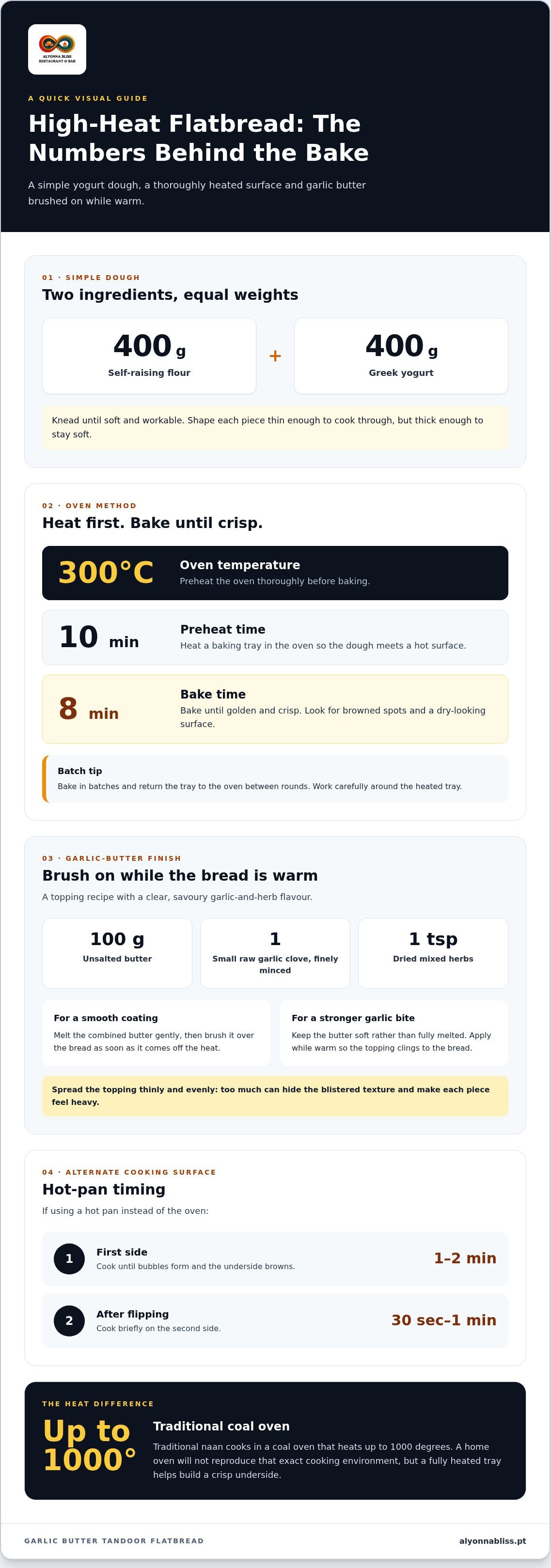
High heat gives garlic butter tandoor flatbread its blistered surface and tender centre. For a straightforward dough, combine 400 g self-raising flour with 400 g Greek yogurt; brush the baked breads with butter mixed with 2 large cloves of finely minced garlic. In Portugal, preheat the oven to 300°C and bake the flatbreads for 8 minutes, until golden and crisp.
That contrast is the pleasure of garlic butter tandoor flatbread: lightly charred edges, a soft centre and warm garlic butter settling into every dimple. A supple dough and a hot baking surface help create the texture, while brushing on the butter after baking keeps its garlic fragrance bright.
Here, you’ll find the ingredients and a simple dough method, how to shape and bake the flatbreads at high heat, and when to brush them with garlic butter. You’ll also find pairing ideas, from rich curries to grilled dishes, so the warm naan can take its place in a generous, satisfying meal.
Key Takeaways
- Start with a simple dough of self-raising flour and Greek yogurt, then knead until soft and workable.
- Use a thoroughly heated oven for a blistered surface and tender centre; watch closely as the bread bakes.
- Brush on garlic butter after baking so its fragrant flavour settles into the warm, dimpled bread.
- Pair naan with curry, grilled dishes, or other favourites for a meal made for sharing.
Garlic butter topping
- Set out 100 g of unsalted butter and let it soften until easy to stir. Mince 1 small raw garlic clove finely, so it spreads evenly instead of landing in sharp, uneven bites. Add 1 teaspoon of dried mixed herbs for a savoury, fragrant finish. This simple recipe keeps the butter flavour clear while letting the garlic and herbs settle into each warm dimple.
- Stir the minced garlic and dried herbs into the softened butter until evenly combined. For a smooth coating, melt the mixture gently and brush it over the bread as soon as it comes off the heat. For a more pronounced garlic bite, keep the butter soft rather than fully melted. Either way, apply it while the flatbread is warm so the topping clings instead of sliding off.
- Choose the topping to suit the rest of the meal. Garlic butter adds richness and a deep savoury aroma, while chopped tomato brings freshness and juicy contrast. For tomato and herb flatbread, scatter the chopped tomato and herbs over the surface after baking. Pat the tomato dry first: excess moisture can soften the crisp spots and make the bread harder to handle.
- Keep the surface balanced by spreading the garlic butter thinly and evenly, or using tomato and herbs sparingly. Too much topping can hide the blistered texture and make each piece feel heavy. To serve both styles, brush one flatbread with garlic butter and finish another with tomato and herbs. Tear them into pieces beside a Nepali Thakali thali, where dal, rice, chutney and curries offer contrasting flavours.
Some versions use 10-12 cloves of minced garlic with 3-4 tablespoons of butter, while another recipe calls for 8 cloves of minced garlic. Other stated proportions include 75 g of salted butter, 30 grams of melted butter, or 4 cloves of black garlic. These are alternative topping approaches, offering different levels and styles of garlic flavour to suit the meal.
Baking flatbreads at high heat
- Choose your preferred style before shaping the dough. Tandoor flatbread cooks against intense heat, developing charred patches and a tender middle. Naan is a leavened flatbread, while roti is usually simpler and cooked on a flat surface. Their doughs and cooking methods differ, so expect distinct textures.
- For an at-home version, preheat your oven to 300°C for 10 minutes. Place a baking tray inside as it heats, so the dough meets a hot surface. Shape one flatbread at a time, keeping it thin enough to cook through while thick enough to stay soft. Work carefully around the heated tray.
- Bake each flatbread until it looks golden and crisp. Look for browned spots and a dry-looking surface, rather than relying on colour alone. If using a hot pan instead, cook the first side for 1-2 minutes, until bubbles form and the underside browns. Flip and cook for 30 seconds to a minute.
- Brush the baked bread with garlic butter while it’s still warm. The heat softens the butter and releases the garlic aroma across the surface. Serve promptly beside chicken curry, using the bread to scoop up the sauce. For plain flatbread, skip the topping and let its toasted flavour complement the dish.
- Keep the oven method practical: bake in batches, returning the tray to the oven between rounds. Traditional naan cooks in a coal oven that heats up to 1000 degrees, creating intense surface browning. A home oven won’t reproduce that exact cooking environment, but a fully heated tray helps build a crisp underside. For a ready-made taste of this style, explore tandoor flatbread.
Curries and other dishes to serve with naan
- Pair naan with a curry that gives it something to gather. Butter chicken brings a creamy, gently spiced sauce, while Madras curry offers bolder chilli warmth. Tear the bread into manageable pieces and scoop sauce from the edge of the dish, without covering the whole surface.
- For a sharper contrast, serve naan with vindaloo. Its tangy, lively character balances the bread’s soft centre and toasted spots. Plain naan lets the curry lead; garlic butter adds another savoury layer. Choose between them based on the curry’s intensity, rather than adding richness to every part of the meal.
- Build a comforting plate with dal, rice, chutney and naan. Dal brings a mellow, spoonable element, while chutney adds a brighter note. Use naan to scoop up the lentils, then alternate with rice for a different texture. This combination works especially well when you want several flavours on the table.
- Set naan beside grilled dishes for a smoky, satisfying pairing. Charred vegetables or grilled chicken bring browned edges that echo the bread’s blistered surface. Add a fresh salad or a spoonful of chutney to lift the richer flavours. Keep the bread warm and tear it as you eat, so each piece stays soft enough to fold around the food.
- For a shared meal, arrange naan with curry, rice and small bowls of chutney. Guests can choose plain bread with a deeply flavoured sauce, or garlic-topped pieces with dal or grilled vegetables. If serving several curries, place a mild option beside a more robust Madras or vindaloo, giving everyone an easy way to balance each bite.
Garlic-butter flatbread ingredients
- Choose a dough style and keep its ingredients balanced. For a yeast-raised version, combine 4 cups all-purpose flour, 2¼ teaspoons active dry yeast, 1 teaspoon salt, ¾ cup warm whole milk, and ¾ cup thick yogurt. Add ¼ cup warm water to help bring the mixture together. The yogurt softens the crumb, while yeast gives the dough its lift.
- Mix the dry ingredients first, then stir in the milk, yogurt, and water. Knead until the dough feels smooth and pliable, adding flour lightly if it clings to your hands. Let the dough rise until it looks ready, then divide it into evenly sized balls. This measured approach gives you pieces that bake at a similar pace.
- Prepare the garlic-butter finish separately. Use 100 g unsalted butter with 1 small raw garlic clove, finely minced, and 1 teaspoon dried mixed herbs. Stir until combined, then brush lightly over the warm bread. A thin coating keeps the surface fragrant without weighing down the tender crumb.
- There isn’t one fixed calorie count for garlic-butter flatbread. It varies with the size of each piece and the amounts of flour, yogurt and butter used. For a closer estimate, divide the nutrition information for the ingredients by the number of flatbreads the batch makes.
- Store leftover naan on the counter for up to 1-2 days, wrapped once cool. To restore softness, place it in a covered frying pan with about 2 tablespoons of water and warm gently. The trapped steam refreshes the bread without drying its edges. For a freshly prepared version, explore the restaurant menu.
Alyonna Bliss: 3-Course Lunch Deal
Alyonna Bliss brings the pleasure of a shared meal to the table with its 3-Course Lunch Deal. It’s a fitting choice when you’d rather enjoy freshly prepared food than shape dough and bake at home. Choose Tandoor Flatbread alongside the meal, or explore Chowmein for a different texture and flavour.
For a lunch gathering, the three-course format makes it easy to enjoy a complete meal, while flatbread offers a familiar way to savour rich dishes. Whether you’re curious about the contrast between plain and garlic-topped bread or simply want lunch without the preparation, these options make a welcoming next step.
For details, visit Alyonna Bliss online.
Make the Next Meal a Shared One
Make your next flatbread meal a small ritual: warm bread passed around the table, bowls within reach and everyone choosing a favourite bite. Garlic butter tandoor flatbread brings a fragrant finish, while plain bread leaves more room for the flavours beside it. The choice can change with the meal, the mood and who’s gathered around your table.
If you’d rather enjoy those flavours without preparing them at home, Alyonna Bliss offers Tandoor Flatbread, Momo, and a 3-Course Lunch Deal. It’s a welcoming option for a midday meal or a shared occasion, with South Asian dishes ready to bring everyone together.
Contact Alyonna Bliss to plan your next meal, and make room at the table for something delicious.
Frequently Asked Questions
What is a garlic-butter tandoor-style flatbread?
It’s a tandoor-style bread finished with garlic-infused butter. Garlic butter tandoor flatbread pairs a toasted, blistered exterior with a soft middle and a fragrant, savoury topping. Plain flatbread lets its toasted flavour stand out. Choose the buttered version for extra richness, or serve plain bread when you want curry and other dishes to take centre stage.
What ingredients and quantities does the recipe use?
For a yeast-raised batch, use 4 cups all-purpose flour, 2¼ teaspoons active dry yeast, 1 teaspoon salt, ¾ cup warm whole milk, ¾ cup thick yogurt, and ¼ cup warm water. For the topping, combine 100 g unsalted butter, 1 small minced garlic clove, and 1 teaspoon dried mixed herbs. Add the liquids gradually, since flour can absorb moisture differently.
What dough works best for tandoori flatbread?
A soft, yeast-raised dough works well for a pillowy flatbread with browned patches. Flour provides structure, while yogurt and warm milk help create a supple texture; yeast gives the dough lift. Knead until smooth, then leave it to rise for one hour. Self-raising flour and Greek yogurt offer a simpler alternative, producing a denser, less airy result.
How do you cook flatbread in a tandoor oven?
Shape the risen dough into a flat round, then carefully place it against the hot inner wall of the tandoor. Intense heat cooks the dough, creating bubbles and charred spots. Turn or remove it once the surface is cooked through and the edges are browned. Tandoor cooking involves very high heat, so use suitable tools and handle the dough carefully.
How can you bake the bread without a tandoor?
Use a preheated oven and a sturdy tray or baking stone to create a hot cooking surface. Heat the oven to 300°C, then bake the shaped dough for 8 minutes, until golden. A hot frying pan is another option: cook each side until browned and bubbled. Brush garlic butter tandoor flatbread with the topping after cooking, then serve warm with curry or grilled vegetables.
How long should tandoor flatbread cook, and at what temperature?
A traditional coal tandoor can reach 1000 degrees, and flatbread cooks quickly in its intense heat. The exact pace depends on the oven’s heat and the dough’s thickness, so look for bubbles, browned patches, and a cooked centre. For a home oven, use 300°C and bake for 8 minutes, watching for a golden surface.


