

Piercing chicken can help a charcoal smoky marinade reach more of its surface, but it won’t carry flavour deep into the centre. Marinades mainly season the outside and a few millimeters below it. For chicken, a recipe recommends marinating in the refrigerator for 6 hours for the best flavour.
A smoky, savoury crust is a pleasure in its own right, and a few careful cuts can help marinade coat meat more evenly. This guide explains how far marinades penetrate, when piercing or scoring helps, and why a thick cut won’t taste the same all the way through. You’ll also learn how to handle marinade and chicken so each piece is ready for the grill with a fragrant, well-seasoned finish.
Key Takeaways
- Use a light, even pattern of shallow scoring or fork pricks to help marinade reach more of the meat’s surface.
- Keep acidic ingredients restrained and avoid marinating for too long, which can leave the outside soft and mushy.
- For thick roasts, build flavour with a surface paste and let charcoal smoke and the meat’s natural flavour shape the centre.
- Turn the meat partway through marinating for more even coverage, and keep it refrigerated while it rests.
Piercing chicken before marinating
- Choose evenly sized chicken pieces before reaching for a fork. Light pricking exposes more surface to the marinade, but won’t carry smoky flavour into the centre. The charcoal smoky marinade absorption you’re looking for starts with good surface contact. Avoid tearing the meat or making deep punctures, which can damage its texture on the grill.
- Place each piece in a shallow dish and lightly pierce thicker areas with a fork. Turn the chicken, then coat every side, including the edges. A chicken recipe recommends refrigerating it in its marinade for 6 hours for the best flavour. Turn the pieces partway through so the coating reaches them evenly.
- How does charcoal-smoked marinade compare with liquid smoke or smoked paprika? Charcoal smoke perfumes chicken as it grills, while liquid smoke adds smoky flavour through the marinade. Smoked paprika brings a smoky, peppery seasoning. For the aroma of a live fire, marinate first, then cook over charcoal.
- Can charcoal or activated charcoal be used safely in a marinade? Keep charcoal briquettes and activated charcoal out of the marinade. Charcoal belongs in the grill as fuel, not in the food. Prepare the marinade separately, coat the chicken, then grill it over the coals for a smoky finish.
- What are the food safety risks of charcoal smoke and marinades? Raw chicken and used marinade can spread bacteria to ready-to-eat food, so keep them separate and refrigerate promptly. Raw meat should stay out of the 40-140 °F danger zone, where bacteria can spread rapidly. Discard marinade that touched raw chicken, and wipe excess from the meat before grilling to reduce flare-ups.
- For more even charcoal smoky marinade absorption, arrange the chicken in a single layer instead of stacking the pieces. This lets the coating touch each piece directly and makes turning easier. Keep the dish covered in the refrigerator while the chicken marinates, then discard the raw marinade rather than using it as a finishing sauce.
Scoring meat to increase marinade penetration
- Use a sharp knife to make shallow, evenly spaced cuts across the meat’s surface. Keep them modest rather than slicing deeply through the flesh. Scoring gives marinade more edges to cling to, but won’t carry flavour through the centre of a thick cut. Small, even slashes work better on chicken than deep channels.
- Does charcoal smoke penetrate meat better before or after cooking? Smoke flavour develops during cooking, as charcoal releases aromatic smoke around the meat. Marinating beforehand seasons the surface; scoring exposes more creases to the marinade, while the grill supplies the smoky character.
- Choose a marinade that coats the scored surface instead of running straight off. Oil can help spices cling, while salt and aromatic ingredients season the outer layer. A thick, spoonable paste stays in shallow cuts better than a watery mixture. Rub it gently over the meat, including the exposed edges.
- What ingredients help smoke flavour stick to meat in a marinade? Oil and a spice paste help hold seasoning against the surface. Garlic, pepper, and paprika add savoury depth, while charcoal smoke itself develops during grilling, not in the marinade.
- Consider the cut, fat, and temperature before scoring. Thin pieces expose more surface to marinade and smoke than a thick roast; fat also affects how the surface browns during cooking. Pat away excess marinade before grilling so wet drips don’t obscure the scored surface or encourage flare-ups.
- Does meat temperature, fat content, or cut affect smoke absorption? Yes. Cut size and surface exposure shape how much smoke reaches the outside, while fat and surface moisture affect browning and smoke contact. For live-fire cooking, explore charcoal tandoor grills as a way to enjoy the interplay of spice, heat, and smoke.
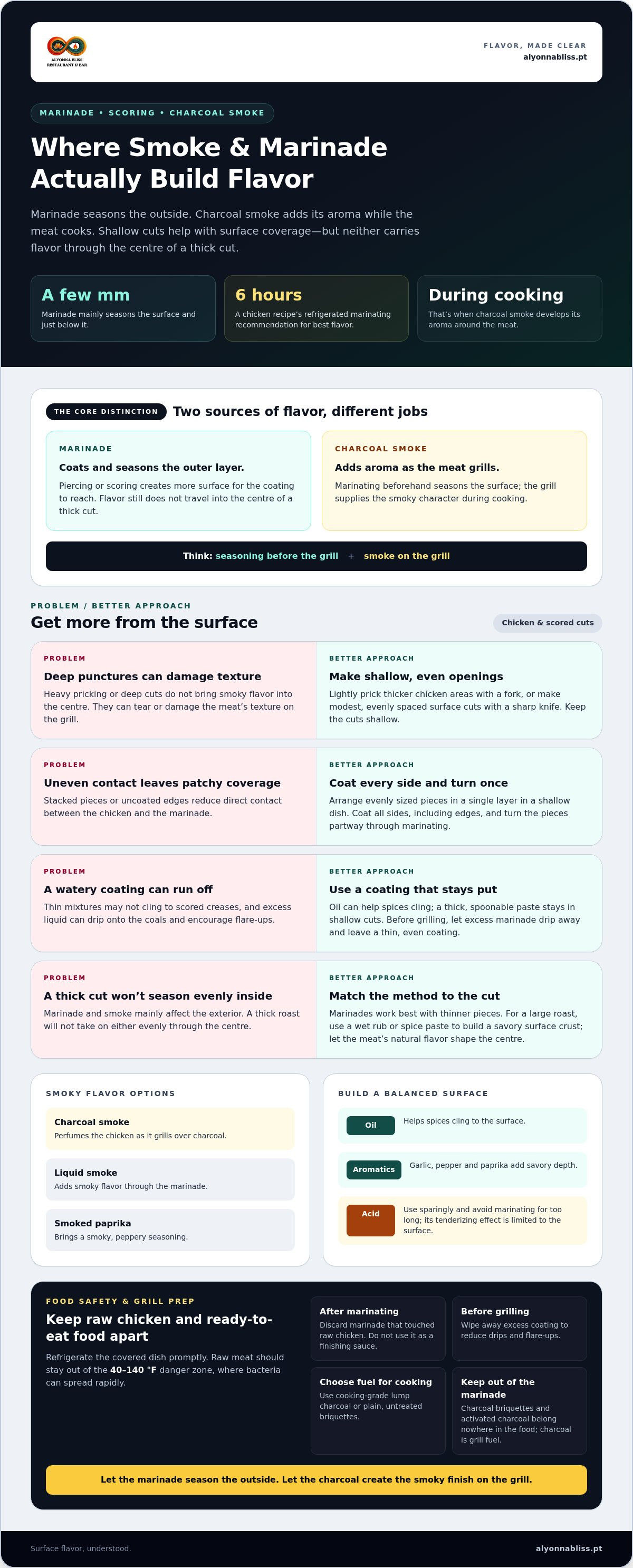
Surface-level flavour absorption
For clean flavour, choose cooking-grade lump charcoal or plain, untreated briquettes. Avoid self-lighting charcoal and treated wood. Marinade and smoke mainly affect the meat’s surface, not its centre.
-
Choose Charcoal for Flavor
Choose charcoal intended for cooking, then let it burn until the coals are established before adding meat. Avoid self-lighting products, painted or treated wood, and fuel that leaves a chemical smell, as these can add unwanted aromas to the grill. The charcoal should support the seasoning, not overwhelm the garlic, spices, or meat’s natural taste.
-
Explain Smoke Flavor Absorption
Keep expectations focused on the outer layer: a wet marinade mainly seasons the surface and only a few millimeters beneath it. Charcoal smoke reaches the meat during cooking, adding aroma to the exterior. A thick roast won’t take on smoke or marinade evenly through the centre, so use a wet rub or spice paste to build a savoury crust.
- Match the marinade to the cut. For thinner pieces, spread seasoning over every side so each bite has a balanced mix of spice and smoke. For a large roast, use a paste that stays on the surface rather than expecting liquid to travel inward. Use acidic ingredients sparingly and marinate for less time, as their tenderising effect is limited to the surface.
- Before grilling, lift the meat from the marinade and let excess liquid drip away. A wet coating can blur the seasoning and drip onto the coals, while a thin, even layer leaves the surface ready to brown. Use delicate spices carefully, since intense heat can darken them quickly. Let charcoal smoke add its own aroma as the meat cooks.
That distinction keeps the approach practical: marinades work best with thinner cuts of meat, while larger cuts are better suited to a wet rub or spice paste.
How does charcoal smoke flavor get absorbed into meat during marinating?
- Separate the marinade’s role from the grill’s. Charcoal smoky marinade absorption describes two effects: marinade seasons the meat’s outer surface, while charcoal smoke adds aroma during cooking. Prepare the marinade before lighting the grill, then let the coals create the smoky finish.
- For a thick beef roast or brisket, expect the centre to taste mostly of the beef itself. A wet marinade won’t reach the middle, so use it to season the exterior. Grill smoke and the meat’s natural flavour shape the interior as it cooks.
- Wait until the charcoal is covered with white ash before cooking. Arrange the meat over steady coals rather than active flames, letting smoke drift across the surface as the heat builds a savoury crust. This gives the exterior time to take on the grill’s aroma.
- Lift the meat from the marinade and let excess liquid drip away. A heavy coating can fall onto the coals and trigger flare-ups, charring the outside before the meat cooks evenly. Leave a thin layer of seasoning on the surface to complement the smoke.
- Turn the meat during cooking to expose more of its surface to the smoke. A roast’s broad face and tucked edges won’t brown alike, so reposition it as needed for even colour. Charcoal smoky marinade absorption is mainly a surface effect; the centre won’t acquire the same smoky coating.
- For a meal built around live-fire cooking, explore charcoal tandoor grills and the deep, fragrant character they bring to grilled food. Seasoned meat, glowing coals, and patient cooking make each smoky bite part of the pleasure.
Alyonna Bliss: 3-Course Lunch Deal
Alyonna Bliss offers a 3-Course Lunch Deal for a satisfying midday pause after a smoky meal at home. If you’d rather leave the cooking behind and gather around a table, enjoy the warmth of South Asian flavours without tending coals or waiting for a marinade. Choose from offerings such as momo, tandoor flatbread, and chowmein for a different kind of savoury comfort.
Charcoal cooking brings a fragrant crust and deep, lingering aroma. A restaurant meal offers its own pleasures, with generous flavours ready to share. For lunch or a relaxed meal, visit alyonnabliss.pt.
Bring the next smoky meal to life
Let your next cookout be guided by the flavour you want on the plate. Think of charcoal smoky marinade absorption as one part of the experience: the marinade adds seasoning, while the fire brings its own aroma. This distinction leaves room to experiment with spice blends, fresh herbs, and different cuts, adjusting the surface seasoning to suit your cooking method.
For another kind of meal, Alyonna Bliss brings South Asian flavours to the table, from momo to tandoor flatbread. Its 3-Course Lunch Deal offers a welcoming change of pace when you’d rather enjoy lunch than tend a grill. Choose the meal that suits the moment, whether you’re gathering with others or simply looking for something comforting.
Contact Alyonna Bliss to plan your next visit, and keep exploring the smoky, fragrant pleasures of cooking and sharing good food.
Frequently Asked Questions
How Deep Do Marinades Go?
Marinades mainly affect the surface and only a few millimeters beneath it. A fork or shallow cut can expose more surface area, but won’t carry seasoning into the centre of a thick piece. For a more balanced bite, slice cooked meat across the grain and serve it with fresh seasoning or sauce on the side, rather than expecting the marinade to flavour every layer.
How Long Should You Marinate Meat?
Choose the time according to the cut and marinade. Chicken thighs, drumsticks, and bone-in breasts typically take 2 to 8 hours; smaller chicken pieces or boneless cuts generally need 1 to 4 hours. Lean pork often needs 2 to 6 hours, while a large beef roast can take 8 to 24 hours. Refrigerate meat as it marinates.
PART III: Can you Marinate too long?
Yes. Leaving meat in marinade too long can weaken protein bonds, making the exterior mushy and less able to retain moisture. Acidic ingredients can intensify this surface effect, so use them sparingly and shorten the marinating time when the mixture contains plenty of citrus or vinegar. A milder mixture can be used for a longer soak than a strongly acidic one.
How deep does smoke flavor penetrate meat, and how long does it take?
Charcoal smoke flavours meat as it cooks, mainly at the exposed surface; it doesn’t travel through a thick roast like a liquid. No single cooking duration suits every cut. Thickness, heat, and the meat’s position over the coals all affect its exposure to smoke. For a large roast, expect the interior’s flavour to come mainly from the beef itself.
How long should meat marinate for smoky flavor, and should it be refrigerated?
Marinate according to the meat and recipe, then let charcoal create the smoke flavour during cooking. A chicken recipe recommends 6 hours in the marinade for best flavour; smaller boneless pieces usually need less time than bone-in cuts. Always marinate raw meat in the refrigerator, not on the counter, and keep any serving sauce separate from marinade that touched raw meat.


