

High heat, not a long bake, gives tandoor flatbread its character. Baking flatbread inside a tandoor means pressing shaped dough onto the hot inner wall, where khubz al-tannur cooks in 2-3 minutes. The result is a bread marked with toasted blisters, a tender middle and the aroma of fresh dough meeting flame.
If you picture bread adhering to the oven wall and emerging crisp at the edges, heat and timing are key. But texture starts well before baking: the dough needs the right feel, enough time to rise, and a shape that can cling to the hot surface.
This guide covers mixing and kneading, rising and shaping, then explains how high heat transforms dough into khubz al-tannur or lavash. You’ll learn what to watch as each bread bakes, so the change from pale dough to warm, blistered flatbread is clear and manageable.
Key Takeaways
- Recognize a traditional tannur by its cylindrical clay chamber, which may stand freely or be set into the ground.
- Build a reliable khubz al-tannur dough by activating the yeast, kneading until smooth and allowing it to rise before shaping.
- Choose dough with the right balance of thickness and softness: leavened breads and thinner lavash each suit the oven in their own way.
- When you’d rather enjoy than bake, Alyonna Bliss serves Tandoor Flatbread alongside its other South Asian favourites.
Khubz al-tannur and its traditional clay oven
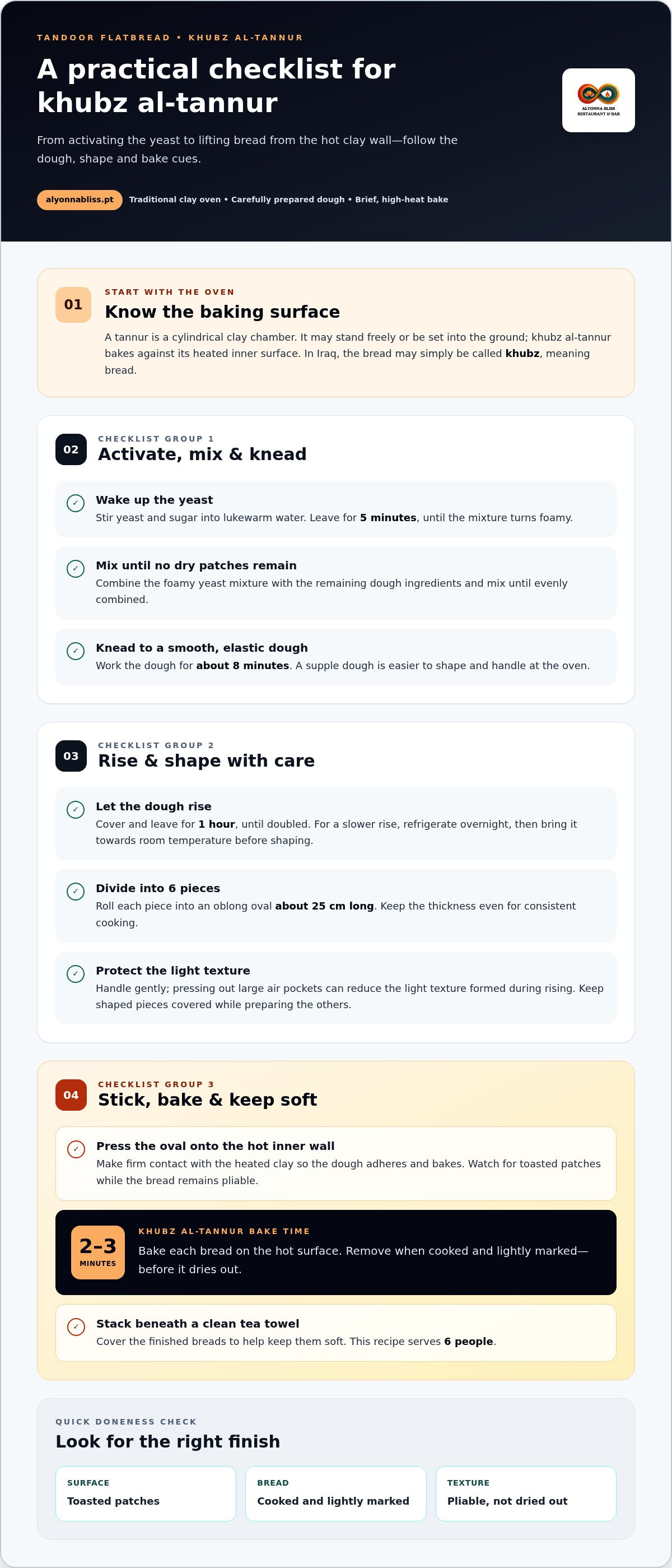
- Start by understanding the tannur’s shape. This traditional oven is a cylindrical clay chamber, either freestanding or sunk into the ground. Its heated interior provides the setting for baking khubz al-tannur against a hot surface. In Iraq, the bread may simply be called khubz, meaning bread.
- Prepare the yeast before mixing the dough. Stir yeast and sugar into lukewarm water, then leave the mixture for 5 minutes until foamy. This visible foam shows the yeast has begun activating. Combine it with the remaining dough ingredients, then mix until no dry patches remain.
- Knead the dough for about 8 minutes, working it until smooth and elastic. A supple dough is easier to shape and handle at the oven. Cover it and leave it to rise for 1 hour, until doubled. For a slower rise, refrigerate it overnight, then bring it towards room temperature before shaping.
- Divide the risen dough into 6 pieces. Roll each piece into an oblong oval about 25 cm long, keeping its thickness even so it cooks consistently. Handle the dough gently; pressing out large air pockets can reduce the light texture formed during rising. Keep shaped pieces covered while preparing the others.
- Carefully press each oval onto the hot inner surface of the tannur. The dough needs firm contact with the heated clay to adhere and bake. Watch as it cooks: the bread should develop toasted patches while staying pliable enough to fold or tear at the table.
- Bake each khubz al-tannur for 2-3 minutes on the hot baking surface. Remove it when the dough is cooked and lightly marked, rather than waiting for it to dry out. Stack the finished breads beneath a clean tea towel to help keep them soft. This recipe serves 6 people.
Lavash baked in a tandoor
In Portugal, use a tandoor with food-handling and fire precautions suited to its setting. Requirements differ between domestic and commercial kitchens, so consider the oven’s placement and use.
- Choose lavash dough that can be rolled thin and evenly. Lavash is often baked in a tonir, the traditional Armenian oven. Its broad, supple shape suits baking against a hot surface. Keep the dough covered while preparing each piece to prevent exposed edges from drying and cracking.
- Roll each portion into a thin sheet, working from the centre towards the edges. Aim for even thickness, rather than a thick middle and paper-thin rim. Uneven dough cooks at different speeds, leaving some areas pale while thinner spots brown sooner. Dust lightly if sticking makes shaping difficult.
- Prepare the tandoor wall and dough before placing the bread. The dough must contact the hot surface closely to adhere and cook. Press it on smoothly, avoiding folds that can leave uncooked patches. Handle the sheet carefully, since uneven stretching can create weak spots during baking.
- Watch lavash as it bakes instead of relying on khubz al-tannur’s stated cooking time. Thickness, surface contact and oven heat all affect how quickly the bread cooks. Look for cooked areas and light browning, then remove the lavash before it becomes too brittle to handle.
- Set the baked lavash aside and decide how you’ll serve it. Keep it flexible for wrapping or tearing alongside a meal, or let it become crisper if that suits the dish. For a prepared taste of this oven-baked tradition, explore tandoor flatbread in Portugal.
In Georgia and Armenia, traditional-oven bread is tonis ṗuri in Georgian and tʿonir hacʿ in Armenian. Quesadilla-style topped flatbread bakes about 10 minutes.
The recipe recommends stacking baked khubz al-tannur under a clean tea towel to keep it soft.
High-temperature flatbread baking
For baking flatbread inside tandoor ovens, manage heat, tools and dough contact carefully. These steps also show how the method differs from conventional-oven baking.
-
Gather Tandoor Baking Tools
Set out a dough cushion or padded bread pillow to carry each shaped flatbread, along with long-handled tools for placing and removing it. Keep a heat-resistant brush nearby for cleanup. Before heating the oven, check that tools are dry, intact and within reach. Avoid reaching across the opening or improvising with short-handled utensils.
Hot clay and an open flame can cause burns, while smoke and fire present additional risks. Keep the work area clear and handle the tandoor with care.
-
Stick Flatbread to the Tandoor Wall
Lay the shaped dough smoothly on the cushion, then press it firmly against the hot wall. Ensure the whole surface makes contact so the bread adheres evenly. Lift the cushion away gently, without dragging the dough or leaving folds. If an edge curls, press it back carefully before it starts to cook.
Watch the dough as it bakes. Once the bread is cooked and marked, remove it with a suitable long-handled tool, not your hands.
- Preheat a conventional oven to 250-280°C, if possible, and allow at least 30 minutes. For home baking, a preheated baking stone holds higher, more even heat than a regular tray. That steadier surface helps flatbread brown consistently. Tandoor flatbread, by contrast, cooks against the heated wall.
Baking flatbread inside tandoor ovens puts dough in direct contact with hot clay, creating a different pattern of blisters and toasted patches from naan baked on a tray or stone. Either way, watch the surface and remove the bread once it is cooked and browned.
- Let the tandoor cool before cleaning. Brush away loose crumbs and ash, then wipe the tools separately. Avoid putting water on hot clay, as a sudden temperature change can damage the oven. Once it is cool, check the inner surface for residue or visible damage before using it again.
Which flatbread doughs work best in a tandoor?
- Match the dough to the texture you want. For a substantial, leavened bread, consider nān-e barbari, an Iranian tandoor bread about 3/4 inch thick. Its depth gives the centre a softer bite, while the hot oven helps brown the outside. Shape it evenly so the thicker dough cooks consistently.
- Choose unleavened dough for a simpler, thinner result. Pakistani tandoori roti is one example; it skips yeast and makes a flexible, straightforward flatbread. Keep its thickness consistent. Uneven shaping can leave some areas cooked before others, especially where dough meets the hot oven surface.
- Use yeast-based dough for a lighter, risen bread. Pakistan’s khamiri roti is one example. For a richer style, naan and kulcha may include ingredients such as milk or egg. These additions change the dough’s character, so shape each piece evenly and watch it closely as it cooks.
- Consider how easily the dough can be shaped and handled. The dough for khubz al-tannur is kneaded for about 8 minutes and left to rise for 1 hour, until doubled. That soft, risen texture provides a useful reference: dough should stretch without tearing and remain manageable as you prepare it for the oven.
- Adapt what you have for a quick experiment. A recipe can use naan, roti, soft tortillas or even sliced bread. These alternatives differ in thickness and texture, so treat them as different starting points, not identical doughs. Shape or arrange each to make even contact with the hot surface, then observe how it browns.
For a ready-made taste of tandoor-baked bread, enjoy Tandoor Flatbread.
Pakistan’s tandoor breads offer a useful range of doughs: unleavened tandoori roti, yeast-based khamiri roti, and richer naan and kulcha made with ingredients such as yeast, milk or egg. Start with the style you prefer rather than assuming one dough suits every result.
When testing a dough, keep its preparation consistent and decide whether you want an unleavened, yeast-based or richer result. This gives you a clear basis for choosing a bread and matching the dough to your preferred texture, without treating different compositions as interchangeable.
Alyonna Bliss: 3-Course Lunch Deal
Alyonna Bliss brings tandoor cooking to the table with Tandoor Flatbread, ready to enjoy without preparing dough or tending a hot oven. If you’re planning a midday meal, the 3-Course Lunch Deal offers another way to settle in over a shared dining experience.
Pair warm flatbread with favourites such as momo or chowmein, and choose a meal to suit your appetite. There’s pleasure in letting someone else tend the flame while you enjoy the aroma, texture and company.
For a meal out in Portugal, explore the 3-Course Lunch Deal or choose Tandoor Flatbread. Visit alyonnabliss.pt to discover Alyonna Bliss.
Bring the warmth of the tandoor to your next meal
Let the kind of meal you want to share guide your next step. At home, making the dough can become part of the occasion: shape each round by hand and serve it while warm and fragrant. The pleasure of baking flatbread inside a tandoor extends beyond the oven. It brings craft to the table and gives everyone something to tear, pass and enjoy together.
If you’d rather leave the baking to someone else, settle in for a relaxed meal. A welcoming table can turn familiar flavours into a chance to linger, connect and discover something new at your own pace.
Contact Alyonna Bliss to learn more, and let your next meal begin with good company and the comfort of freshly prepared food.
Frequently Asked Questions
How to bake flatbread in a tandoor oven step by step?
Prepare risen dough and shape it evenly, then attach it to the heated inner wall using a padded bread cushion. Work in sequence: divide the dough, shape one portion, place it on the cushion, press it onto the wall, then withdraw the cushion gently. Keep the remaining portions covered as you work. Remove each cooked bread with a long-handled tool.
What temperature should a tandoor be for baking flatbread?
A tandoor relies on the heat retained by its clay interior, rather than one universal temperature setting. For a home-oven alternative, set the oven to 250-280°C if possible, and preheat it for at least 30 minutes. A preheated baking stone holds higher, more even heat than a regular tray, helping the flatbread brown more consistently.
How long does flatbread take to cook in a tandoor?
Khubz al-tannur cooks on the hot baking surface for 2-3 minutes. Check the bread’s surface and edges as it bakes, since thickness and contact with the oven wall affect how quickly it cooks. Remove it when cooked and lightly marked, before it dries out. Thinner lavash may need a different baking time, so watch its colour and texture closely.


