

If you’re wondering how to eat newari khaja set, an unfamiliar name and a generous spread can make it hard to know where to begin. You don’t need to recognise every dish or follow a prescribed order. Start by looking over the platter, choose one element that appeals to you, and let that first taste guide what comes next.
This guide offers a simple way to explore different textures and flavours, whether you’re eating on your own or sharing the meal. Sample elements separately before trying small combinations, and adjust your pace to suit your appetite. There’s no checklist to memorise and no single “right” way to enjoy every mouthful.
The Newari khaja set at Alyonna Bliss offers a welcoming way to explore Nepali food. Notice what catches your eye, try a little, and let each taste shape the next. You can enjoy it as a dine-in meal or order delivery, and take your time either way.
Key Takeaways
- A Newari khaja set brings different tastes and textures together, and its contents can vary.
- Notice contrasts such as soft and crisp or savoury and tangy; you don’t need to memorise the names of every component.
- To work out how to eat newari khaja set, sample one element on its own, then try a small combination.
- Use a suggested sequence as a starting point, not a rule; customs can vary by household and setting.
- Explore Nepali food with Alyonna Bliss’s Newari khaja set, available for dine-in or delivery.
What Is a Newari Khaja Set? A Welcoming First Look
A Newari khaja set is a Newari-style platter that brings a variety of smaller food elements, flavours and textures together in one meal. Its contents can vary, so there isn’t one fixed lineup to memorise before you sit down. The point is to enjoy the spread as a whole while noticing what each element brings to the meal.
Khaja is part of Newar food culture, but you don’t need specialist knowledge to appreciate it. Take a moment to look over the platter, choose a first taste, and explore at your own pace. You can learn the names of the components as you go, if you’re curious. A first bite is simply a chance to discover what you enjoy.
What makes a khaja set different from a single dish?
A single main dish usually centres on one preparation, while a khaja set gathers smaller elements on the same platter. You can move between tastes and textures, sampling each separately or combining a little of one with another. That variety makes the meal feel like a spread of choices rather than one flavour from beginning to end.
One mouthful might feel gentle, another more vivid; one element may be soft, while another offers a firmer or crisp contrast. These are ways to think about variety, not a promise about what a particular set contains. Instead of relying on a standard ingredient list, use the platter in front of you to guide what you try and how you pair it.
Why the platter can feel unfamiliar at first
Several small portions together can be a lot to take in visually, especially if the names are new to you. You might wonder what to try first, how the items fit together, or whether there’s a correct way to eat them. Start by choosing one element that catches your attention. You can explore the rest after that first taste.
Notice the contrasts as you go: a milder taste beside a more deeply seasoned one, or a soft texture next to something with more bite. Try elements individually before deciding whether you’d like to combine them. This is a practical way to begin learning how to eat newari khaja set without trying to memorise every component.
Keep the cultural context in view, but keep your first approach uncomplicated. A khaja set reflects a distinctive Newari food tradition; enjoying it begins with attention, appetite and curiosity. You don’t need to arrive knowing every name or custom. Let the meal unfold bite by bite, and allow your preferences to shape the experience.
How to Read the Platter: Notice Its Different Textures and Flavours
Rather than trying to identify every item, look at the platter as a mix of different roles. Some elements may anchor a bite, others may bring a fuller savoury flavour, and accompaniments can add brightness or heat. The selection varies, so use these as ways to read what’s in front of you, not as a fixed checklist.
Look for the platter’s different roles
Notice what seems to anchor the meal, what looks like a substantial savoury bite, and what might add a sharper or more vivid note. Chiura, or beaten rice, and bara, a savoury lentil pancake, are familiar examples from Newari food, but they’re illustrations rather than guaranteed parts of every set. Focus on the elements actually on your plate and how they balance one another.
Thinking in roles can make a spread easier to approach than a list of unfamiliar names. A base may feel relatively plain beside a more seasoned bite; an accompaniment may offer tang or spice. You don’t have to identify each element before you can notice its flavour or decide whether you’d like to try it alongside something else.
Notice contrast before deciding what you like
Let your senses do the first round of reading. Is one bite soft while another has a crisp edge? Does a flavour feel mild, deeply savoury, tangy, or strongly spiced? Pause between bites and notice how the next taste compares. Varied textures make small bites rewarding, turning a soft mouthful beside a crisp one into a fresh contrast.
A relish or pickle, if included, can change the impression of another element. Try a little alongside a milder bite to see how the flavours work together, then taste each separately. There’s no ideal combination to find; the useful discovery is how the flavours shift when you pair them.
For a calm first look, notice:
- Which element seems soft, firm, or crisp.
- Which flavours feel gentle, savoury, tangy, or spiced.
- Whether a small accompaniment changes the taste of a larger bite.
These observations are enough to help you understand the platter without turning the meal into a tasting exam. If you’d like to explore these contrasts over a meal, Alyonna Bliss’s Newari khaja set offers a welcoming way to enjoy Nepali food. Let what’s on the plate guide your curiosity, and notice which combinations you’d like to try again.
How to Eat a Newari Khaja Set: A Simple First-Bite Sequence
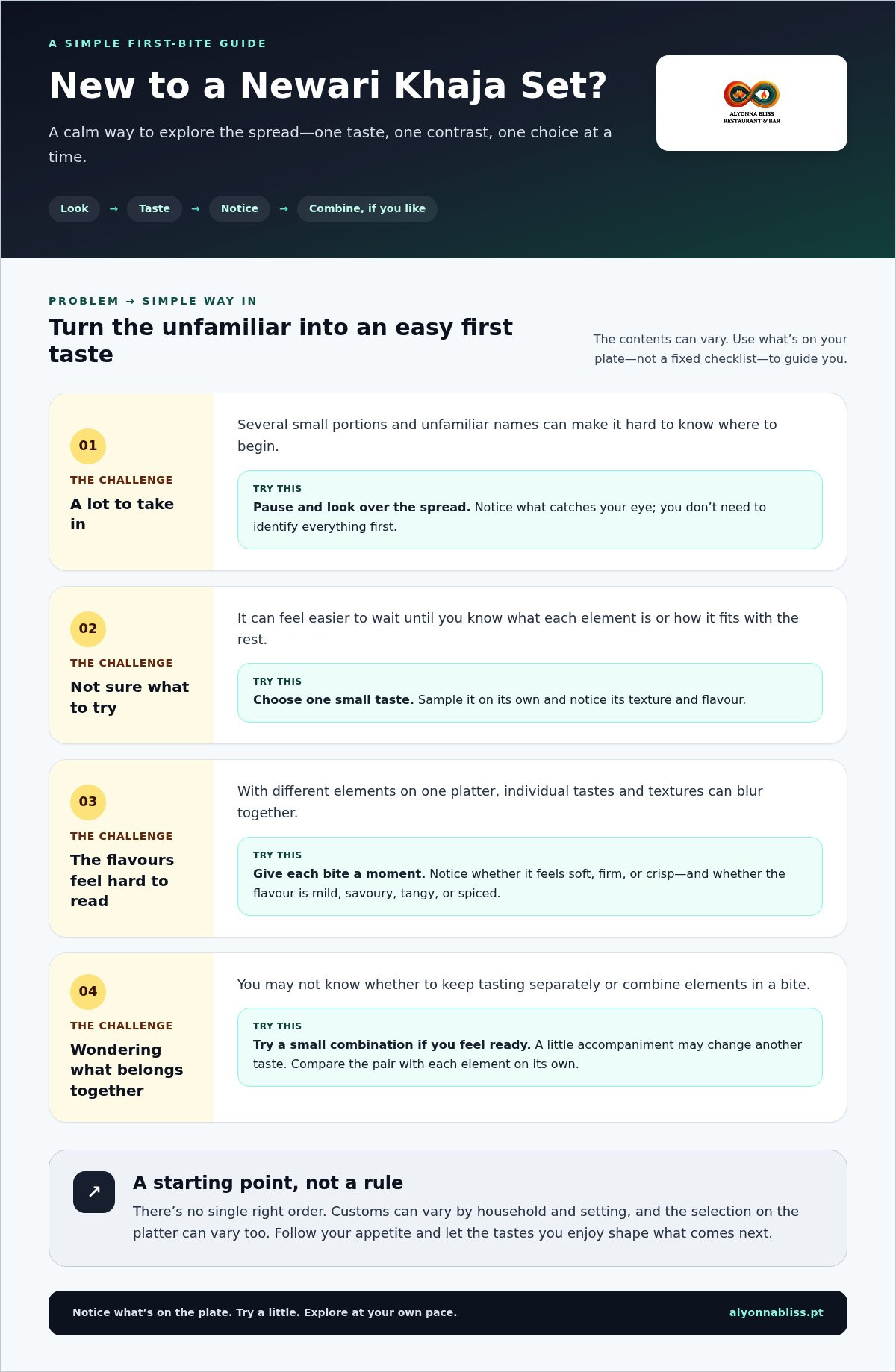
If the spread is new to you, pause before choosing. You don’t need to recognise every element or decide what belongs together right away. Begin by looking over the platter, sample one small bite, and then choose what you’d like to try next. This is a helpful starting point for how to eat newari khaja set, not a prescribed order. Follow your appetite and let the tastes you enjoy shape the meal.
- Pause and take in the spread. Notice which elements look familiar, which seem more vivid, and where you’d like to begin. There’s no need to identify everything first.
- Choose one small taste. Start with an element that appeals to you. Take a small bite and notice its texture and flavour on their own.
- Give that first taste a moment. Is it soft, crisp, mild, savoury, or more strongly seasoned? Paying attention helps you decide what might complement it.
- Try a small combination if you feel ready. Pair two elements in a bite, or keep tasting them separately. Build later bites around what you enjoyed most.
Start with one small taste
A modest first bite lets you meet a flavour without committing to a large mouthful. Choose by appearance or instinct, then notice what comes through: a gentle taste, a firmer texture, or seasoning that lingers. Use whichever utensil feels comfortable, or follow the way you usually enjoy a shared platter. The aim is to taste attentively before adding another element.
Try combinations at your own pace
Once you’ve sampled an element on its own, pair it with a little of something else if you like. If the platter offers richer and sharper or milder tastes, try a small pairing and notice how each changes the other. A combination can bring balance or contrast, but it’s just as satisfying to keep the elements separate. You don’t need to make every bite a mix.
Let preference lead the next mouthful. Return to a first favourite with a different companion, or enjoy it on its own again. If a flavour feels intense, move to something gentler before revisiting it. This loose rhythm gives you room to explore without rushing, whether you’re dining alone or sharing the platter. A suggested sequence can make the first few bites easier; after that, follow your curiosity.
Is There a Right Way to Eat a Newari Khaja Set?
You can explore a Newari khaja set at your own pace; the suggested approach is a guide, not a strict order. There’s no need to worry that one unfamiliar choice will spoil the meal. Your preferences can shape how you taste the platter, while customs may differ between households and dining settings. Personal comfort and cultural practice aren’t the same thing, so stay open to the setting without assuming one way suits everyone.
Follow your comfort and the setting
Choose the utensil or eating style that feels comfortable. If you’re sharing the meal, notice how the people around you are approaching it. Following their lead can help you feel at ease, especially if they know the custom for that occasion. It’s a considerate way to join in, not a rule that every diner must follow the same method.
Newari food has cultural roots, and how a meal is shared or enjoyed may depend on the household or setting. A restaurant meal and a gathering with family, for example, may not feel exactly alike. If someone offers a gentle cue, you can follow it. Otherwise, there’s no need to turn the meal into an etiquette test. Be attentive, enjoy the food, and let the people sharing the table help set the tone.
Adjust the meal to your own palate
Your comfort with flavour matters, too. If you prefer gentler tastes, begin with an element that looks milder to you, then explore more assertive-looking flavours in smaller amounts. Appearance can’t tell you everything about taste, so treat it as a tentative guide and let each bite give you better information. You don’t have to try every element to have a satisfying meal.
Give yourself room to pause between tastes. If something feels sharper or more intense than expected, choose a gentler bite next, or enjoy the flavours separately. If you like a bold contrast, explore it in a small pairing. These are options, not instructions. The set’s contents and flavour balance can vary, so let your own palate guide what you try.
That’s the heart of how to eat newari khaja set with confidence: be curious, considerate and comfortable. You can savour each element separately, try a combination, or move between the two. To experience the platter in a restaurant setting, enjoy a Newari khaja set at Alyonna Bliss. Bring an open appetite, and let the meal unfold in a way that feels right for you.
Enjoying a Newari Khaja Set at Alyonna Bliss
A Newari khaja set can be a lovely way to begin exploring Nepali food. Rather than focusing on a single flavour, you can experience a platter as a collection of tastes and textures. At Alyonna Bliss, the set offers an inviting introduction, whether Nepali cuisine is already familiar to you or you’re approaching it for the first time. You don’t need to arrive with a list of dish names in mind. Notice what draws your attention and let the meal unfold naturally.
Make the meal an easy introduction to Nepali food
Think of the khaja set as one point of entry into a wider food tradition, not a test of what you already know. Alyonna Bliss also serves Nepali specialities such as Thakali thali and momos, offering other ways to explore the menu. Enjoy each choice on its own terms. There’s no need to compare dishes or understand every detail at once; one meal can simply lead to another discovery.
The tasting approach in this guide can make that first experience feel more approachable. Instead of trying to name everything, pay attention to what you enjoy, what surprises you, and which flavours you’d like to revisit. Let the platter itself shape your experience. That keeps the meal personal and leaves room for the pleasure of discovery.
Choose a relaxed way to enjoy it
You can enjoy Alyonna Bliss’s Newari khaja set as a dine-in meal or choose delivery to enjoy the restaurant’s food at home. Dining in makes the platter part of a restaurant meal; delivery lets you settle in wherever you feel comfortable. Either way, there’s no need to hurry. Take your time, follow your appetite, and let each taste become part of your introduction to Nepali food.
Now you have a simple answer to how to eat newari khaja set: approach it with curiosity, not a rulebook. Notice what you like, keep the pace comfortable, and enjoy the contrasts in the way that suits you. Ready to try it? Enjoy a Newari khaja set at Alyonna Bliss, and let the meal find its own rhythm.
Let Your Curiosity Lead the Next Bite
Your first Newari khaja set doesn’t need to be an expert tasting. Let it be the beginning of a new food memory: a flavour that surprises you, a texture you want to revisit, or a moment shared around the table. Take your time, follow what appeals, and leave room for the unexpected. That relaxed curiosity is the simplest answer to how to eat newari khaja set, and it can make trying an unfamiliar cuisine feel more welcoming.
At Alyonna Bliss, a Newari khaja set offers one way to explore Nepali food. Choose the setting that suits you, settle in, and let the experience unfold at your own pace. Explore the Nepali and Indian menu at Alyonna Bliss, then bring an open mind and an appetite for discovery.
Frequently Asked Questions
Do you eat a Newari khaja set in a particular order?
No, there’s no single order every diner needs to follow. If you’re wondering how to eat newari khaja set, begin wherever feels inviting, then let your appetite guide the next bite. At a shared table, you can follow the group’s rhythm or enjoy your own plate. The set is meant to be explored, not completed according to a sequence of rules.
Can I eat a Newari khaja set with a fork?
Yes, you can use a fork if that’s what feels comfortable. A utensil can also help if you’d rather keep different elements separate or try a small combination neatly. Eating with your hands is another familiar way to enjoy some platters, but it isn’t the only acceptable choice for every diner or setting. Choose what lets you relax and enjoy the meal.
Is a Newari khaja set always spicy?
No, don’t assume every part of the platter will taste hot. A khaja set can bring together different flavours, and the balance may vary with its components. If you’re sensitive to spice, sample a small amount of an unfamiliar element before taking a larger bite. A tangy or deeply seasoned taste can feel bold without every item having the same level of heat.
Is a Newari khaja set the same as samay baji?
The names are sometimes used interchangeably, but they can describe different contexts. Samay baji is commonly associated with ceremonial or ritual occasions, while khaja is often used for a more everyday platter, including restaurant meals. Usage can vary, so the terms don’t always signal identical dishes or occasions. It’s useful to treat them as related expressions rather than assume every khaja set is a ceremonial samay baji.
Can a vegetarian enjoy a Newari khaja set?
Yes, vegetarian versions of Newari khaja sets exist. What’s served can vary, so the name alone doesn’t tell you whether a particular platter is vegetarian or what it contains. If you follow a vegetarian diet, consider the actual components of the set rather than relying on a standard ingredient list. Different preparations may offer different combinations, and there isn’t one universal version to expect.
What should I try first if I have never eaten Newari food?
Choose one element that looks approachable, take a small taste, and let that first impression guide you. If you’re sharing the meal with someone familiar with Newari food, they may be able to introduce a couple of the names as you go. You don’t need to learn the whole platter before enjoying it. Notice what you like and what you’d try again.


