

What if beaten rice could do more than sit quietly beside a meal? In Newari cuisine, baji is a light, delicate base that brings contrasting flavours and textures together. Exploring baji beaten rice culinary uses means looking beyond the grain itself: its gentle crunch can balance savoury meat, bright pickles, lentils and greens, while giving each mouthful a satisfying, starchy centre.
If you’ve wondered how baji differs from other beaten rice, or what makes it feel at home on a Newari plate, the answer lies in its variety and role. Sleek Taichin, thicker lhuya and roasted, reddish siya each offer a slightly different texture. You’ll see how baji anchors the celebrated samay baji platter, works alongside traditional accompaniments and fits into the wider Newari khaja experience. A Newari khaja set at Alyonna Bliss offers a warm introduction to this shared dining tradition, where food is made for gathering, tasting and lingering.
Key Takeaways
- Understand how “baji” and “chiura” are used for flattened rice, while keeping regional differences in mind.
- Connect the way rice is flattened with baji’s light texture and its role alongside other foods.
- Explore baji beaten rice culinary uses across snacks, accompaniments and Newari khaja, without assuming every platter is the same.
- Choose pairings by contrast: balance dry, crisp baji with moist or savoury elements for a more satisfying bite.
- See baji as part of a wider Newari dining tradition, and discover that tradition through a shared khaja experience.
What Is Baji Beaten Rice? A Clear Introduction to Chiura
Baji is flattened rice served as a grain in Newari food, not a bowl of cooked rice. Its thin flakes are light and dry, with a delicate bite. In Newari meals, baji is valued as an ingredient in its own right, rather than simply as a garnish. Newar cuisine often features baji (beaten rice) as a foundational element.
Is baji the same as chiura or poha?
Chiura is a widely used Nepali name for flattened rice; baji is closely associated with Newar food. Usage can vary by region, and the terms may overlap. Poha is another name commonly associated with Indian dishes made from flattened rice. The words don’t guarantee that the rice, preparation or finished dish is identical, so consider the local context and how it’s served.
What texture does beaten rice bring to a dish?
Baji’s thin flakes feel different from cooked rice: lighter and drier, with a gentle crispness that can soften beside moist foods. Varieties and preparations differ, so the exact bite isn’t always the same. This texture helps explain the range of baji beaten rice culinary uses, from a simple serving to a component of a larger meal.
How Baji’s Preparation Shapes Its Texture and Culinary Role
Flattening rice gives it a different feel from a bowl of cooked grains. The flakes are thin and usually dry before serving, rather than soft and cohesive. Their precise texture can vary, but they offer a lighter contrast alongside richer or wetter foods.
That difference shapes how baji works in a meal. Cooked rice can provide a soft, warm base, while dry baji keeps its own distinct bite beside other components. If it meets moisture, it may become more yielding. Baji’s texture helps it balance a meal, bringing a lighter bite alongside fuller flavours.
Why does baji feel different from a bowl of rice?
Cooked rice is tender and moist; dry baji is made up of separate flakes. This contrast can keep a plate from feeling uniformly soft. Some varieties or preparations may feel firmer than others, so the exact texture depends on what’s served.
This is one reason the baji beaten rice culinary uses vary. Its role depends on whether it stays dry or softens alongside other foods.
Does baji need cooking before serving?
Not always. Some preparations serve baji dry, while others soften or season it as part of a dish. Follow the package directions or a trusted recipe for the specific type you’re using. Avoid assuming that all beaten rice needs the same treatment.
For a dry serving, the flakes remain distinct; in a softened preparation, they become more tender. To explore Newari dining in a shared setting, consider Alyonna Bliss’s Newari khaja set.
Baji Beaten Rice Culinary Uses: Snacks, Accompaniments, and Khaja
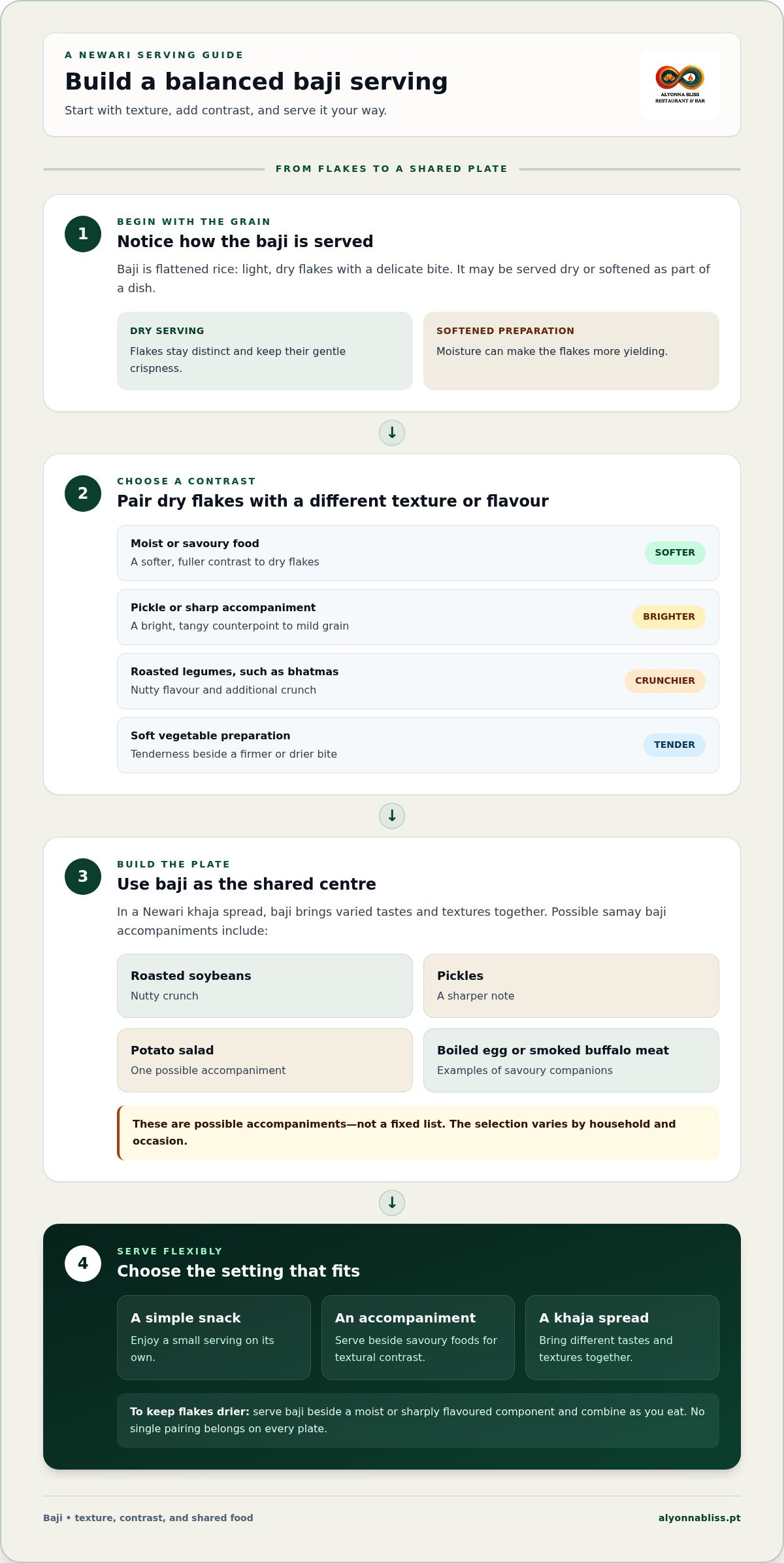
Baji can be served as a simple snack, alongside savoury foods, or as part of a wider Newari khaja spread. Its role depends on the preparation and what else is served. In samay baji, for example, beaten rice is paired with varied accompaniments, which can include roasted soybeans, pickles, potato salad, boiled egg and smoked buffalo meat. The selection isn’t fixed across every household or occasion.
How does baji fit into a Newari khaja spread?
In a khaja spread, baji gives different tastes and textures a shared centre. Bhatmas, or roasted soybeans, may add a nutty crunch; pickles can bring a sharper note. These examples show possible contrasts, not ingredients required on every plate. The combination can differ with household custom and setting, making each spread its own expression of Newari food.
Can beaten rice work beyond a traditional platter?
Yes. A small serving can be enjoyed as a snack, or baji can accompany savoury foods as a textural contrast. At home, you might serve it with a moist or sharply flavoured component, keeping them separate until eating if you’d like the flakes to stay drier. Treat this as a flexible serving idea, not a traditional recipe; follow a trusted recipe for a specific preparation.
Alyonna Bliss offers a Newari khaja set as a way to explore the tradition. The examples here describe broader culinary contexts, not the specific ingredients in the restaurant’s set.
How to Choose Baji Pairings and Serve It Well
A thoughtful pairing starts with texture, not a strict recipe. If the baji is dry and delicate, consider adding a moist or savoury element nearby; if other parts of the plate are already soft, a crisp or firmer contrast can bring welcome balance. The best combination depends on the type of baji, the other foods and your own preferences. Newari serving customs also vary, so no single pairing belongs on every plate.
Which flavours and textures complement baji?
Think in contrasts: mild grain with bold savoury flavours, or a dry bite beside something softer. Traditional samay baji examples include pickles, roasted soybeans and potato salad, but these are possible companions, not required ingredients. Use the table as a flexible guide to roles and textures rather than a fixed menu.
| Pairing category | What it adds | Possible meal role |
|---|---|---|
| Moist or savoury preparation | A softer, fuller contrast to dry flakes | Balances a bite or rounds out a plate |
| Pickle or other sharp accompaniment | A bright, tangy counterpoint | Brings lift to a mild grain base |
| Roasted legumes, such as bhatmas | A nutty flavour and additional crunch | Adds another texture to a varied spread |
| Soft vegetable preparation | Tenderness beside a firmer or drier bite | Helps create contrast across a shared meal |
These examples reflect broad pairing principles and familiar khaja components, not universal rules. Regional practice, household preference and the occasion all shape what is served. Start with one contrast you enjoy, then adjust the rest of the plate around it. If a combination feels too dry, add a moist component; if it feels too soft, look for a crisper element.
How can a reader serve baji as a simple snack?
For an uncomplicated snack, serve a small portion of baji with a savoury accompaniment you enjoy, keeping additions separate so you can taste how each changes the bite. A pickle or roasted legume can offer a different flavour and texture. Treat this as a flexible serving idea, not a prescribed traditional recipe; preparations vary, so follow a trusted recipe when making a specific dish.
This texture-led approach makes baji beaten rice culinary uses easier to understand: choose companions that bring contrast, then let taste guide the proportions. If you’d like to experience Newari food in a shared dining setting, explore the Newari khaja set at Alyonna Bliss.
Discover Baji’s Place in a Newari Meal
Baji is best understood as one part of a larger Newari food tradition, not as a complete meal by itself. Its quiet, grain-forward character helps different dishes sit together on the plate, offering a contrasting texture among richer, softer or more intensely seasoned foods. That role may seem simple, yet it gives the meal a sense of balance: each element has its own flavour, and baji helps bring the experience into focus.
Newar cuisine includes foods served in everyday meals as well as spreads associated with gatherings and festivals. The details depend on the dish, occasion and household, so no single plate represents every family or setting. A useful way to approach baji beaten rice culinary uses is to see how it functions alongside other foods, while leaving room for the many ways Newari cooks and communities shape a meal.
What makes baji meaningful beyond its ingredients?
On a shared plate, baji can connect contrasting tastes and textures without overwhelming them. It gives diners a familiar base from which to explore the other components, creating a meal that’s varied but cohesive. Its significance comes through in this culinary context, not in a claim that every Newari meal or celebration follows the same pattern.
That distinction matters. Food traditions are lived and adapted, and serving choices can differ between homes, occasions and regions. The careful way to describe baji is as a recognised part of Newari cuisine, with a role that changes according to what accompanies it. A traditional platter may offer one expression of the cuisine; another meal may use different ingredients or arrangements. Both can belong to a rich and evolving food culture.
For a curious diner, this means paying attention to the whole plate. Notice the contrast between baji and the foods beside it, how each mouthful changes with a different combination, and how a simple grain can make room for other flavours. This kind of tasting offers a respectful introduction, without reducing Newari food to a single recipe or a checklist of ingredients.
Explore Newari food at Alyonna Bliss
Alyonna Bliss serves Nepali and Indian food, including a Newari khaja set. It offers a way to encounter Newari dining in a restaurant setting, while the set’s specific ingredients should be understood from its menu rather than assumed from general descriptions of baji or khaja.
Food can be an invitation to discover a culture through flavour, texture and the pleasure of sharing a table. If you’d like to explore Newari dishes alongside the wider Nepali and Indian menu, Explore Alyonna Bliss and enjoy the experience at your own pace.
Let Your Next Meal Be an Invitation
Food traditions become vivid through tasting: the first encounter with an unfamiliar texture, the surprise of a new flavour beside a familiar one, and the conversations that gather around a shared meal. Let curiosity lead. Notice what you enjoy, follow the contrasts that appeal to you, and leave room for each dish to tell its own story. That’s a welcoming way to keep exploring baji beaten rice culinary uses and the wider food cultures they belong to.
Alyonna Bliss brings Nepali and Indian dining together, with a Newari khaja set and options to dine in, order delivery, or gather for a private event. Choose the setting that suits you, then make space for a meal worth lingering over. Explore Alyonna Bliss and take your next step into a table of flavour, discovery, and shared enjoyment.
Frequently Asked Questions
Is baji the same as poha?
Not always. Both names refer to flattened rice in some contexts, but the words can point to different regional traditions and dishes. “Poha” often describes a prepared Indian dish, while “baji” is associated with Newari food. If you’re reading a menu or recipe, look at the preparation and accompanying ingredients rather than relying on the name alone. That gives you a clearer sense of what will arrive on the plate.
Can you eat baji without cooking it?
Some types are served dry or used without further cooking, while other recipes soften or season the flakes. Follow the package directions for the specific product, or use a reliable recipe that describes its intended preparation. For example, a recipe may call for the rice to be softened before mixing it with other ingredients. Don’t assume every type is ready to eat straight from its packaging.
Is baji gluten-free?
Rice itself is naturally gluten-free, but that alone doesn’t confirm the status of every packaged baji product or finished dish. Processing and possible cross-contact can matter, and other ingredients in a dish may contain gluten. If you avoid gluten for medical reasons, read the product label and allergen information carefully. Check the details for the complete dish, not just the beaten rice.
How should dry beaten rice be stored?
Follow the product label, since storage guidance can vary. In general, keep dry beaten rice in its original sealed packaging or a suitable airtight container, in a clean, dry place. Close the package after each use so moisture is less likely to affect the flakes. Check the label for any product-specific instructions and its stated date, rather than relying on a general storage period.
Can baji replace cooked rice in every meal?
No. The two have different textures, so they won’t create the same result in every dish. Baji may suit a plate where separate flakes provide contrast, while cooked rice is a better fit when a recipe needs soft, moist grains. Choose based on the dish’s texture and purpose. If adapting a recipe, consider whether changing the rice would alter how the other ingredients combine.
Is baji mainly a snack or part of a meal?
It can be either, depending on the preparation and setting. A small serving may work as a snack, while baji also appears in Newari khaja, where it sits alongside other foods. These roles aren’t mutually exclusive, and neither one defines every dish. The range of baji beaten rice culinary uses makes more sense when you consider the meal around it and how the rice is served.


