

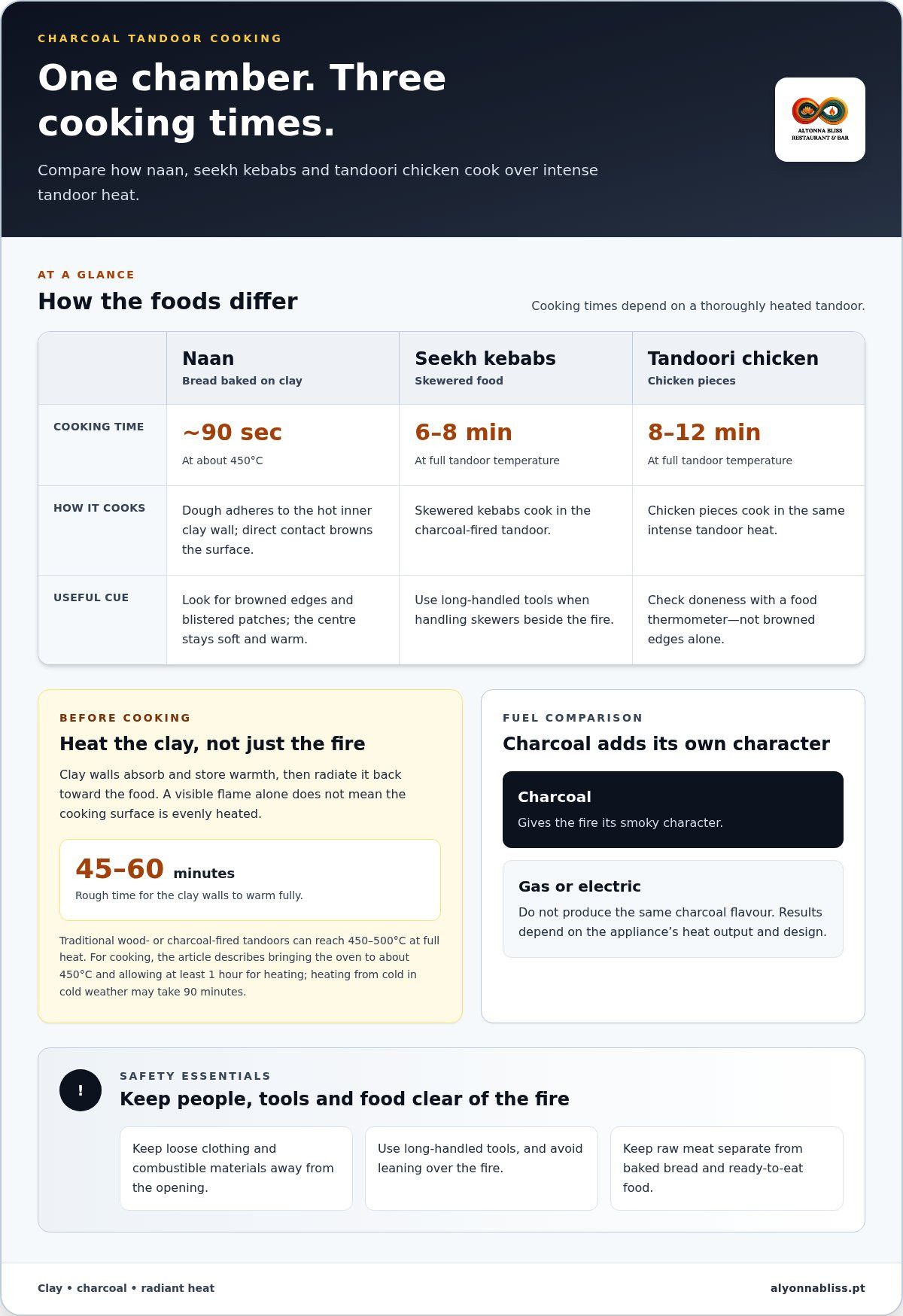
A tandoor can cook far more than naan: it turns out bread, chicken and seekh kebabs over intense charcoal heat. In the charcoal tandoor cooking method, naan takes about 90 seconds on clay walls heated to 450°C, while tandoori chicken pieces cook in 8-12 minutes and seekh kebabs in 6-8 minutes. The same oven brings together blistered edges, smoky aromas and tender centres.
A tandoor is more than a very hot oven: its shape and clay walls determine how food cooks. This guide explains how the clay stores heat, how charcoal and airflow sustain the fire, and why naan sticks to the oven wall. It also looks at how the same radiant heat cooks skewered meats, making the charcoal tandoor cooking method easier to picture from flame to table.
Key Takeaways
- A tandoor’s deep shape brings food close to intense heat, helping bread blister while skewered ingredients cook over the charcoal.
- Clay walls absorb and hold heat, so the oven’s cooking character depends on how thoroughly they warm before food goes in.
- Thermal charging is more than lighting a fire: steady preheating helps the clay and charcoal work together for consistent cooking.
- Airflow through the lower vent influences the fire’s intensity, making vent control an important part of managing tandoor heat.
- Explore the flavours of tandoor flatbread and other South Asian favourites as part of a relaxed meal at Alyonna Bliss.
1. Naan baking on tandoor walls
Naan cooks against the tandoor’s hot clay wall, where direct contact browns its surface quickly. At 450°C, it takes about 90 seconds to bake, developing blistered patches and a soft, warm centre. This brief cooking time depends on the oven being thoroughly heated; a cooler wall slows browning and changes the bread’s texture.
To bake naan, shape the dough into an oval and press it onto the inner wall with a suitable bread cushion or tool. Make sure it adheres before releasing it, so it stays in place as the surface bubbles. Watch the colour, then lift the bread away with a long-handled tool when the edges are browned. Turn or reposition it if one side colours faster.
The same charcoal heat cooks other tandoor favourites at different speeds. Seekh kebabs take 6-8 minutes, while tandoori chicken pieces take 8-12 minutes at full tandoor temperature. Charcoal gives the fire its smoky character; gas and electric tandoors use different heat sources and don’t produce that same charcoal flavour. Their cooking results depend on the appliance’s heat output and design.
In Portugal, whether a charcoal tandoor needs a permit depends on its setting and installation. Because it burns fuel, effective ventilation is also needed to carry smoke away. A restaurant kitchen, a private outdoor space and an enclosed area each present different conditions, so there is no single answer for every site.
Food and fire safety both matter beside a hot tandoor. Keep loose clothing and combustible materials away from the opening, use long-handled tools for naan and skewers, and avoid leaning over the fire. For chicken, use a food thermometer to assess doneness rather than relying on browned edges alone. Keep raw meat separate from baked bread and ready-to-eat food.
There is no single purchase price for a charcoal tandoor in Portugal: size, construction, fuel design and installation needs all affect cost. Specialist catering-equipment retailers and outdoor-cooking suppliers are practical places to look. Compare each model’s ventilation and intended use, since a tandoor designed for a commercial kitchen may not suit a small domestic space.
Naan’s quick bake against the oven wall makes it a natural partner for skewered meats and richly flavoured dishes. The charcoal tandoor cooking method combines clay, radiant heat and live fire, giving bread a crisp surface and tender middle. That contrast is the pleasure of tandoor baking: quick cooking, fragrant warmth and bread best enjoyed fresh.
2. Tandoor design and clay heat retention
A tandoor’s tall chamber places food around a central heat source. Its clay walls absorb warmth from the fire, then radiate it back toward bread and skewers. The oven is more than a container for charcoal: the chamber’s depth, opening and clay body all affect how heat reaches food. A narrow opening also helps retain heat while allowing access for bread and skewers.
Clay’s role is gradual: the walls need time to warm before they can contribute fully. A tandoor takes roughly 45 to 60 minutes to heat its clay walls fully. Until the interior is charged, the fire may be hot while the cooking surface remains uneven. Waiting allows heat to spread through the wall, helping the oven cook more consistently instead of relying only on direct flame.
Think of the clay as a heat reservoir. Once warmed, it continues radiating energy as the fire shifts, balancing direct heat from the charcoal with warmth stored in the chamber. Naan placed against a hot section browns through contact, while skewered food cooks in the surrounding heat. The same chamber can therefore cook different foods without a flat surface or pan.
Shape matters, too. A rounded, upright interior gives the cook access to several zones: the base near the charcoal, the wall for bread and the open space above the fire. Each position exposes food to a different mix of radiant warmth and moving hot air. Turning a skewer or repositioning bread helps when one area cooks faster than another. Placement works with the tandoor’s design.
Clay also affects how the oven responds during a cooking session. A fully warmed wall continues contributing heat after food is removed, while a cooler section may brown bread unevenly. Do not treat the visible flame at the opening as the only sign that the oven is ready. Let the clay heat through, then observe how the cooking surface responds to the first batch. The material shapes the texture on the plate.
For diners, that stored warmth helps create the tandoor’s familiar contrast: a browned, fragrant exterior and a softer centre. The chamber’s design turns fire, clay and careful placement into a shared meal’s defining flavours. To enjoy those traditions at the table, explore tandoor cooking and South Asian flavours.
The bottom air vent controls oxygen intake and can be adjusted to regulate heat. This gives the cook a way to manage the fire alongside the chamber’s stored warmth, rather than judging readiness only by the visible flame. Vent adjustment belongs in the same careful process as allowing the clay to warm and watching the first food cook. It offers an additional point of control while the cook works with the tandoor’s different cooking positions. Attention to the vent, the warmed walls and food placement helps make heat management part of the cooking process, instead of relying on a single sign of readiness.
3. Tandoor heating and clay thermal charging
Thermal charging means warming the tandoor’s clay until it stores and radiates heat. Traditional tandoors burn wood or charcoal and can reach 450-500°C at full heat. For cooking, bring the oven to about 450°C and allow at least 1 hour for heating. In cold weather, heating from cold may take 90 minutes. The charcoal tandoor cooking method depends on patience as much as fuel, since the walls need time to absorb warmth.
Choose lump charcoal for a charcoal-fired tandoor. Briquettes can contain fillers, and their ash may choke the bottom air vent. A four-hour session may use approximately 3kg to 5kg of lump charcoal. The amount depends on the oven, the fire and how long it needs to hold cooking heat.
Follow a gradual sequence. Place charcoal in the fire area and light it according to the tandoor’s design. Let the fire build steadily rather than forcing the clay to heat too quickly. The walls absorb warmth over time, so a fierce flame alone does not mean the full chamber is ready.
- Start with a clean, dry tandoor. If rain has entered the oven, warm it gradually over 45 minutes before beginning a full firing.
- Build the charcoal fire and leave the bottom air vent open enough to support combustion. The vent supplies oxygen, while ash buildup can restrict airflow.
- Allow at least 1 hour for heating, then bring the tandoor to about 450°C before cooking. In cold weather, allow 90 minutes from cold.
- Once the tandoor reaches full temperature, heat it for 30 minutes before cooking to burn off residue. This prepares the cooking chamber as well as the clay.
- Cook only after the clay has absorbed heat throughout. Maintain the fire and observe how the oven responds as each batch goes in.
These steps make the charcoal tandoor cooking method a deliberate process, not simply a matter of lighting fuel and adding food. Thermal charging lets the clay contribute stored heat alongside the live fire. If the chamber is still warming, cooking conditions can change between the first and later batches.
During a four-hour session, the fire and charcoal supply need attention as cooking continues. Keep the vent clear so air can reach the fire, and add fuel in a controlled way when the heat needs sustaining. Steady preparation brings together glowing charcoal, warmed clay and the fragrant first batch, creating the deep heat associated with tandoor cooking.
4. Tandoor temperature control and airflow
Airflow is the tandoor’s quiet control point. Its bottom vent regulates the oxygen entering the charcoal fire and influences how steadily heat develops. Open it to support combustion, then adjust it to manage the fire’s intensity. The vent does not act alone: charcoal quality and ash also affect heat. In a clay chamber, these details shape how evenly food cooks.
Use lump charcoal rather than briquettes for tandoor cooking. Briquettes can contain fillers, and their ash may clog the bottom air vent. Restricted airflow can weaken the fire and make the temperature harder to sustain. Keep the vent clear and observe the fire’s response as you adjust its opening. Small changes help you understand how the tandoor behaves.
Temperature matters as much as fuel. Tandoor cooking requires temperatures above 400°C, with 450°C or higher recommended for best results. A temperature of 480°C is also cited as one to manage during cooking. These figures describe a demanding heat range, where the cook must balance the active fire against the warmth held by the clay.
A practical heat check uses the opening: hold a hand 30 cm above it. If you can’t keep it there for two seconds, the tandoor is approaching cooking temperature. This is a rough sensory cue, not a substitute for a thermometer. Use it alongside temperature readings and the food’s progress, especially when the fire is being adjusted.
Charcoal choice can change cooking time quickly. With standard barbecue charcoal alone, one cooking experience found that after about 5 minutes, the tandoor had lost enough heat for naan to take up to 15 minutes. That example shows why a short burst of strong heat may not sustain the chamber. Lump charcoal, a clear vent and a thoroughly heated clay body help support a steadier cooking rhythm.
- Check that the bottom vent is clear before lighting or tending the fire.
- Use lump charcoal, then adjust the vent gradually in response to the fire.
- Assess heat with a thermometer and the 30 cm hand test.
- Watch the first naan for signs that the heat is slowing, such as delayed browning.
With the charcoal tandoor cooking method, temperature control depends on oxygen, fuel and clay working together. A clear vent supports combustion, while suitable charcoal helps sustain the fire through successive batches. Read these cues together instead of relying on the flame’s appearance alone. This gives you a more measured approach to heat, from the first piece of bread to the last skewer.
Keep the fuel choice tied to the airflow requirement: use lump charcoal rather than briquettes for tandoor cooking. Briquettes contain fillers and produce ash that can choke the bottom air vent. This makes the recommended fuel choice directly relevant to preserving the vent’s role in supplying oxygen to the fire. When choosing between these fuels, prioritize lump charcoal; the alternative may introduce material that interferes with the bottom air vent. The point is not merely fuel preference: it is part of maintaining airflow for tandoor cooking.
5. Traditional cooking and customer experience
Tandoors have cooked bread and meat for thousands of years. Their history reaches more than 5,000 years, with origins in the Indus Valley. That long tradition begins with a practical design: a heated chamber cooks food close to fire and clay. At the table, its lasting appeal is sensory too, bringing warm bread, smoky aromas and browned surfaces together.
The cooking method shapes the meal’s rhythm. Bread and skewered meat emerge from the same oven with different textures, creating a natural contrast between soft, blistered dough and savoury char. Serve them with fresh accompaniments, and each bite can shift from smoky to bright, warm to cooling. Tandoor cooking is not only about heat; it brings variety to a shared meal.
For guests, the visible craft connects a meal to its preparation. A cook shapes dough, presses it against the clay, then lifts out bread ready to share. The transformation from simple ingredients to a fragrant finished dish gives the meal a clear beginning. The oven’s glow and the scent of baking bread make cooking part of the welcome.
The Indus Valley connection places the tandoor within a long culinary story, rather than a passing kitchen trend. Cooks across generations have used its intense heat for staple foods such as bread and meat. Today, the same pairing lets diners experience heritage through familiar pleasures: freshly baked bread, well-seasoned food and dishes served to share.
A thoughtful tandoor meal balances flavour and texture. Pair a smoky grilled dish with bread that can catch its juices, then add crisp or fresh elements for contrast. Soft bread beside charred meat, for example, creates a different mouthfeel in every bite. Sharing the dishes lets guests explore those contrasts together, making conversation and discovery part of the meal.
At home or in a restaurant, notice the details to appreciate traditional tandoor cooking. Look for browned patches on bread, a smoky aroma from the fire, and the contrast between outer char and a tender centre. These cues tell a story of clay, flame and skilled timing. They also make each dish distinct, rather than simply hot.
Bring that spirit of shared discovery to your next meal. Explore traditional South Asian flavours and enjoy the warmth, aroma and craft that make tandoor cooking memorable.
Alyonna Bliss: 3-Course Lunch Deal
Alyonna Bliss brings the warmth of South Asian cooking to the table, with its 3-Course Lunch Deal for a midday meal. If the tandoor’s smoky flavours have caught your imagination, Tandoor Flatbread offers a way to enjoy that tradition alongside a meal. Chowmein adds a wok-cooked choice for anyone drawn to a different savoury texture.
Choose the lunch deal for a complete midday dining experience, or settle in for flatbread and other favourites when you’re ready to share a relaxed meal. The appeal lies in the contrasts: soft bread, fragrant spices and comforting dishes served around the table.
For details or to plan a visit, visit Alyonna Bliss.
Let the next meal bring the craft to life
The charcoal tandoor cooking method is more than a way to prepare food. It invites you to notice how flame, clay and skilled hands shape a meal, then share that discovery around the table. Choose a dish that brings those textures and aromas into focus, and enjoy it fresh.
At Alyonna Bliss, Tandoor Flatbread brings tandoor tradition to the meal, while Momo offers another South Asian favourite to share. For a midday occasion, the 3-Course Lunch Deal makes space to settle in and enjoy several courses together. Each offers a different way to gather over flavour, warmth and conversation.
Explore the menu and plan your visit. Let the next meal be a chance to savour something new and share it with good company.
Frequently Asked Questions
What Can You Cook in a Tandoor Oven?
A tandoor cooks breads, skewered meats and other foods suited to intense radiant heat. Naan adheres to the inner wall, while seekh kebabs and tandoori chicken cook on skewers. Pair bread with grilled meat so it can catch the juices, or serve both with fresh accompaniments. The oven’s shape lets cooks prepare different textures in one cooking session.
How do you light and preheat a charcoal tandoor safely?
Start with a clean, dry tandoor and follow the appliance’s instructions for lighting and tending its fire. Use lump charcoal, keep the bottom vent clear, and allow at least 1 hour for preheating. Once the oven reaches full temperature, heat it for 30 minutes before cooking to burn off residue. If rain has entered the tandoor, warm it gradually over 45 minutes before full firing.
What temperature should a charcoal tandoor reach for different foods?
Aim for about 450°C for naan; traditional tandoors reach 450-500°C at full heat. The exact cooking time varies by food and position in the chamber, so use its surface colour and texture as cues. Naan should develop browned patches, while skewered foods need turning or repositioning if one side cooks faster. For a temperature check, a thermometer gives a clearer reading than judging the flame alone.


