

Vindaloo’s signature is not chilli alone. An authentic vindaloo spice profile combines red chilli heat with the sharp tang of vinegar and garlic, plus the warmth of toasted spices. The dish has roots in Goa, where cooks adapted the Portuguese carne de vinha d’alhos, meat with garlic and vinegar, by adding Indian spices and chillies.
It’s easy to mistake fierce heat for the whole story, especially since British versions made vindaloo famous as an exceptionally hot curry. But its character is more layered: bright acidity, deep garlic, fragrant spices and heat that supports rather than overwhelms them. Learn how to recognise those flavours, understand the dish’s Portuguese-Goan heritage and see how whole spices build its aroma. These details help distinguish a balanced, tangy vindaloo from a curry that relies on chilli alone.
Key Takeaways
- Look beyond chilli burn: a well-balanced vindaloo brings heat together with vinegar’s tang and garlic’s depth.
- Recognise how Goan cooks adapted a Portuguese garlic-and-vinegar dish with Indian spices and chillies.
- Use the meat’s vinegar-and-garlic marinade as a clue to vindaloo’s defining character, not just its colour or heat.
- Notice how toasted whole spices contribute a layered aroma that ground chilli alone can’t provide.
- When you’re ready to enjoy a curry, Alyonna Bliss offers vindaloo alongside other Indian favourites.
Vindaloo's chilli heat compared with British versions
Traditional Goan vindalho does not include potatoes. Chillies bring the heat, but vinegar, garlic and toasted spices shape the flavour just as strongly.
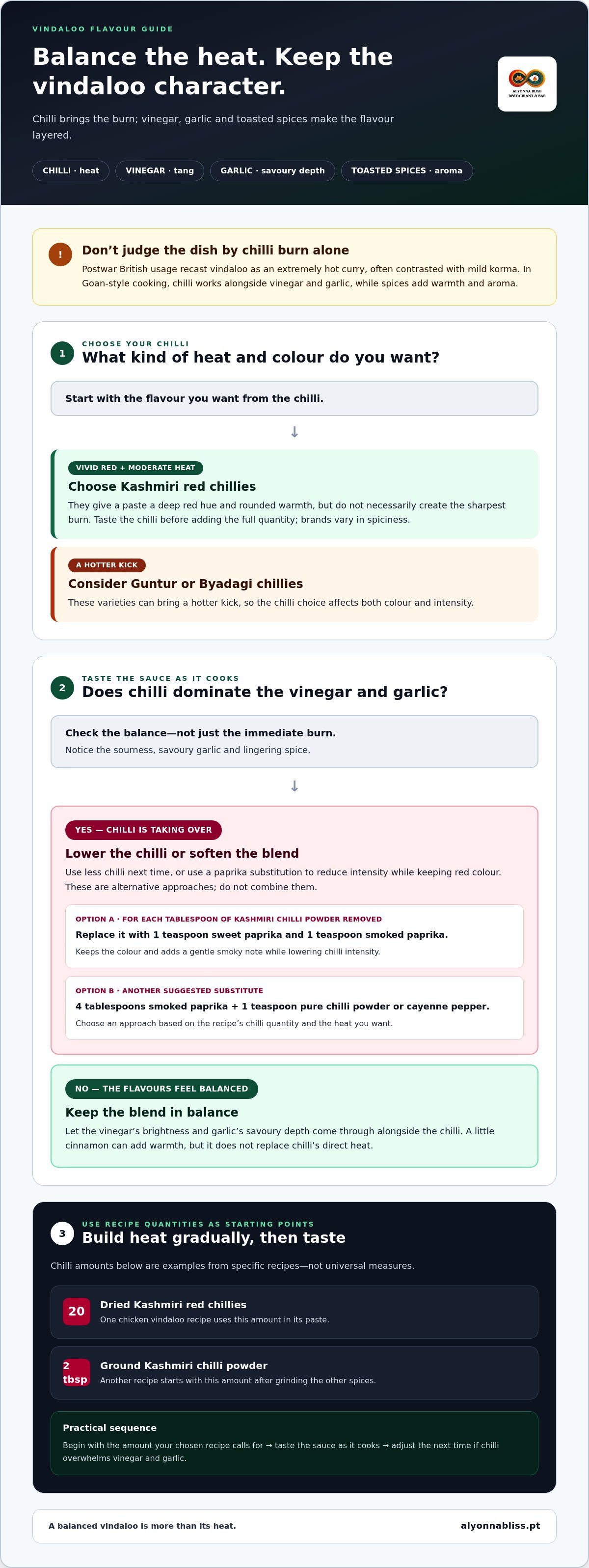
- Separate chilli intensity from the overall flavour. Postwar British usage recast vindaloo as an extremely hot curry, often contrasted with mild korma. That contrast can make chilli seem like the dish’s defining feature. In Goan-style cooking, red chilli works alongside vinegar and garlic, while spices add warmth and aroma. British curry houses may have increased the chilli to match vindaloo’s bold flavours. When tasting, look beyond the immediate burn: notice the sourness, savoury garlic and lingering spice.
- Choose Kashmiri chilli for vivid colour and moderate heat. Kashmiri red chillies give a paste a deep red hue and rounded warmth, but don’t necessarily create the sharpest burn. Guntur or Byadagi chillies can bring a hotter kick, so the variety affects both colour and intensity. Taste the Kashmiri chilli before adding the full quantity. Different brands vary in spiciness, which can change the balance even when you use the same amount.
- Reduce heat without stripping away the red tone. For each tablespoon of Kashmiri chilli powder removed, replace it with 1 teaspoon each of sweet paprika and smoked paprika. This adjustment keeps the colour and adds a gentle smoky note, while lowering chilli intensity. Another suggested substitute uses 4 tablespoons of smoked paprika and 1 teaspoon of pure chilli powder or cayenne pepper. These approaches are alternatives, not amounts to combine. Choose based on the recipe’s chilli quantity and the heat you want.
- Build the heat gradually, then assess the finished balance. One chicken vindaloo recipe uses 20 dried Kashmiri red chillies in its paste; another starts with 2 tablespoons of ground Kashmiri chilli powder after grinding the other spices. Those are recipe-specific examples, not universal measures. Begin with the amount your chosen recipe calls for, then taste the sauce as it cooks. If the chilli dominates the vinegar and garlic, use less next time or soften the blend with paprika. A little cinnamon contributes warmth, but it won’t replace chilli’s direct heat.
Because spiciness varies by brand, taste Kashmiri chilli before adding the specified quantity. Its vibrant red colour and moderate heat contrast with the hotter kick Guntur or Byadagi chillies can bring.
Goan pork marinated in vinegar and garlic
Build the marinade around vinegar, garlic and ground spices. The meat and timing determine how you apply it.
-
Prepare a Vinegar and Garlic Marinade
Combine garlic, vinegar and spices into a paste, then coat the pork evenly. Traditional Goan vindaloo centres on pork marinated with vinegar and garlic, giving the dish its savoury, sharp foundation. Palm or coconut vinegar suits this Goan character; apple cider vinegar is an alternative when those vinegars aren’t available. If the vinegar’s acidity is above 5%, reduce and dilute its amount so the tang doesn’t overwhelm the other flavours.
-
Coordinate Marination and Spice Tempering
Grind roasted spices with soaked chillies, fresh garlic and ginger, then add vinegar and a little water to make a paste. Coat the meat before cooking so the aromatic mixture clings to each piece. Temper the spices as you build the curry, allowing their fragrance to bloom in the sauce. Tempering does not replace marination: the paste seasons the meat first, while cooking develops the sauce’s layered aroma.
- For beef, use the vindaloo paste as both marinade and flavour base. One recipe marinates beef in the paste for at least 2 hours, allowing the vinegar, garlic and spices to sit against the meat before cooking. Keep the paste evenly distributed rather than adding it only to the pan later. That sequence gives the beef contact with the full seasoning, while the remaining sauce carries the same tang into the finished curry.
- Choose chicken marination time according to the recipe and cut. One chicken vindaloo recipe calls for at least 1 hour, with an option to marinate overnight, but advises against leaving bone-in chicken for longer than 2 to 3 hours. Another recommends 4-6 hours in the refrigerator, ideally overnight. These are different recipe approaches, not one universal timing rule. Follow one method consistently rather than combining their timings.
- Balance the paste before it reaches the heat. Combine roasted spices, soaked chillies, garlic, ginger and vinegar with a little water; the paste should coat the meat rather than run off. For chicken, beef or pork, spread it over the surface before the stated marination period. During cooking, let the sauce carry the remaining seasoning. The result should keep vinegar’s brightness without losing garlic’s rounded, savoury depth.
Goan and Portuguese culinary origins
Vindaloo’s history reflects an exchange between Portuguese cooking and Goan adaptation. Its distinctive spice character grew from that meeting.
-
Trace Vindaloo’s Goan Origins
Place vindaloo in Goa, on India’s west coast, where the dish developed. Goa was a Portuguese colony, and became the capital of the Portuguese State of India in 1530. The Portuguese had founded that state in 1501. These dates help explain the long culinary contact behind the dish, but avoid treating vindaloo as simply Portuguese or simply Indian. Its identity comes from Goan cooks reshaping a Portuguese preparation.
-
Describe Portuguese Culinary Influence
The story begins with carne de vinha d’alhos, the Portuguese dish whose name means meat with garlic and vinegar. Meat was marinated in wine vinegar and garlic, creating a sharp, savoury base before Indian spices entered the picture. Red wine shipped from Portugal to Goa could turn to vinegar during the long voyage around Africa and across the Pacific Ocean. This story offers context for vinegar’s place, not a complete recipe for vindaloo.
-
Identify Spices Added by Goan Cooks
Goan cooks adapted the Portuguese preparation, replacing wine with palm vinegar and adding spices. The Portuguese brought chilli peppers to India, and Goan vindalho developed to include them. In Indian cooking, the resulting paste could combine chilli with cumin, coriander, black pepper, cloves, cinnamon, cardamom, mustard seeds and turmeric. Some pastes also include fragrant ginger. These additions form a family of flavours, not a fixed list every cook must follow.
-
Outline the Goan-Inspired Spice Profile
Compare ingredients and technique rather than expecting one universal formula. One Goan-inspired blend uses 2 teaspoons of cumin seeds, 20 black peppercorns, 8 whole dried Kashmiri red chillies, 4 green cardamoms, 4 cloves and a 1-inch cinnamon stick. That recipe yields 4 tablespoons of spice mix. These quantities describe one blend; they don’t define every household’s vindaloo. The useful clue is the contrast of chilli, toasted warmth and aromatic depth.
- Follow the dish as it travelled into Anglo-Indian cooking from the 19th century onward. A British cookbook published in 1888 offered vindaloo with beef, pork or duck, showing that versions could vary in meat. Keep that later adaptation distinct from Goan origins: Portuguese technique supplied the garlic-and-vinegar foundation, while Goan cooks shaped it with local ingredients and spices. This history helps explain why restaurant recipes can differ without sharing an identical blend.
Vindaloo's hot, intense flavour and spice rating
Garlic, vinegar and ginger give vindaloo savoury depth, bright acidity and aromatic warmth. Goan recipes traditionally use palm or coconut vinegar; Kashmiri chilli brings moderate heat, while Guntur or Byadagi can raise it.
Traditional Goan versions sampled were medium-hot at most, though British curry-house versions often use more chilli. Adjust the heat through the chilli variety and quantity while preserving the balance of the other flavours.
-
Assess Vindaloo’s Heat and Intensity
Taste for acidity, garlic and spice before judging the chilli burn alone. One beef vindaloo recipe rates its heat at 7 out of 10, while Goan versions sampled were medium-hot at most. These examples show why a single spice rating can’t define every recipe. British curry-house versions may be much hotter, reflecting a style that emphasises chilli intensity. Notice whether heat supports the other flavours or overwhelms them.
-
Build Signature Garlic and Vinegar Flavours
Keep garlic and vinegar prominent, then use ginger to add fragrant warmth. Together, these ingredients create the sharp, savoury foundation associated with vindaloo, rather than a sauce defined only by chilli. Goan recipes commonly use palm or coconut vinegar; apple cider vinegar can substitute when those aren’t available. If using vinegar above 5% acidity, reduce and dilute its amount. This helps maintain balance without losing the dish’s characteristic tang.
-
Use Black Mustard Seeds for Flavour
Add black mustard seeds to bring a distinct, pungent note to the spice mixture. Their flavour contributes more than heat, giving the sauce a savoury edge that stands apart from chilli’s direct burn. One vindaloo recipe uses 1 1/2 teaspoons of black mustard seeds in the curry sauce. Treat that quantity as a recipe example, not a fixed rule. Keep mustard in proportion so its sharpness doesn’t crowd out garlic or vinegar.
-
Layer Cumin and Coriander Flavours
Use cumin and coriander to give the sauce an earthy, rounded spice base. Whole seeds can be toasted before grinding, releasing a warm aroma that joins the sharper notes of mustard and vinegar. Cumin and coriander can give vindaloo paste an earthy, rounded spice base, with their proportions varying by recipe. Another recipe uses 3 teaspoons of cumin seeds. These differing measures show how recipes shape the balance to suit their other spices.
- Add fresh curry leaves to deepen the aromatic character. One curry sauce uses 10 leaves, bringing a fragrant note that complements the toasted spices. Their role is different from coriander or cumin: curry leaves add a fresh, distinctive aroma, while the seeds build earthy warmth. Add them as the recipe directs, and notice how their scent rounds out the sauce beside garlic and vinegar.
- Adjust the chilli only after identifying what feels out of balance. Kashmiri chilli gives colour with moderate heat; Guntur or Byadagi adds a hotter kick. For each tablespoon of Kashmiri chilli powder removed, a suggested adjustment is 1 teaspoon each of sweet paprika and smoked paprika. Taste the finished sauce for tang, garlic and spice together. A balanced vindaloo lets each remain recognisable.
Whole-spice vindaloo blend
There’s no single fixed ratio for vindaloo masala; one Goan-inspired recipe combines 2 teaspoons of cumin seeds, 20 black peppercorns, 8 whole dried Kashmiri red chillies, 4 green cardamoms, 4 cloves and a 1-inch cinnamon stick. Toast whole spices lightly for 2 to 3 minutes, then grind them to release their aromatic oils.
-
Set the Vindaloo Masala Spice Ratio
Use a recipe’s proportions as a starting point, not a universal rule. The example above yields 4 tablespoons of spice mix, balancing cumin, pepper and chilli with cardamom, cloves and cinnamon. Other vindaloo recipes add coriander, mustard seeds or turmeric, changing the blend’s warmth and savouriness. Keep the listed quantities together when making that version, especially if you plan to marinate meat in its paste.
-
Toast Whole Spices
Warm the whole spices in a dry pan for 2 to 3 minutes, stirring so they toast evenly. Stop when their aroma rises; avoid letting them darken or burn, which can make the blend taste harsh. Dry-roasting helps release the spices’ essential oils and deepen their flavour. Toast the spices before grinding, while keeping dried chillies separate if the recipe calls for soaking them first.
-
Grind the Toasted Spices
Let toasted cumin, peppercorns, cardamom, cloves and cinnamon cool, then grind them into a fine, even powder. A consistent grind helps the ingredients blend through the vindaloo paste instead of leaving pockets of one spice. If your recipe includes Kashmiri chillies, soak them for 10 minutes before grinding. Combine the chilli and ground spices with garlic, ginger and vinegar when making the paste.
- Keep the spice mix distinct from the finished curry paste. The ground blend supplies concentrated warmth, while vinegar, garlic and ginger add vindaloo’s sharp, savoury notes. When cooking Indian food at home, separating them makes it easier to adjust the paste without changing the whole-spice proportions. Add the blend in stages, tasting the sauce as the flavours come together.
- Store any unused dry mix in an airtight container in a cool, dry place. One recipe gives homemade vindaloo spice mix a storage period of up to 6 months. Keep the container away from moisture, which can affect the ground ingredients’ texture and aroma. For a ready-made taste of Indian curry, explore vindaloo and other curries.
Dry-roast whole spices before grinding to release their essential oils and intensify their flavour, bringing out their full aroma.
Alyonna Bliss: 3-Course Lunch Deal
Alyonna Bliss offers a 3-Course Lunch Deal for a satisfying midday meal after exploring vindaloo’s layered flavours. It gives you a chance to enjoy a thoughtfully paced lunch without turning your day around a long cooking project.
For another kind of meal, choose Momo, Tandoor Flatbread or chowmein. Each has its own texture and character, from tender dumplings to warm bread and wok-tossed noodles. Choose according to the meal you feel like sharing.
Ready to explore new flavours over lunch? Visit Alyonna Bliss and discover Indian and Nepali dishes at the table.
Let Your Next Curry Be a New Discovery
Next time you taste vindaloo, let each mouthful unfold. Notice how the warmth develops, how tang meets savoury depth, and whether the spices linger gently or arrive all at once. Attentive tasting turns the authentic vindaloo spice profile from an idea into something you can recognise and enjoy.
Food is also a way to keep discovering around a shared table. Let your curiosity guide you toward a dish you already love or a flavour you haven’t tried before. A good meal need not be a test of heat; it can be a welcome pause, a little conversation and a reason to return to the table.
For your next meal, contact Alyonna Bliss and explore a welcoming taste of South Asian cooking. Follow your appetite, stay curious, and enjoy the discovery.
Frequently Asked Questions
Deconstructing the Flavor Profile: What Makes it Stand Out?
An authentic vindaloo spice profile stands out through the interplay of acidity, garlic, chilli and toasted spices. Rather than judging it by heat alone, notice how the first taste develops: vinegar brings brightness, garlic adds savoury depth and spices leave a warm finish. In a balanced version, each layer remains distinct. That layered flavour sets vindaloo apart from a curry where chilli dominates every mouthful.
What does Vindaloo taste like?
Vindaloo tastes tangy, garlicky and warmly spiced, with chilli heat ranging from moderate to intense. The exact impression depends on the chilli variety and how much the cook uses. Taste a small spoonful with rice: it can soften the immediate sharpness while letting the sauce’s spice and savoury notes come through. Lingering warmth should complement the tang, not erase it.
What spices are traditionally used in Goan vindaloo?
Goan vindaloo spice mixtures commonly include cumin, coriander, black pepper, cloves, cinnamon, cardamom, mustard seeds and turmeric alongside red chillies. Cooks may use whole spices for a fragrant paste or ground spices for convenience. The exact mix varies by recipe, so compare the aroma as well as the ingredient list. Cumin and coriander bring an earthy base; cloves and cinnamon add sweet warmth.
How does Kashmiri chili affect vindaloo’s flavor and heat?
Kashmiri chilli contributes a vivid red colour and moderate warmth, so it can deepen vindaloo’s appearance without necessarily making the sauce fiercely hot. For a stronger kick, recipes may use Guntur or Byadagi chillies instead. To reduce heat while keeping colour, replace each removed tablespoon of Kashmiri chilli powder with 1 teaspoon each of sweet paprika and smoked paprika. Taste the chilli first, since brands vary.
How does authentic Goan vindaloo differ from British Indian restaurant versions?
Authentic Goan vindaloo centres on a sharp, garlicky sauce and can be medium-hot, while British curry-house versions often became known for much stronger chilli heat. Some British adaptations also used lemon juice instead of vinegar. Potatoes, sometimes associated with British-style versions, aren’t part of traditional Goan vindalho. The difference is not simply heat: the balance of acidity, garlic and chilli shapes the character.
How long should vindaloo meat marinate in its spice paste?
Follow the timing for your chosen meat and recipe, because recommended marination periods differ. One beef recipe calls for at least 2 hours. Chicken instructions range from at least 1 hour, with an overnight option, to 4-6 hours in the refrigerator; one recipe advises limiting bone-in chicken to 2 to 3 hours. Don’t combine these into one rule. Use the method written for your cut and preparation.


