

The most satisfying Indian meal isn’t always the hottest one. To order authentic Indian food online in Portugal, choose dishes that suit your appetite and preferred spice level, then review the menu and ordering details before confirming. A little attention to those choices can help you find a meal that feels just right, whether you’re after gentle comfort or bolder heat.
Ordering should feel as welcoming as arriving at a table set with fragrant spices, warm breads and dishes made for sharing. This guide explores Indian flavours and menu prices, explains what to look for around payment, customer support and returns, and helps you think through spice preferences. It also takes a closer look at butter chicken, a familiar favourite with a rich, mellow character. From choosing a dish to understanding the details that shape an online order, you’ll find a clear path to a meal that brings warmth, aroma and a little discovery to your table.
Key Takeaways
- Explore Indian dishes by their ingredients, cooking style and flavour profile, then use the menu’s listed prices to choose what suits your meal.
- Before checkout, understand the payment and customer support options, along with the process for handling an order issue or return.
- Use descriptions of spice and heat to guide your choice, from gentler flavours to a more intense curry.
- Discover the range from butter chicken to vindaloo, and see how food delivery can bring those rich, aromatic flavours to your table.
Indian dishes and menu prices
Indian menus bring together curries, rice dishes, breads, and tandoori preparations. To order authentic Indian food online, compare dish descriptions and listed prices before selecting a meal.
Dish Selection and Authenticity
Read the ingredients and cooking details, not just the dish name. A biryani description may identify its rice, spices, and accompaniments, while a curry description can clarify its sauce and main ingredients. Look for preparation terms such as tandoori and details about sides. These clues tell you more about the meal than a photograph or broad label alone.
Authenticity can’t be judged by one word on a menu. Regional recipes and kitchen methods vary, so detailed descriptions help you understand what you’re choosing. For example, a Thakali thali listing dal, rice, chutney, and curries gives a clearer picture of its variety than the words “set meal.”
Regional and Dietary Choices
Menus may include regional specialties alongside familiar curries. Compare named dishes and their listed components to find a meal that suits your appetite. For vegetarian or vegan choices, read the ingredient details, including sauces and sides. Halal suitability depends on ingredients and preparation, so use the restaurant’s relevant menu information rather than assuming based on a dish name.
For allergies, review dish-specific allergen information before choosing. Clear ingredient descriptions help you make an informed selection, rather than relying on colour or photographs.
For online reviews, focus on recent local feedback that mentions specific dishes, order accuracy, and delivery experience. Ratings can guide your decision, but detailed comments give more context than a score alone.
Menu prices depend on the dishes selected, while delivery charges depend on the ordering service and delivery details. As you order authentic Indian food online, review item prices and any displayed fees in the order summary before paying.
To assess food safety and restaurant authenticity, look for clear dish descriptions, ingredient details, and customer comments about the food received. Check allergen information for the chosen item, and use the restaurant’s own menu descriptions to understand its preparations. These practical details help you choose a meal with greater confidence.
Payment options, customer support, and returns
Before paying, review your order details, including the selected dishes and final total. Payment methods can vary between restaurants and ordering services, so don’t assume that cash, card, or a digital wallet is accepted. Choose from the options shown and check the amount in euros before confirming.
Keep the order confirmation and payment record together. These details help support staff identify the order if a dish is missing, incorrect, or arrives damaged. Note the item name and describe the problem clearly. A photo can help explain a packaging or delivery issue, while the confirmation provides useful order details.
The handling of issues with prepared meals depends on the circumstances and the stated terms. Read those terms before placing an order, especially if you’re concerned about a cancellation or an incorrect item. If something goes wrong, use the support route shown in your confirmation or ordering account, and include the order reference and a concise description. Don’t assume an opened or partly eaten dish can be returned like an unused retail product.
- Payment: Select only a method shown during checkout, then review the final total.
- Support: Keep the confirmation and describe any missing or incorrect dish precisely.
- Returns: Read the platform’s terms and follow its process for reporting a problem.
For example, if a curry arrives but its listed side is missing, state which item is absent and share the order reference. Clear details make the issue easier to understand. For an Indian meal delivered to your table, you can place an online food order and review the payment details before completing checkout.
The total, including the delivery charge, is shown at checkout in euros; review the amount for your order before confirming.
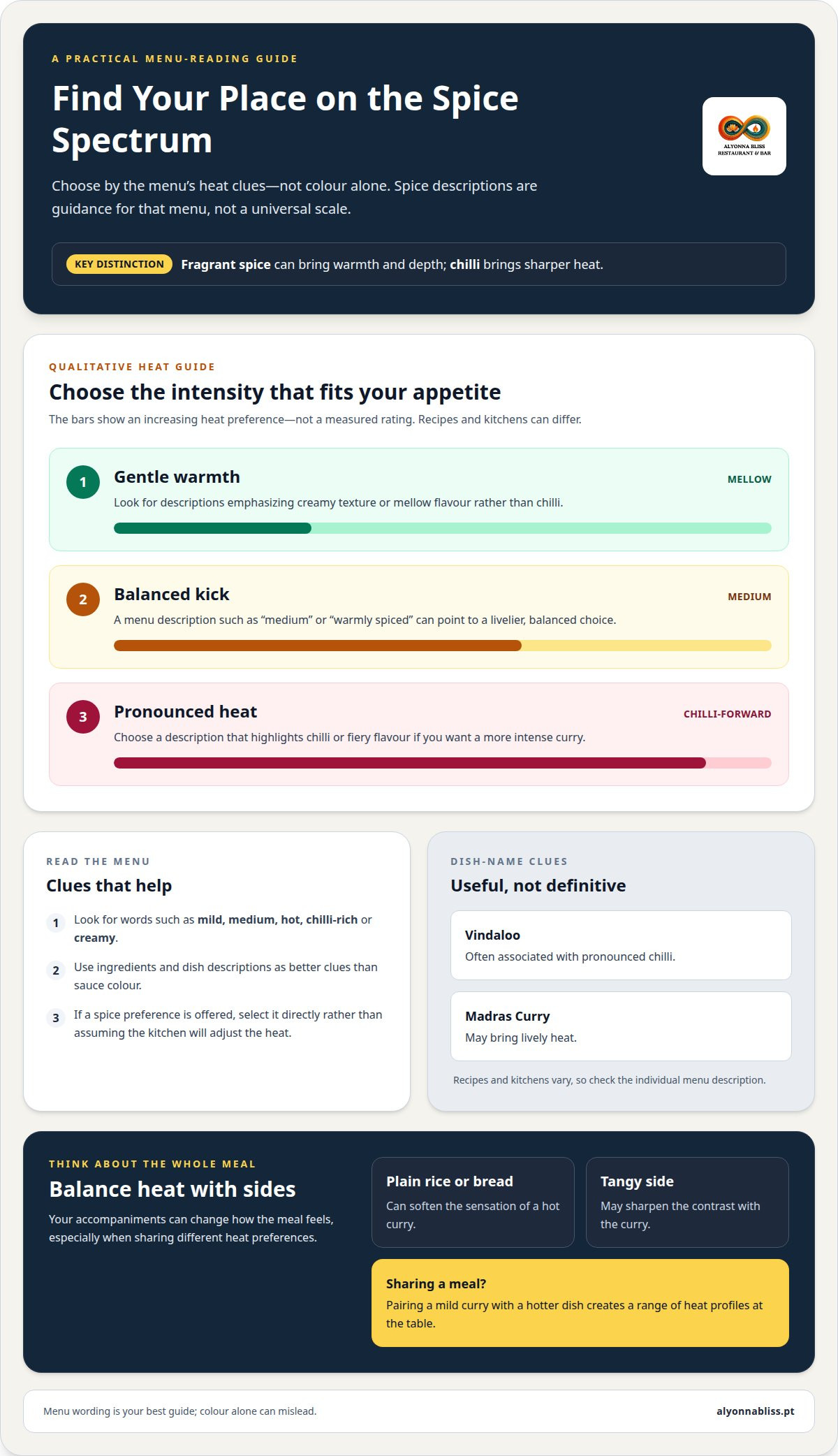
Spice and heat preferences
Indian dishes balance chilli heat with fragrant spices, tangy notes, and savoury depth. A richly spiced dish doesn’t have to taste fiery. Consider these qualities separately when choosing: cumin and coriander bring warmth, while chilli creates sharper heat. A creamy curry, for example, may feel gentler than a chilli-forward preparation.
Dish names offer clues, not a universal heat scale. Vindaloo is often associated with pronounced chilli, while recipes and kitchens can differ. Madras Curry may also bring lively heat. Read each menu description for terms such as mild, medium, hot, chilli-rich, or creamy, and treat them as guidance for that menu.
- Prefer gentle warmth: Choose descriptions that emphasize creamy texture or mellow flavour, rather than chilli.
- Enjoy a balanced kick: Look for a curry described as medium or warmly spiced.
- Want pronounced heat: Select a dish whose description highlights chilli or fiery flavour.
Think about the whole meal, too. Plain rice or bread can soften the sensation of a hot curry, while a tangy side may sharpen the contrast. If you’re sharing, choosing different heat profiles gives everyone a distinct option. A mild curry alongside a hotter dish creates balance across the table.
When choosing a dish, read its description before ordering. If the menu offers a spice preference, select it directly rather than assuming the kitchen will adjust the heat. Don’t judge intensity by colour alone: red sauces can vary, and golden sauces can still contain chilli. Ingredients and menu wording provide better clues.
A Thakali thali brings dal, rice, chutney, and a variety of curries together on one platter. Since its components can vary in flavour and heat, think of the meal as a range of tastes rather than one uniform spice level. Pair a hotter bite with rice, then return to chutney or dal for another contrast.
How can I identify authentic Indian dishes and ingredients when ordering online?
Start with the dish name, then read its ingredients and preparation. A detailed biryani description, for example, should explain its rice, spices, and accompanying ingredients. Tandoori dishes point to a cooking method, while curry names can signal different sauce styles. Specific details help you understand what the kitchen is preparing beyond a familiar label.
Look for ingredients associated with the dish rather than relying on photographs alone. Dal describes a lentil-based preparation, while chutney usually adds a contrasting flavour alongside a meal. A menu that names these components gives you a clearer picture of taste and texture. Descriptions of charcoal cooking, oven cooking, or wok preparation also explain how a dish is made.
- Read the full description: Note ingredients, cooking methods, and listed accompaniments.
- Look for distinctive details: Biryani with named rice and spices tells you more than “spiced rice.”
- Compare menu terms: “Tandoori” describes a preparation style, not a spice level.
Regional names can add helpful context, but recipes vary between kitchens. A thali, for instance, brings several components together, so its listed contents matter more than the name alone. Check whether the description names rice, dal, chutney, or curries. For Butter Chicken, look for wording that explains the sauce and its flavour, rather than assuming every version tastes identical.
Photographs can show portion presentation, but they cannot establish ingredients or preparation by themselves. Use the written menu first, then treat an image as a visual guide. If a description names ingredients you avoid, select another dish with clearer details. For a meal shaped around Indian curry flavours, explore Indian curry options and choose a description that suits your table.
Alyonna Bliss: Indian Curries, Butter Chicken to Vindaloo
Alyonna Bliss brings Indian curry favourites together, from butter chicken and Madras to vindaloo. If you’re choosing between a mellow, creamy curry and a bolder, chilli-led dish, these familiar names offer different ways into the menu. Food delivery makes them an option for a relaxed meal at home, while momo adds another savoury choice to the table.
For a midday meal, the 3-Course Lunch Deal offers a set-course option. Choose according to the kind of meal you want, whether that means settling in with curry or sharing a few distinct flavours. The menu’s range makes it easier to shape a meal around comfort, curiosity, or both.
Contact Alyonna Bliss to discuss your meal and explore the menu.
Make Your Next Meal a Moment to Share
Let appetite set the direction. A comforting curry, a crisp-edged tandoor flatbread, or a table of shared flavours can turn an ordinary evening into a welcome pause. When you order authentic Indian food online, choose with the occasion in mind: a quiet meal, a midday break, or something savoury to enjoy together.
Alyonna Bliss brings these choices together with its 3-Course Lunch Deal, momo, and Tandoor Flatbread. Let the dishes shape the mood, whether you’re seeking a leisurely lunch or a meal with contrasting textures and warm spices. The next step can be simple: contact Alyonna Bliss about your order and begin planning what you’d like to enjoy. May your next meal bring fragrant comfort, generous flavour, and a little joy to the table.
Frequently Asked Questions
What are the most popular Indian dishes available for online delivery?
Popular choices include Momo, Butter Chicken, Madras Curry, and Vindaloo, alongside Tandoori Chicken and Chicken Tikka. For a meal with several textures and flavours, explore a Thakali thali with dal, rice, chutney, and assorted curries. Garlic Naan is another option to enjoy with curry. Choose according to whether you want a comforting sauce, a spicier dish, or varied bites to share.


