

What if the best lunch pairing isn’t three bold dishes, but a thoughtful balance of contrast and comfort? If you’ve ever wondered how to pick 3-course lunch pairings without making the meal feel too rich, repetitive, or filling, start by giving each course a different job. Choosing a starter, main, and accompaniment becomes easier when you consider appetite, spice, flavour, and texture together.
A bright or lighter beginning can make room for a warmly spiced main, while the accompaniment adds contrast or brings the meal together. You’ll learn how to build that balance, adjust it to your appetite and spice preference, and choose combinations that feel satisfying from the first bite to the last.
These practical pairing principles work especially well with the varied flavours of Indian and Nepali cooking. At Alyonna Bliss, the dine-in 3-Course Lunch Deal is structured around a starter, main, and accompaniment. Use each course to create a lunch that feels varied, considered, and complete.
Key Takeaways
- Learn how to pick 3-course lunch pairings by giving the starter, main, and accompaniment distinct roles.
- Use contrasts in texture and flavour to keep a meal varied, and balance richness with lighter or fresher elements.
- Compare lighter, comfort-led, and exploratory pairing routes to match the mood of your lunch.
- Choose your appetite and preferred spice level first, then build the rest of the meal around the main.
- Explore Indian and Nepali cooking through a dine-in lunch shaped around a starter, main, and accompaniment.
How to Pick 3-Course Lunch Pairings That Feel Like One Meal
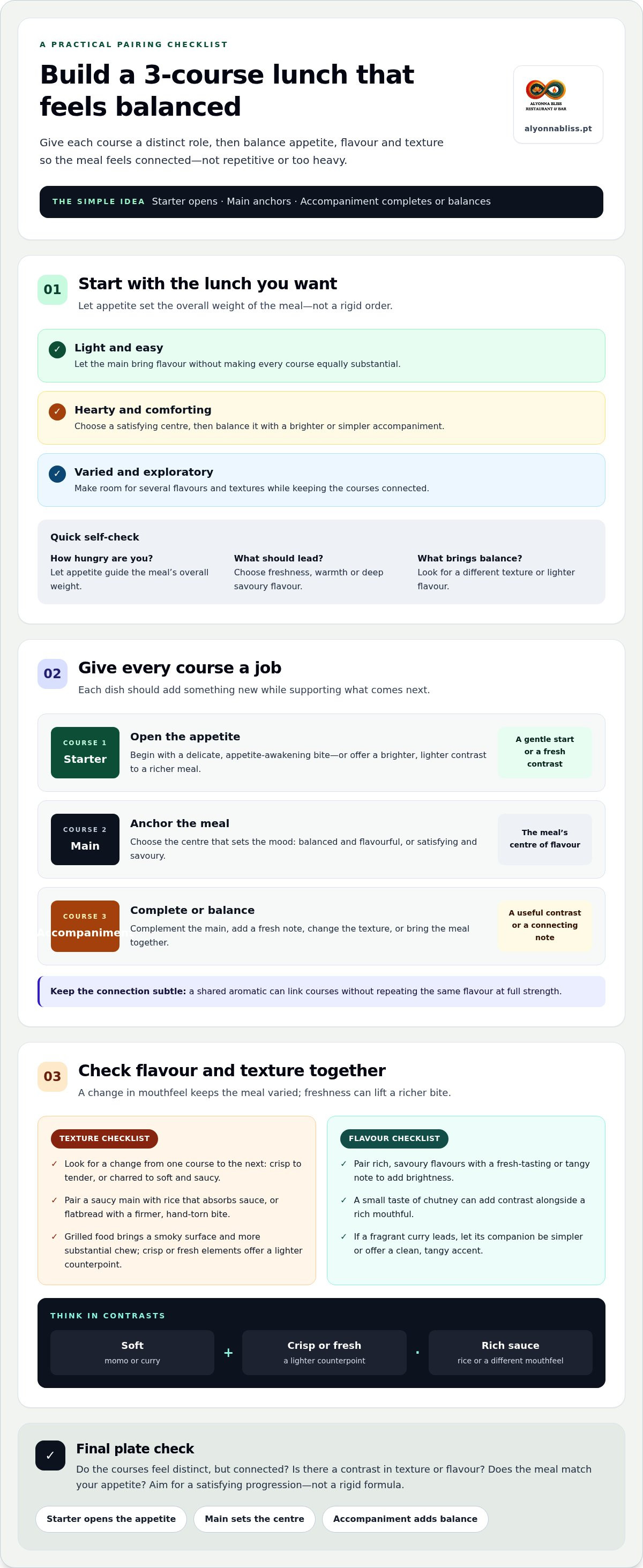
A satisfying lunch does more than move from a small dish to a larger one. It builds appetite, offers a centre of flavour, then leaves the meal feeling complete rather than heavy. To decide how to pick 3-course lunch pairings, give every course a role and look for flavours and textures that work together.
The starter welcomes you into the meal, the main anchors it, and the accompaniment complements or balances it. That balance might come from contrast, such as a fresh note alongside something rich, or continuity, such as a related aromatic carried gently from one course into another. The concept of food pairing involves identifying complementary flavours and textures. These principles are flexible: the goal is a satisfying progression, not a rigid formula.
What makes three courses work together?
A balanced three-course lunch gives each dish a distinct role: the starter opens the appetite, the main provides the centre, and the accompaniment completes the meal or adds contrast.
Each course should feel different enough to hold your interest, yet connected enough to support what follows. A shared aromatic can create a quiet thread across the meal, while crispness in one course and a softer, saucier texture in another keep the experience from feeling repetitive. Continuity doesn’t mean repeating the same flavour at full strength. A subtle echo is often enough.
Start with appetite, not a rigid order
First, decide what kind of lunch you want: light and easy, hearty and comforting, or varied, with several textures and flavours to explore. Appetite helps you judge the overall weight of the meal. For a lighter lunch, let the main bring flavour without making every course equally substantial. For a heartier meal, choose a satisfying centre and balance it with a brighter or simpler accompaniment.
There’s no single right sequence for every diner. Use these questions to shape your choices:
- How hungry are you? Let your appetite guide the overall weight of the meal.
- What should lead? Choose the course that sets the mood, whether you want freshness, warmth, or deep savoury flavour.
- What would bring balance? Look for a different texture or a lighter, complementary flavour in the other courses.
This approach leaves room for personal preference and the character of the dishes. Aim for a lunch that unfolds naturally, with each course adding something new while contributing to a satisfying whole.
Balance Flavour and Texture Across Your Lunch Courses
Flavour tells you what a course brings; texture shapes how it feels with every bite. A lunch can move from crisp to tender, or from charred to soft and saucy, creating variety without making the courses feel disconnected. When working out how to pick 3-course lunch pairings, consider both what each dish tastes like and how its texture changes the rhythm of the meal.
Use texture to keep each course distinct
Look for a change in mouthfeel from one course to the next. A tender starter can make a crisp element elsewhere feel lively, while a saucy main can pair well with an accompaniment that absorbs the sauce or contrasts with its softness. Rice offers a gentle, distinct base; flatbread brings a firmer, hand-torn bite. Grilled dishes have a smoky surface and more substantial chew, while crisp or fresh-tasting elements can provide a lighter counterpoint.
Think about the different textures in dishes such as momo, chutney, curry, rice, and tandoor-grilled food. Ask how they might complement one another: a soft bite beside something crisp, or a rich sauce with an accompaniment that changes the mouthfeel. Texture contrast keeps three courses from feeling like the same bite repeated in different portions.
Pair richness with freshness and brightness
Rich, savoury flavours can be deeply satisfying, but a whole lunch built around the same weight may feel monotonous. A fresh-tasting or tangy note can lift the impression of a fuller dish, bringing brightness without competing with its savoury depth. Try a small taste of chutney alongside a rich mouthful to add contrast, or look for aromatic notes that connect the flavours.
Let one element lead at a time. A fragrant curry, for instance, already carries layered flavour, so its companion might offer a simpler texture or a clean, tangy accent rather than another equally intense taste. The aim isn’t to make every course sharp or light. It’s to create room for contrast, allowing warmth, savouriness, and freshness to be noticed in turn.
As you explore the Indian and Nepali cooking at Alyonna Bliss, use these ideas as a flexible guide. Notice the texture and flavour of each course, then enjoy how complementary elements can bring a lunch into balance.
Compare Three Pairing Routes for Different Lunch Moods
A useful way to decide how to pick 3-course lunch pairings is to start with the kind of lunch you want, then give each course a job. The routes below are flexible frameworks. Indian and Nepali dishes offer many ways to think about flavour and texture: momo, curries, Nepali thali sets, rice, flatbreads, and tandoor grills can all inspire a different pairing approach.
| Lunch mood | Starter role | Main character | Accompaniment function |
|---|---|---|---|
| Lighter and varied | Open with a delicate, appetite-awakening bite. | Choose a balanced centre with flavour that doesn’t overwhelm. | Add a fresh note or a different texture. |
| Comfort-led | Offer contrast, such as a brighter or lighter beginning. | Let a satisfying, savoury dish anchor the meal. | Complement a saucy main with rice or flatbread. |
| Discovery-led | Begin with a familiar flavour or format. | Explore an Indian or Nepali flavour or preparation. | Bring the elements together with a complementary texture or flavour. |
Choose a lighter, varied progression
For a lighter lunch, think of a delicate opening, a balanced main, and an accompaniment that adds something new. Variety doesn’t require larger portions: a soft texture beside a firmer one, or a fragrant note alongside a milder flavour, can make the progression feel lively. When choosing, consider the character of each dish and avoid making all three courses equally rich or filling.
Choose a heartier, comfort-led progression
If you’re hungry for a more substantial lunch, let the main carry the warmth and savoury depth. A curry, for example, pairs naturally with rice or flatbread, each offering a different way to enjoy its sauce. Keep the opening contrasting rather than equally rich, so the meal has more than one note. The aim is comfort with movement, not heaviness from the first bite onward.
Choose a discovery-led progression
Curiosity can begin with something familiar, then take a gentle step towards a flavour or preparation you haven’t tried. Momo, a Nepali thali set, or tandoor-grilled dishes can each offer a point of comparison. You don’t need specialist knowledge; simply notice whether you’re drawn to fragrant, savoury, or grilled flavours, then choose an accompaniment that supports rather than competes with them.
Use the table as a starting point, not a recipe. Your appetite and preferences can shape a pairing that feels personal and complete.
Adapt Your Pairings to Spice, Richness, and Appetite
A balanced lunch should suit the diner as much as the dishes. To decide how to pick 3-course lunch pairings, use a simple sequence: consider your appetite, choose the main that appeals to you, then look for a starter and accompaniment that balance its flavour and texture. Heat matters, but so do richness, how satisfying the meal feels, and whether each course brings something different.
How should spice preference shape a pairing?
Start by thinking about the main’s chilli heat and how comfortable you are with it. Heat is only one part of flavour: a dish can be fragrant and complex, with layered aromatics, without tasting intensely hot. If you prefer gentler flavours, an aromatic main can still be an inviting choice. If you enjoy chilli, consider whether you want that warmth to lead or be balanced by a milder accompaniment.
Let the supporting courses create room around the main. A simpler, less intense starter can keep the meal from building heat at every turn, while a fresh or tangy note may add contrast. This gives you a way to shape the whole meal around your preferred level of spice.
How can you match a meal to your appetite?
If appetite or richness is your strongest preference, choose the main first. A hearty curry or another substantial dish can anchor the lunch; a contrasting starter can introduce freshness or a lighter texture, while the accompaniment supports the main without making every course feel equally rich. For a gentler meal, choose a main with a lighter feel and let the other courses add variety rather than extra weight.
Use this quick check before settling on a combination:
- Appetite: Are you after a lighter lunch or something more sustaining?
- Flavour: Should chilli heat lead, or would you rather enjoy aromatic depth with gentler warmth?
- Balance: Could a contrasting texture or fresher note offset the main’s richness?
There’s no need to make every course equally filling or intense. Aim for a comfortable progression, with enough contrast to keep the meal interesting and enough harmony to make it feel considered.
Bring these ideas to the table and enjoy the Alyonna Bliss 3-Course Lunch Deal, a dine-in lunch of starter, main, and accompaniment.
Enjoy a Thoughtful Three-Course Lunch at Alyonna Bliss
Pairing ideas are most rewarding when they meet the pleasure of sitting down to eat. At Alyonna Bliss, the dine-in 3-Course Lunch Deal is structured around a starter, a main, and an accompaniment. Think of those courses as an invitation to shape a meal with intention: begin with something that welcomes the appetite, let the main set the flavour and character, then choose an accompaniment that brings balance or a satisfying finish.
The wider menu offers Indian and Nepali dishes to explore, including momo, Indian curries, Nepali Thakali thali sets, Newari khaja sets, charcoal tandoor grills, flatbreads, noodles, and rice dishes. The Thakali thali brings together dal, rice, chutney, curries, and butter on a platter. These dishes illustrate the range of flavours and textures you can discover at Alyonna Bliss, from comforting curries to grilled and wok-fired dishes.
What to keep in mind when choosing the lunch deal
As you choose, consider four things together: flavour, texture, appetite, and the role of each course. A starter can offer a fresh or contrasting beginning; the main can carry the flavours you’re most drawn to; the accompaniment can complement its texture or help the meal feel complete. If you prefer a heartier lunch, let that preference shape the main, then look for contrast elsewhere rather than making every course equally rich.
There’s no rigid formula to follow. The principles behind how to pick 3-course lunch pairings are there to build confidence, not take the pleasure out of choosing. Aromatic flavours can connect courses, while a change in texture or a brighter note can keep the meal lively. Trust what appeals to you, and use the starter, main, and accompaniment as a simple guide rather than a set of rules.
Bring your pairing choices to the table
Remember three ideas: contrast keeps courses distinct, continuity lets related aromas or flavours carry through, and appetite helps you choose the meal’s overall weight. Together, they make a flexible framework for enjoying Indian and Nepali cooking without needing specialist knowledge or a perfect pairing on paper.
Bring your curiosity and appetite, then enjoy lunch in person at Alyonna Bliss. Explore our 3-Course Lunch Deal.
Bring Better Balance to Your Next Lunch
Knowing how to pick 3-course lunch pairings comes down to a few thoughtful choices: match the meal to your appetite, balance rich or spicy flavours with something lighter, and use texture to keep each course distinct. Contrast adds freshness and interest; a shared aromatic or flavour can make the meal feel connected.
At Alyonna Bliss, the dine-in 3-Course Lunch Deal brings these ideas to the table with a starter, main, and accompaniment. It’s a welcoming way to enjoy Indian and Nepali cooking, guided by your own tastes rather than rigid pairing rules. Choose what appeals, follow the flavours, and let each course contribute to a lunch that feels satisfying and complete.
Enjoy a considered lunch in person at Alyonna Bliss. Explore our 3-Course Lunch Deal and bring your appetite for something delicious.
Frequently Asked Questions
How do you choose dishes for a three-course lunch?
Start with the main dish or the kind of lunch you’re in the mood for, then choose a starter that opens the meal and an accompaniment that suits the main. For how to pick 3-course lunch pairings, look for contrast: crisp beside soft, or a fresh-tasting note alongside a richer flavour. Keep the sequence flexible and let your appetite shape the final choices.
What makes a good starter and main course pairing?
A good pairing lets the starter lead naturally into the main while giving each dish its own character. Consider how rich or intense each course feels: a lighter opening can leave room for a substantial main, while a more distinctive starter may work well with a simpler centre. Aim for balance, not matching flavours exactly. Changing texture or intensity between courses helps the meal feel varied.
Can you pair spicy food with a milder accompaniment?
Yes, a milder accompaniment can provide a welcome contrast beside a boldly seasoned main. Fragrant spices create layers of aroma and flavour, while chilli brings a more direct heat; the two aren’t the same. Consider how much warmth you enjoy, then choose supporting courses that make the whole lunch appealing. There’s no need for every dish to have the same spice intensity.
How do you balance rich dishes in a three-course meal?
Balance a rich main by choosing other courses with a different feel, rather than making every dish equally substantial. A fresher flavour or contrasting texture in the starter can create a lighter opening, while the accompaniment can support the main without adding competing richness. You can also look for changes in aroma or temperature. The goal is a varied progression that feels satisfying, not heavy.
What accompaniment goes well with curry for lunch?
Rice or flatbread can both complement curry, depending on the texture you want. Rice provides a soft, relatively neutral base, while flatbread offers a firmer bite and another way to enjoy a saucy dish. Think about the curry’s character and what would balance it. Choose the accompaniment that best suits the texture and flavour you want from the meal.
Should all three courses have similar flavours?
No, the courses don’t need to taste alike. A shared aromatic or complementary flavour can give the meal a sense of continuity, while differences in texture and intensity keep each course interesting. If every dish repeats the same flavour profile and mouthfeel, the lunch may feel monotonous. Look for a subtle thread that connects the courses, then let each one bring its own character.
How can beginners choose an unfamiliar Indian or Nepali lunch pairing?
Begin with a flavour or texture you already enjoy, then add one unfamiliar element to explore. You might choose a familiar accompaniment alongside a less familiar curry, or start with a known dish before trying a new preparation. Alyonna Bliss brings Indian and Nepali cooking together, including momo, curries, and tandoor dishes. Follow your appetite and curiosity; no specialist knowledge is needed.


